Start with the buds, not the calendar
A flowering shrub can look ready for a tidy-up just when pruning would remove its next display. The key question is where it makes flower buds. Some shrubs bloom on old wood: stems that grew in a previous season. Others bloom on new wood: growth produced during the current growing season. Once you know which pattern your shrub follows, the pruning window becomes much easier to choose.
If you are unsure what you have, identify the plant before cutting it back. Plant labels, photographs of its leaves and flowers, and notes on when it blooms can help narrow it down. Look closely at the stems, too. Plump buds may already be present well before flowers open. When identification remains uncertain, remove only dead or damaged growth and watch the shrub through one flowering cycle.
Prune spring bloomers after their flowers fade
Many shrubs that flower in spring, including lilac, forsythia and many early-flowering spireas, bloom on old wood. They develop the stems and buds for a future display after the current flowers fade. Pruning them in late winter may leave the plant healthy, but it can also cut away many of the buds you hoped to see open.
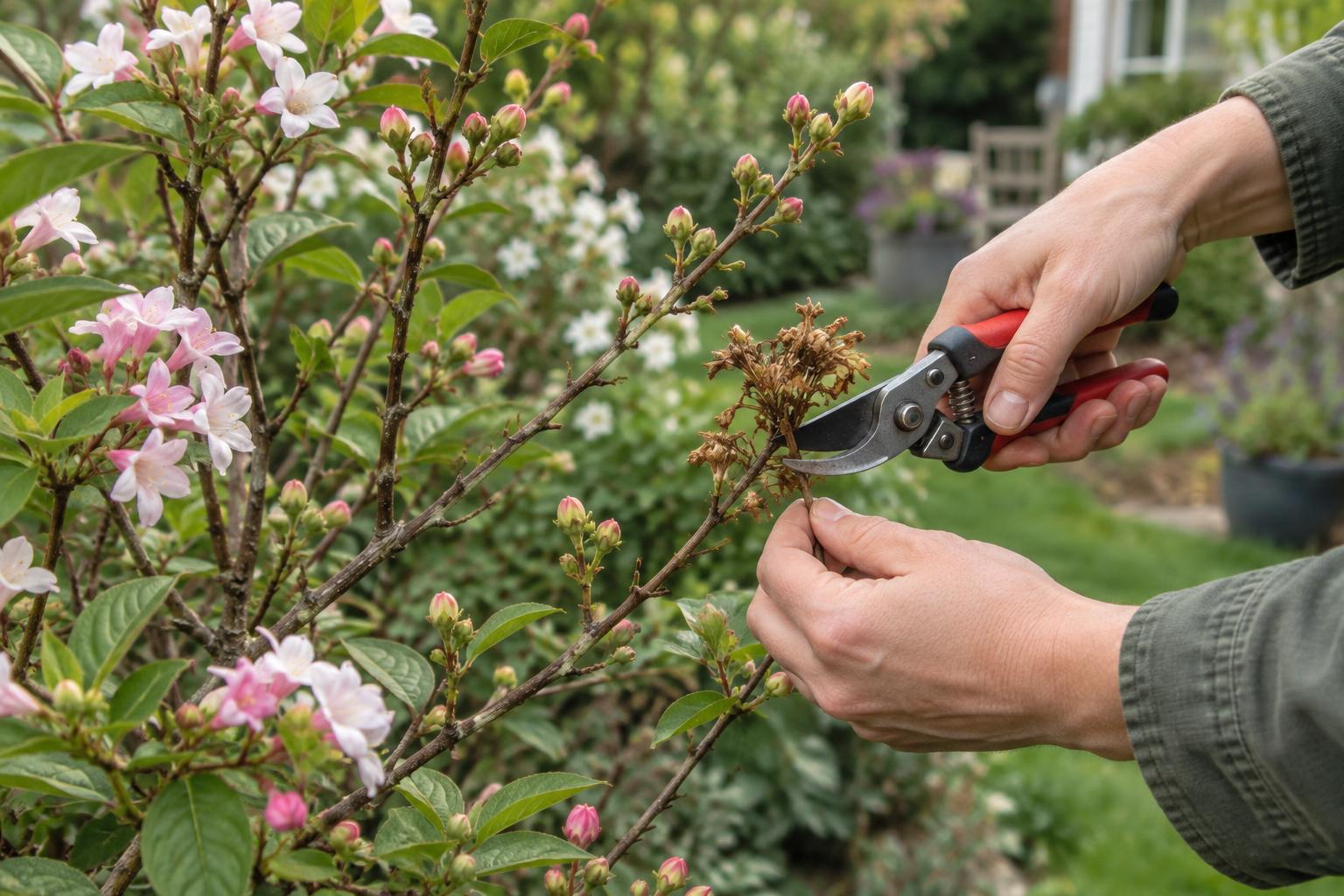
For these shrubs, make most shaping cuts soon after flowering. That gives the plant time to grow replacement stems before its next bloom cycle. Start by removing dead, broken or crossing branches. If the shrub is crowded, take out a few older stems near the base rather than clipping every branch to the same height. This keeps a more natural shape and lets light reach the interior. Avoid removing a large share of the plant at once unless you have a specific renovation plan and can accept fewer flowers while it recovers.
Prune new-wood bloomers before growth begins
Shrubs that flower on new wood generally tolerate pruning in late winter or early spring, before vigorous new growth starts. Panicle hydrangeas, smooth hydrangeas and butterfly bush are examples, though the right amount of pruning varies by plant and growing conditions. Because their flowers develop on fresh stems, early pruning does not normally remove an established set of flower buds.
A useful first pass is the same for any shrub: remove dead or damaged wood, then step back and assess its shape. Shorten stems only as much as needed for the plant’s space and growth habit. Very hard pruning is not a requirement for good flowering and may be unsuitable for a young, stressed or slow-growing shrub. In colder climates, waiting until the worst winter weather has passed can also make it easier to see which stems have survived.
Watch for exceptions and mixed signals
A shared name does not guarantee a shared pruning rule. Bigleaf and oakleaf hydrangeas commonly flower on old wood, unlike the new-wood hydrangeas above. Some varieties can bloom on both old and new growth. For an unidentified hydrangea, hold off on major pruning until you know its type; a light cleanup of clearly dead stems is less likely to sacrifice flowers.
Reblooming shrubs can also complicate the schedule. Removing spent flowers may encourage a tidier plant, but a heavy cut at the wrong time can still reduce a later flush or the following season’s bloom. Climate matters as well: “late winter” and “just after flowering” are more useful guides than a fixed month. Work with your local frost pattern and the plant’s actual stage of growth.
Make each cut serve a purpose
Before you begin, decide whether you are removing damage, opening up a crowded plant or reducing its size. Use clean, sharp pruners and cut just above a healthy bud or side branch, without leaving a long stub. For an older, overgrown shrub, removing a small number of the oldest stems at ground level over successive seasons is often gentler than cutting the whole plant back at once.
If you missed the ideal window, you do not have to prune for the sake of pruning. Leave healthy branches in place, deal with any broken or diseased wood, and plan your shaping for the next suitable time. A season of observation can be more valuable than a rushed haircut: note when the shrub flowers, where buds appear and which stems are most productive. Those clues will help you keep both the shrub and its blooms.