Start with the soil, not the stem
Mulch is a layer of material placed over the soil surface. It can slow evaporation, moderate swings in soil temperature and make it harder for some weeds to establish. Those benefits come from covering the ground around a plant, not from covering the plant itself. When mulch rests against a stem or trunk, it may hold moisture where the plant needs air and make it harder to spot damage.
Before spreading anything, pull existing weeds and check the soil level. If a plant is already set too deep, adding mulch will bury it further. Look for the point where the stem meets the soil; on a tree, look for the widening at the base of the trunk, often called the root flare. Keep that area visible rather than building a mound around it.
Choose a mulch you can spread loosely
Shredded leaves, wood chips, bark and clean straw can all work as organic mulches, depending on the bed. Wood chips and bark are often convenient around shrubs and trees, while shredded leaves or straw may be easier to move aside in a vegetable bed. Use material appropriate to the plants and setting, and avoid any mulch that is matted, contaminated or full of unwanted seeds.
Texture matters as much as the name on the bag. Coarse material usually leaves more space for air and water to pass through than a dense layer of fine particles. If you use fine mulch, apply a thinner layer and check that water can reach the soil beneath it. Mulch should protect the soil, not form a crust that sheds water.
Spread it wide, shallow and clear of plants
For many established beds, a loose layer about 2 to 3 inches deep is a useful starting point. A finer material may need only 1 to 2 inches. Measure the finished depth, including any mulch already present, rather than adding the same amount every time you refresh a bed. You should be able to see the soil surface when you part the mulch, without finding a thick, compacted stack underneath.
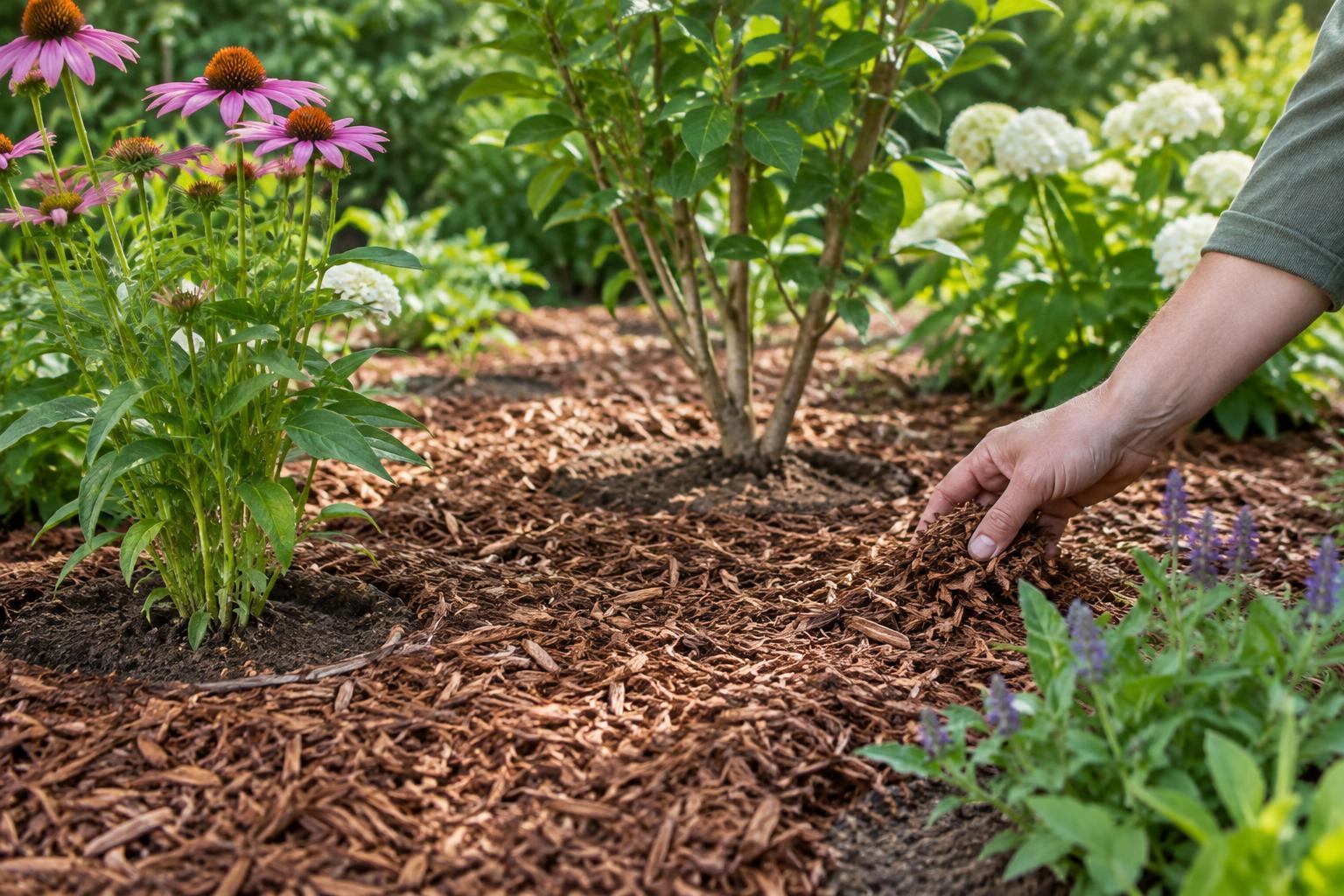
Use your hands or a small rake to draw mulch away from stems. Leave a visible ring of bare soil around small plants; give larger shrubs and trees several inches of clearance around their bases. The exact gap can vary with the plant and the coarseness of the material, but no mulch should be pressed against tender stems or piled against bark. Around a tree, extend the layer outward over available soil rather than upward against the trunk.
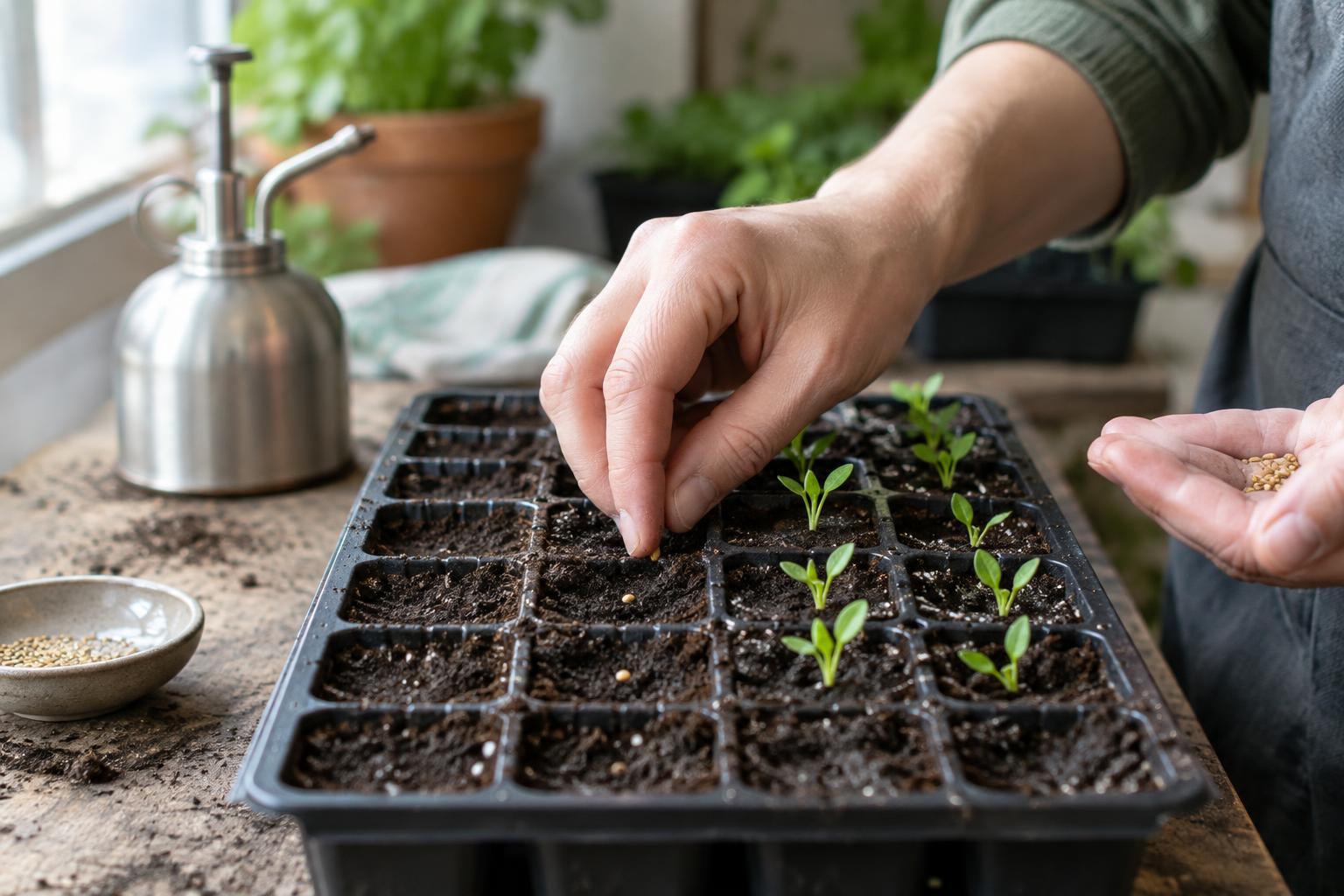
Take extra care with seedlings, low-growing plants and crowded beds. Their leaves can easily be trapped under mulch or splashed with damp material. Spread mulch after seedlings are large enough to remain clearly above it, or leave an unmulched patch while they establish. If a plant has a crown where leaves and stems emerge close to the ground, keep that crown uncovered.
Water, then check what is happening underneath
Water the soil as needed before mulching, especially if it is already dry. Afterward, water slowly enough to soak through the new layer and confirm that the soil below is getting moist. Mulch can reduce how quickly the surface dries, but it does not replace checking the soil. Push a little aside before watering again; if the soil beneath is still damp, wait and reassess.
As the season goes on, look for mulch that has blown into plant centers, washed against stems or packed down into a dense mat. Gently pull it back and loosen it where necessary. If you see persistent dampness, soft tissue at a plant’s base or signs that water is not penetrating, reduce the depth and give the stem more clearance.
Refresh the layer without building a mound
Organic mulch gradually breaks down and mixes with the soil. That does not mean it needs a full new layer on a fixed schedule. First, loosen what remains and measure its depth. Top up only thin areas, keeping the finished layer modest and the spaces around plants open. In a bed where small plants are close together, a lighter covering you can maintain may be more useful than a thick one.
The simplest visual check is a flat, even blanket with plants emerging cleanly through it. If the mulch resembles a cone around a trunk or hides the base of a stem, move some of it outward. A few minutes spent adjusting the layer can preserve the benefits of mulch while leaving each plant room at its base.