Decide whether the plant needs dividing
A perennial does not need dividing simply because it has been in the ground for several years. Consider it when a clump has outgrown its space, its center has thinned while the edges remain vigorous, or neighboring plants are being crowded. Division can also be a way to move part of a healthy plant to a new bed.
First, check what you are growing. Many clump-forming perennials, including daylilies and hostas, can be divided into sections with roots and shoots. Plants with deep taproots or woody bases may be difficult to divide successfully; moving seedlings or taking cuttings may suit them better. If you cannot identify the plant, examine its growth habit before digging rather than assuming every perennial can be split.
Choose a gentle time and prepare the new spot
The best time depends on the plant and your climate. In general, divide when the soil is workable, temperatures are moderate and the plant is not putting its energy into flowering. Early spring, as new growth begins, often works well. Early autumn can also work where divisions have time to establish before the ground freezes. In hot climates, avoid dividing during intense heat; in cold climates, avoid doing it so late that roots have little time to settle.
Prepare the planting area before lifting the clump so its roots spend less time exposed. Choose a spot with the light, soil and space the plant needs at its mature size. Remove weeds, loosen the soil and dig a hole wide enough to spread the roots without bending them sharply. If the soil is dry, water the original plant a day beforehand; damp soil is usually easier to work with than powdery or waterlogged ground.
Lift and separate the clump
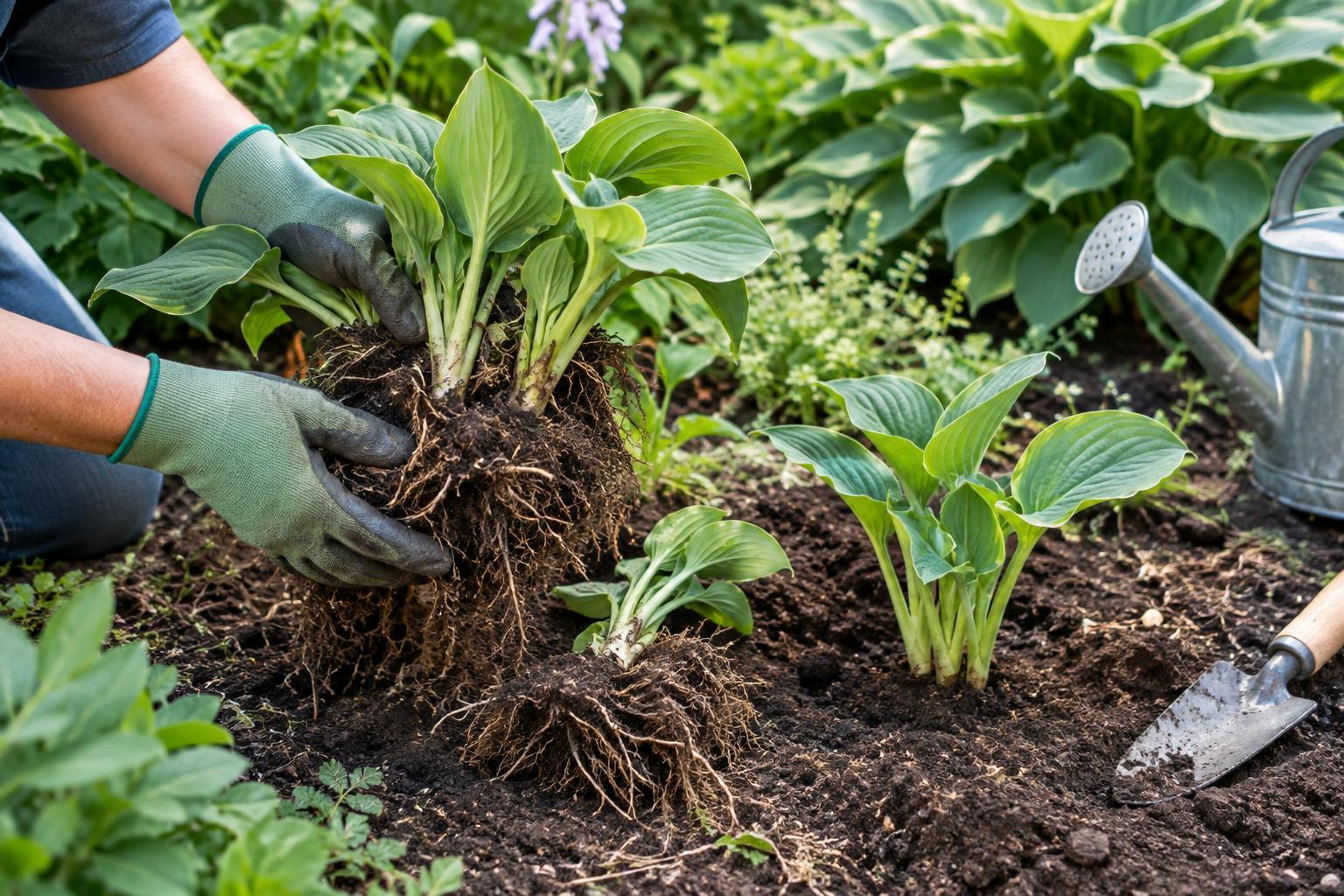
Use a spade or garden fork to loosen the soil around the plant, starting beyond the main stems to preserve as many roots as practical. Work around the clump, then lift it from below. Shake or brush away enough soil to see where shoots and roots connect. A gentle rinse can help with a dense root mass, but keep the roots from drying out while you work.
For a loose clump, pull sections apart by hand. For a firm one, use two garden forks back to back to ease it open, or cut through it with a clean, sharp spade or knife. Aim for divisions that each have healthy shoots or buds and a reasonable share of roots. A few sturdy pieces are generally easier to replant and care for than many tiny fragments. Discard dead or badly damaged material, especially from a hollow or declining center, and retain the vigorous outer sections.
Work carefully around sharp tools and wear gloves if the plant irritates your skin. If you are dividing more than one plant, clean cutting tools between clumps, particularly when a plant shows signs of disease.
Replant at the right depth
Plant divisions promptly. Set each piece at roughly the depth it grew before, spreading its roots into the prepared hole and firming soil gently around them. Keep the crown—the point where stems meet roots—from being buried too deeply. Some perennials, such as bearded irises, have specific planting-depth needs, so check the needs of your plant when its growth habit differs from an ordinary clump.
Leave enough space for each division to grow rather than filling every gap immediately. Water thoroughly after planting to settle soil around the roots. If you have extra divisions, pot them in suitable growing mix or offer them to another gardener instead of leaving their roots exposed while you decide where they belong.
Help divisions settle in
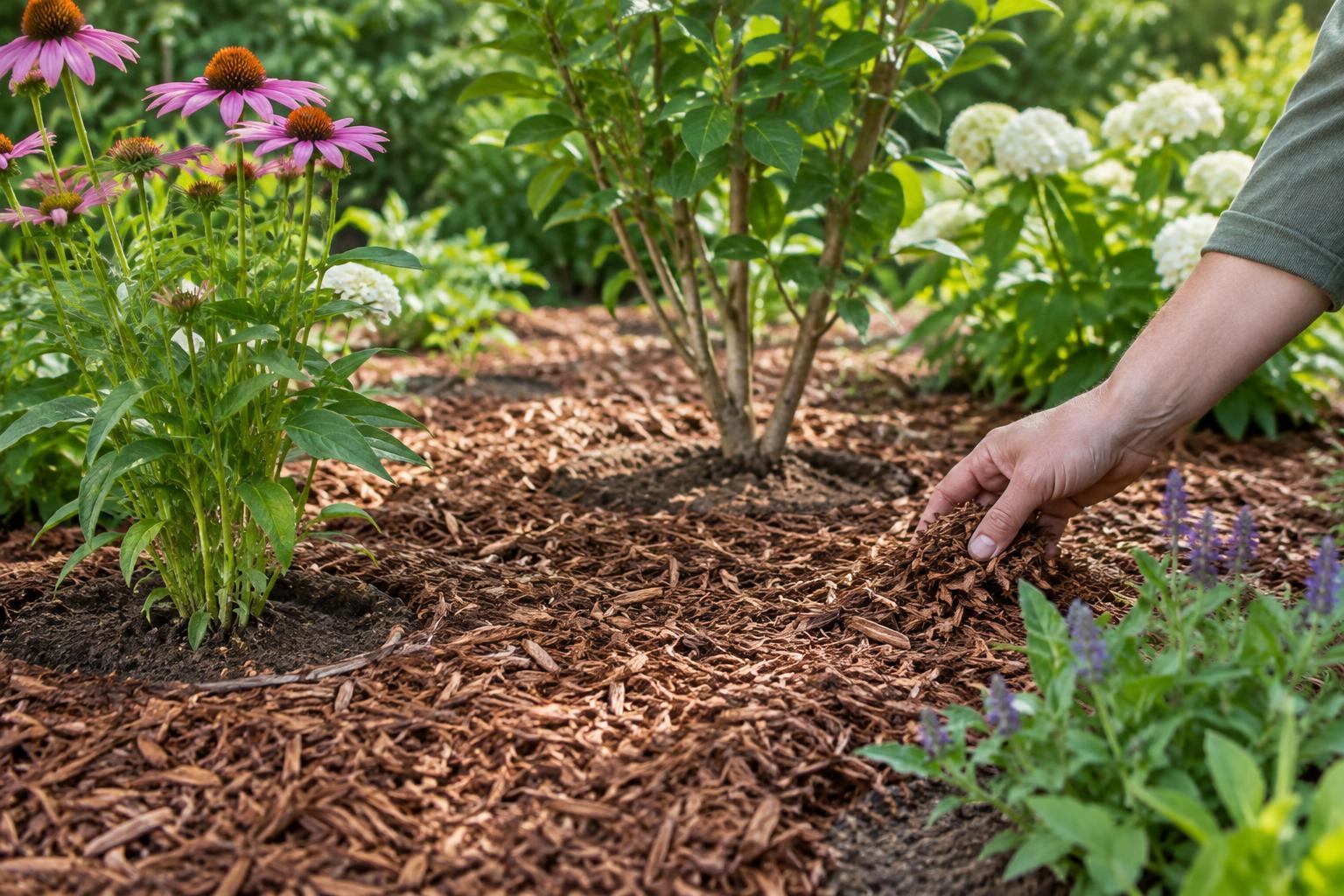
Keep the soil consistently moist, but not soggy, while new roots establish. Check moisture below the surface rather than watering only because the top looks dry. A light layer of mulch can help limit drying and weeds; leave a little space around the stems and crown. In warm or windy weather, temporary shade may reduce stress for a newly moved plant.
Some divisions will look untidy or pause in growth after being moved. Give them time and avoid judging success by immediate top growth alone. For future divisions, note which plants recover well and how quickly they fill their allotted space. That observation will help you decide when—and whether—they need dividing again.