Why fall planting works
Fall often gives new trees and shrubs a gentler start than the heat of summer. As air temperatures ease, many plants need less water, while soil can remain warm enough for roots to grow. A plant that develops roots before winter may be better prepared to support new leaves and shoots in spring.
The goal is to plant while the soil is workable and leave time for roots to settle before the harshest local conditions arrive. The first cool day is not necessarily the start of the planting window, and the first light frost does not always end it. Soil moisture, the approach of a deep freeze and the type of plant matter more than a date on the calendar.
Match the window to your climate
In cold-winter climates, start planning as summer heat fades. Plant early enough that roots have several weeks in unfrozen soil before the ground is likely to freeze hard. If the soil is already frozen or stays waterlogged, wait until spring. A late purchase can be especially risky in an exposed site where drying winds and repeated freezing and thawing may disturb a new plant.
In climates with mild winters, the useful planting window may extend much later. Cooler, wetter weather can reduce watering demands, but avoid working soil when it is saturated: digging and backfilling wet soil can leave it compacted. Where winters bring frequent heavy rain, good drainage matters as much as temperature.
In hot or dry climates, wait for sustained relief from heat rather than planting during a brief cool spell. Fall planting can give roots a head start before the next hot season, but rain may be unreliable. Plan to water the root zone during dry periods, including in winter when the soil is not frozen. In coastal or other moderate climates, use the same checks—workable soil, manageable heat and enough moisture—rather than relying on a broad regional label.
Consider the plant and how it was grown
Deciduous trees and shrubs drop their leaves and can be good candidates for fall planting when they are suited to the site. Evergreens keep foliage through winter and may lose water to sun and wind when roots cannot replace it quickly. In colder climates, give evergreens an earlier start in fall, choose a sheltered position where appropriate, or consider spring planting if the season is already advanced.
Container-grown plants offer some scheduling flexibility, though roots that circle tightly in the pot need attention before planting. Bare-root plants are handled differently: they are usually planted while dormant and should not be left with exposed roots drying out. Follow the supplier’s care directions and plant only when the soil is suitable. Whatever the format, choose a species and mature size that fit the available space; a well-timed planting cannot make up for a poor site match.
Use the soil as your final check
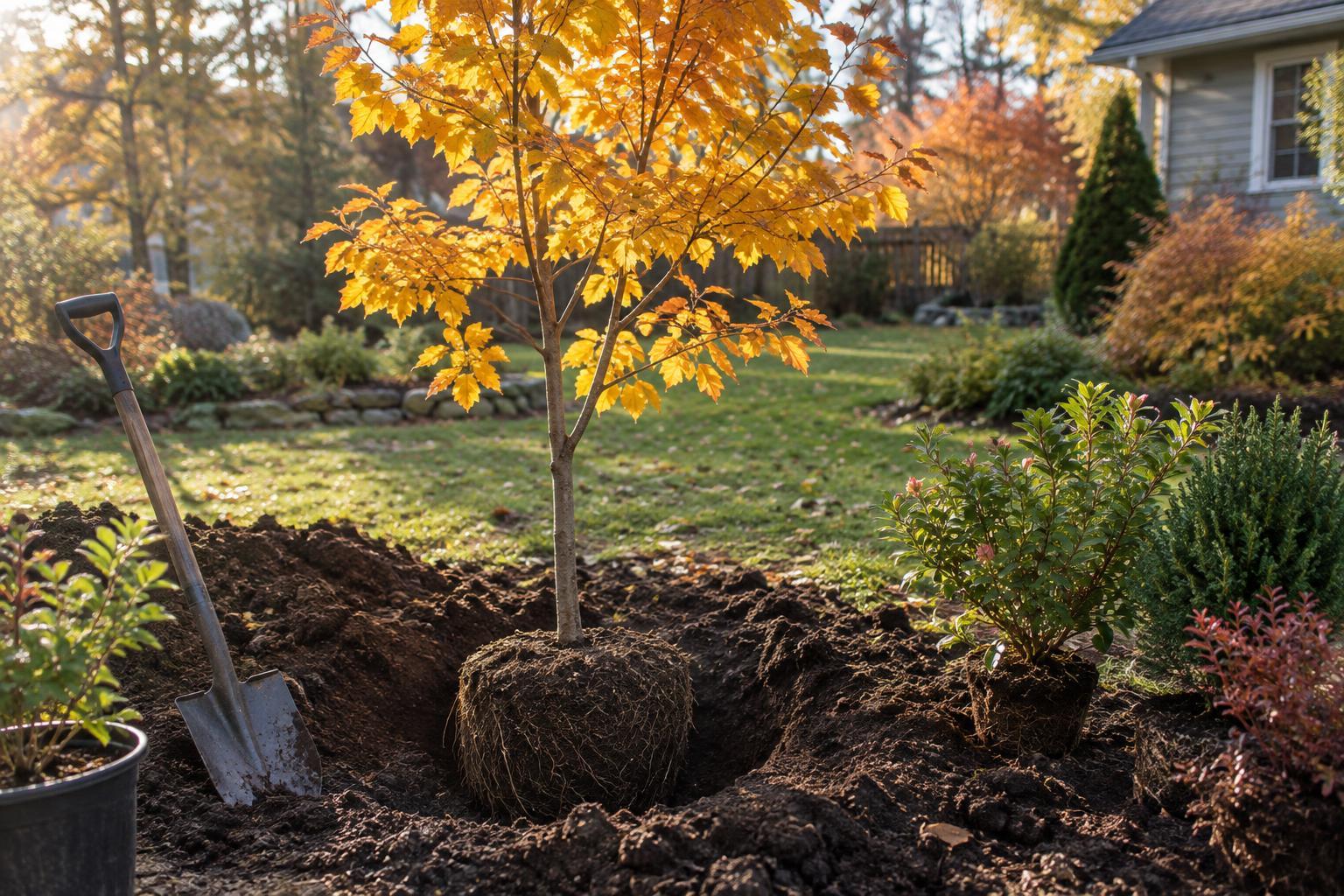
Before digging, check that the chosen spot drains reasonably well and has room for the plant’s mature canopy and roots. Dig a hole wide enough to spread the roots into the surrounding soil, but no deeper than the root ball needs. Set the plant so the top of the root ball sits at or slightly above the surrounding ground, especially where settling or poor drainage is a concern. Keep soil and mulch away from the trunk or main stems.
Water thoroughly after planting to settle soil around the roots. Then check moisture beneath the surface instead of watering by a fixed schedule. New plants need attention even when the weather feels cool, but constantly soggy soil can be harmful. A layer of mulch over the root area can help moderate moisture and temperature; leave a gap around the trunk.
Know when to wait
Fall is an opportunity, not a deadline. If a hard freeze is close, the planting site is soaked, or you cannot provide water during a dry winter, spring may be the safer choice. The same is true if you have not yet found a tree or shrub suited to your soil, light and available space.
A simple decision rule is to plant when heat has eased, the soil is workable and you can care for the plant through its first winter. Let local conditions set the pace. Giving a well-chosen tree or shrub a sound planting site and steady aftercare matters more than hitting a particular week.