Why fall planting matters
Many familiar spring-flowering bulbs, including tulips, daffodils, hyacinths and crocuses, need a period of cool conditions before they flower well. Planting in fall gives them time to grow roots in cool soil and experience winter chilling before spring growth begins. A bulb planted too early may start growing while the weather is still warm; one planted too late may have little time to establish roots before the ground freezes.
There is no single planting date that suits every garden. Fall arrives at different times, and even nearby gardens can have different soil conditions. Rather than planting by the calendar alone, watch for a sustained turn toward cooler weather. In climates where the ground freezes, aim to plant after the soil has cooled but while it is still workable.
Find your local planting window
A useful cue is soil that has cooled to roughly 50–55°F (10–13°C) at planting depth. You do not need to measure it precisely: consistently cool days and nights, with the heat of summer behind you, are a practical signal. If a warm spell follows planting, the bulbs will usually remain underground until conditions favor growth, though planting during prolonged warmth can increase the chance of early shoots.
Allow several weeks for roots to develop before a hard freeze if your climate permits. In colder regions, that generally means planting earlier in fall than gardeners in milder regions do. Where the soil stays workable through winter, planting can often wait until later in fall. If you miss your usual window, planting sound bulbs in workable soil is generally better than leaving them in storage until spring. Results may be less predictable, especially if the bulbs receive too little chilling.
Snow cover, mulch and sheltered spots can change how quickly soil cools or freezes. Check the conditions in the bed you plan to use, not just the air temperature on a forecast. Raised beds and containers, for example, can change temperature more quickly than in-ground planting areas.
Adjust for mild winters
In places with short or mild winters, some spring bulbs may not receive enough natural chilling for dependable flowers. Tulips and many hyacinths can be particularly challenging. Before buying, check the variety’s planting guidance and choose bulbs described as suitable for your climate when possible. Some daffodils are better adapted to mild-winter gardens than others.
Pre-chilling can be an option for bulbs that need more cold than your garden provides. Follow the supplier’s instructions for the type of bulb and the length of chilling it requires. Keep bulbs cool but unfrozen, dry enough to avoid rot, and separate from ripening fruit. Plant them promptly after chilling, once outdoor soil conditions are suitable. Pre-chilling can help, but it does not guarantee that every bulb will return and flower in later years.
If you garden in a warm region, it can be simpler to treat demanding bulbs as a one-season display and try several varieties to see what performs well in your space. Keep notes on planting time and flowering; your own garden’s results can guide future choices.
Plant for healthy roots and reliable blooms
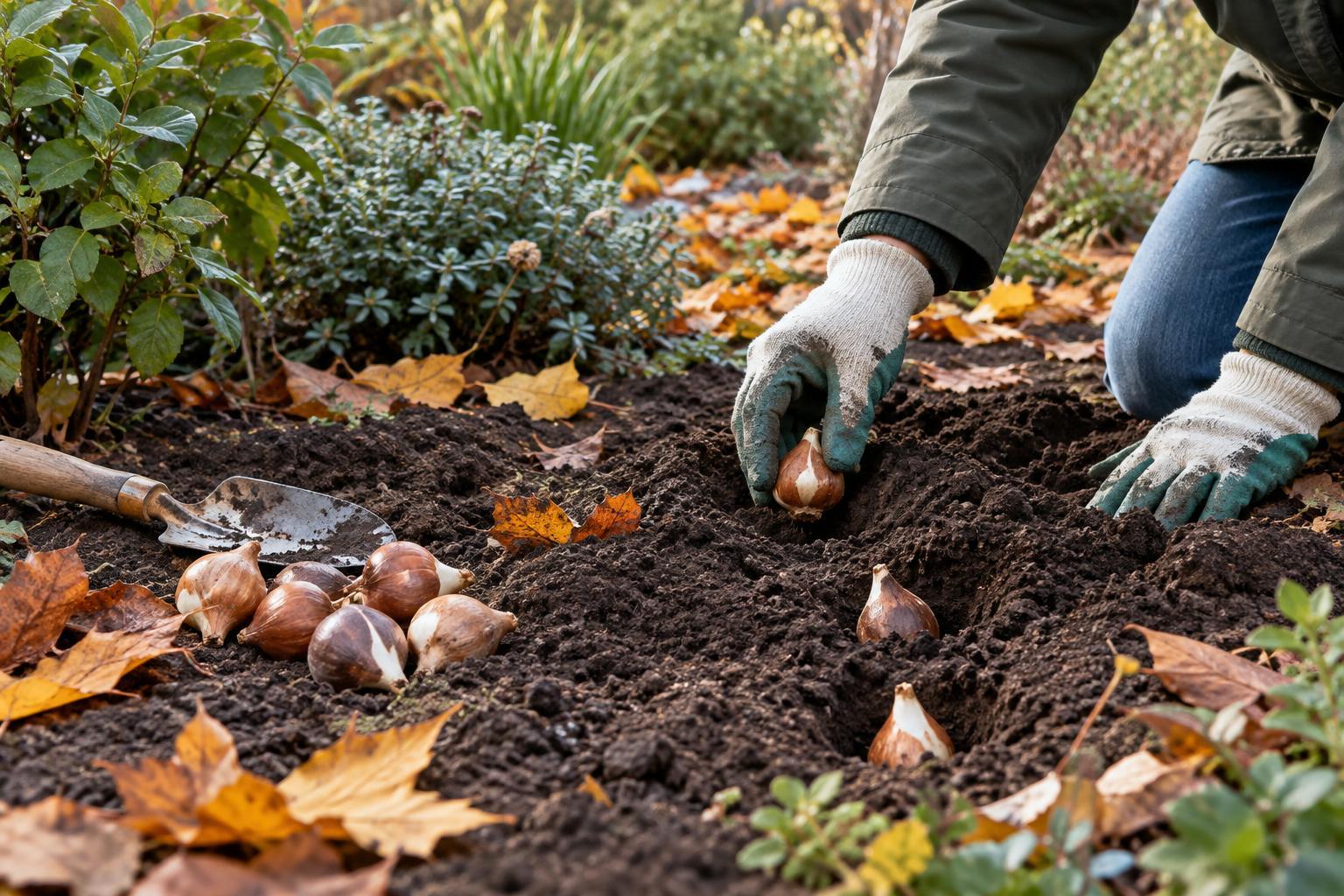
Choose firm bulbs without soft patches or signs of mold, and plant them soon after purchase. A site with good drainage is important because bulbs can rot in persistently wet soil. Follow the depth and spacing on the package; as a general guide, many bulbs are planted at a depth of about two to three times the bulb’s height. Place pointed ends upward when their shape makes that clear. If not, set the bulb on its flatter base.
Water after planting to settle soil around the bulbs. In a dry fall, occasional watering may help roots establish, but avoid keeping the bed soggy. A layer of mulch can moderate soil temperature and help protect the surface from repeated freezing and thawing. Leave enough room around emerging shoots in spring, and remove heavy, matted mulch if it blocks their growth.
What to do after planting
Once bulbs are planted, the main job is patience. Roots grow out of sight while cool weather supplies the conditions many bulbs need for spring flowering. Mark planting areas so you do not disturb them during other garden work. If animals dig in the bed, a temporary barrier laid over the soil may help protect newly planted bulbs.
After flowering, leave the foliage in place until it naturally yellows. The leaves help the bulb store energy for a future season. Not every spring bulb will come back equally well in every climate or planting spot, but good timing, suitable varieties and well-drained soil give them a sound start.