Choose plants worth saving
Seed saving starts before you pick a seed head or fruit. Notice which plants grew well in your garden and produced the flowers, leaves or fruit you wanted. Choose healthy plants with desirable traits, and leave enough of the crop in place to mature fully. If a plant shows signs of disease, skip it rather than risk carrying problems into another growing season.
For a first attempt, try plants with seeds that are easy to see and handle, such as beans, peas, sunflowers or many annual flowers. Check the seed packet or plant label if you have it. Open-pollinated varieties are more likely to produce offspring similar to the parent plant. Seeds from hybrids may still grow, but the resulting plants can differ noticeably.
Even open-pollinated plants can cross with nearby compatible varieties. If you grow several kinds of the same crop, do not count on saved seed reproducing every detail of the parent. Treat uncertain results as an experiment, especially if a predictable harvest matters to you.
Wait for seeds to mature
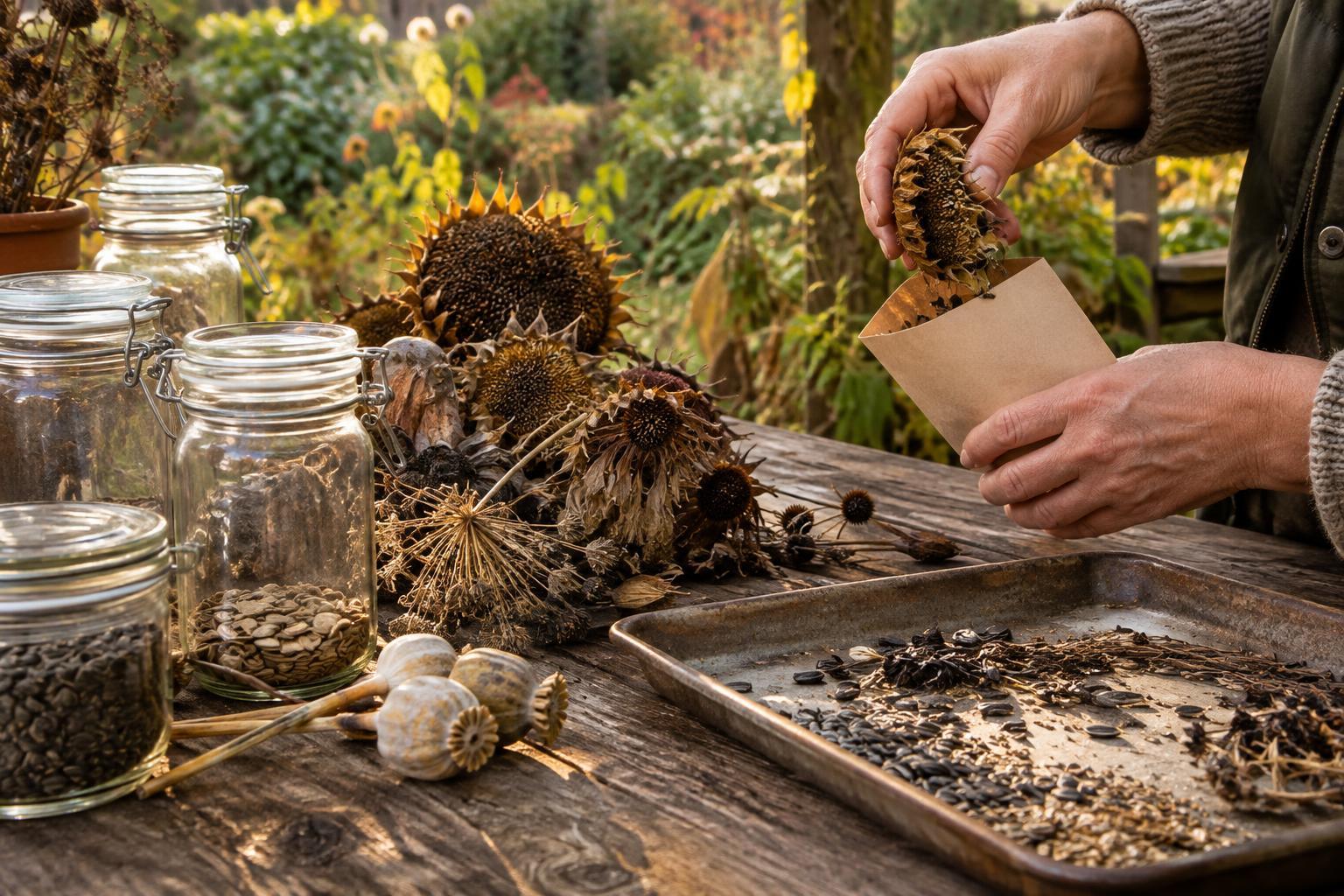
For dry-seeded plants, wait until pods, flower heads or seed capsules look mature and begin to dry on the plant. Bean and pea pods may turn papery; flower heads may become brown and release seeds when gently rubbed. The exact timing varies by plant and climate, so use these signs rather than a fixed date. Collect on a dry day if possible, and bring in seed heads before rain or wind scatters them.
Spread a clean tray or sheet beneath a seed head as you cut or shake it. This catches loose seeds and makes sorting easier. Keep different plants or varieties separate from the start. Remove obvious bits of stem, chaff and damaged seed, but do not worry about making the batch look perfect.
Seeds from fleshy fruits need a different approach. Scoop them from fully ripe fruit, separate them from as much pulp as you can, and rinse if needed. Spread them out to dry rather than leaving them in a damp clump. Some crops need more specialized cleaning methods, so look up the needs of a particular plant before saving a large batch.
Dry seeds thoroughly but gently
Drying is the step most worth taking slowly. Moisture trapped in a packet or jar can encourage mold and spoil the seeds before spring. Place cleaned seeds in a thin layer on a plate, screen or other surface where air can circulate. Choose a sheltered spot out of strong sun and away from dampness. Stir or turn larger seeds occasionally, and give any seeds that still feel soft or sticky more time.
Paper towels can hold onto small seeds as they dry. If that is a nuisance, use a smooth surface and keep it somewhere the seeds will not blow away. Avoid trying to speed the process with high heat, which may damage seeds. Before packing them, check that dry pods are brittle and that seeds no longer carry surface moisture. When in doubt, leave the batch spread out a little longer.
Label and store each batch
Label seeds as soon as they are dry. Include the plant name, variety if known, and the year collected. A brief note about the plant’s color, flavor or growing conditions can be useful later, particularly when several packets look alike. Put each batch in a paper envelope or another small, clearly marked container so varieties do not get mixed together.
Store the packets somewhere cool, dry and dark, away from large temperature swings. A sealed outer container can help protect properly dried seeds from humid air, but it should never be used to hide a moisture problem: if you see condensation or smell mustiness, take the seeds out and assess them. Keep stored seeds away from pests and check them occasionally. Different plants’ seeds remain usable for different lengths of time, so plan to use older batches before newer ones.
Check saved seeds before planting
A small germination test can help you decide how heavily to sow. Place a few seeds on a damp paper towel, fold it over, and keep it in a suitable spot for that plant to sprout. Check regularly so the towel stays damp but not soaked. If most seeds sprout, the batch is likely worth planting. If only a few do, sow more generously or choose fresher seed.
Saving seeds does not have to mean saving everything. Start with one or two reliable plants, keep clear labels, and note what grows well the following season. Those simple records will help you refine your method and build a seed collection that suits your garden.