Why cover an empty bed?
After the last harvest, a vegetable bed can spend months exposed to rain, wind and weeds. A cover crop is a plant grown mainly to care for the soil rather than to harvest. Its leaves help shield the surface, while its roots hold soil in place and keep it occupied. When the crop is cut down, its growth can become mulch or be added to compost.
Fall cover crops are especially useful where a bed will not be planted again until spring. They do require a little planning: the crop needs enough time to establish before growth slows, and you will need a way to manage it before sowing vegetables. Start with one empty bed so you can see how a particular crop behaves in your climate.
Choose a crop that fits your winter and spring plans
First decide whether you want a crop that dies in winter or one that survives and resumes growing in spring. Oats and some other tender crops may be winter-killed where freezes are strong enough, leaving residue that is usually easy to move aside. In a mild climate, they may stay alive. Cereal rye is more cold-tolerant and can protect soil for longer, but its vigorous spring growth takes more effort to cut back. Check the seed description for its expected behavior in your area rather than relying on the season name alone.
Legumes such as crimson clover or hairy vetch are another option where growing conditions suit them. With the right root bacteria, legumes can capture nitrogen from the air; some seed may call for a matching inoculant. A simple mix of a grass and a legume can provide both ground cover and varied growth, but a single crop is easier to manage on a first try. If you use a crop related to vegetables you grow, such as a mustard before cabbages, consider how it fits into your crop rotation.
Prepare the bed and sow the seed
Sow after you clear the finished vegetables, while there is still enough warmth and moisture for seeds to germinate. In colder regions, that may mean sowing promptly after a late-summer harvest; in milder places, the window may extend further into fall. If the bed is already close to freezing, a cover crop may establish poorly. Covering the soil with leaves or another suitable mulch can be a more reliable alternative.
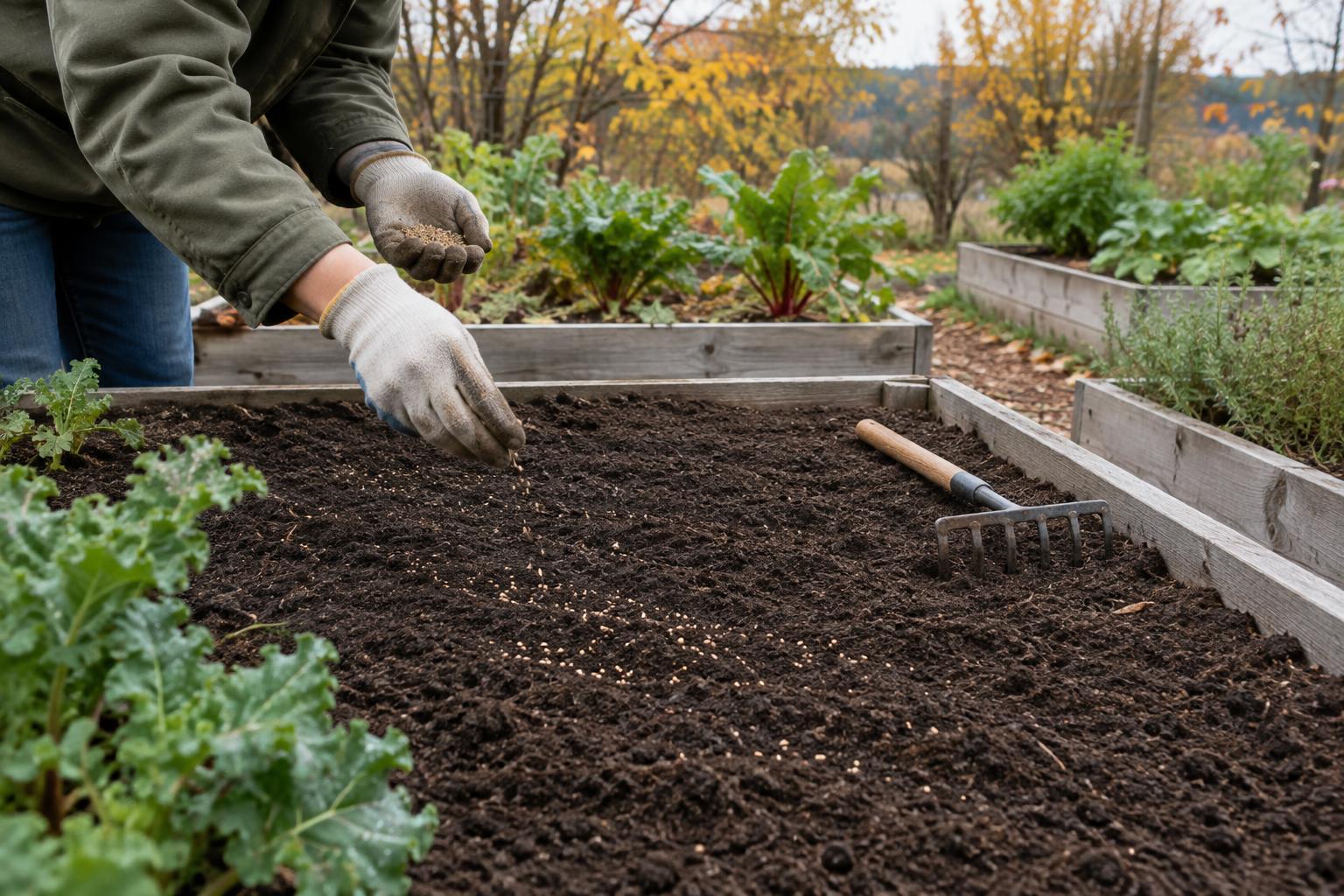
Pull out large weeds and remove vegetable plants that show signs of disease. Loosen only the surface if the soil is compacted or crusted, then rake it reasonably level. You do not need a finely worked seedbed, but seeds should be able to touch soil rather than land on a thick mat of old stems.
Scatter seed evenly at the rate and depth recommended on its packet. Dividing the seed in half and making two passes across the bed can help prevent bare patches. Rake lightly to cover small seed, or follow the packet guidance for larger seed, then firm the surface gently with the back of a rake. Water if the soil is dry, and keep the surface from drying out during germination when possible. Avoid walking on the bed, especially when it is wet.
Look after it through fall and winter
Once seedlings are growing, the main task is to check whether they are covering the soil. Thin, patchy growth can result from dry conditions, poor seed contact or sowing too late. You can mulch exposed spots rather than repeatedly disturbing the bed. Keep an eye on the edges, where a vigorous cover crop may spread into paths or neighboring plantings.
A cover crop does not need to look lush all winter to be useful. Even growth that has died back can leave roots and residue that protect the bed. If your chosen crop survives, do not let it set seed unless you are prepared for volunteer plants. Removing flower heads or cutting the crop while it is still manageable is usually simpler than dealing with mature, tough stems.
Make room for spring vegetables
Plan the end of the cover crop before you plant the next one. Cut living growth near the soil surface and leave the roots in place, or pull plants if you need to open a small planting area. You can lay the cut tops on the bed as mulch, compost them, or move them aside while you prepare seed rows. A dense, overwintered crop may need more than one cutting.
Give the cut material time to wilt and begin breaking down before sowing small vegetable seeds directly into the bed. Thick fresh residue can make a fine seedbed difficult to prepare, and cool spring weather can slow decomposition. For transplants, you may be able to open individual planting holes sooner. The best approach depends on how much growth you have and whether your next crop needs a clear soil surface. By choosing the cover crop with that next planting in mind, you can protect the bed without creating an extra spring chore.