Why waiting matters
The first mild days of spring invite digging, weeding and planting. But soil can remain wet beneath a dry-looking surface, especially after winter rain or snowmelt. Working it too soon presses soil particles together and squeezes out some of the spaces that normally hold air and let water move through. The result may be a hard surface, slower drainage and a bed that is more difficult for roots to explore.
There is no single date when every garden becomes ready. Soil texture, drainage, shade and recent weather all matter. A sunny, raised bed may be workable while a nearby low spot is still soggy. Check the particular bed you intend to use rather than relying on the calendar or the appearance of the top inch.
Try a handful test before you dig
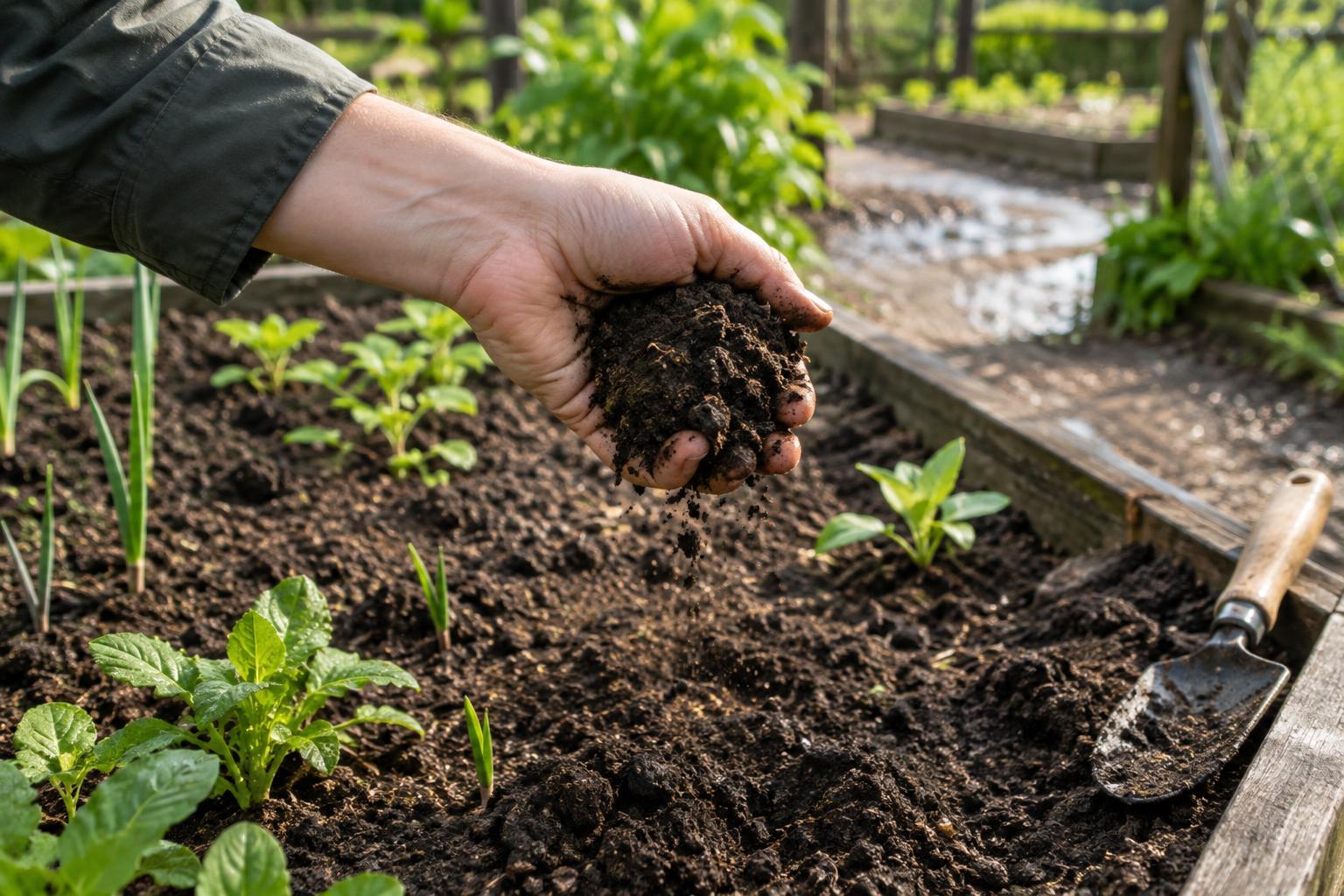
Take a small handful of soil from a few inches below the surface in the bed you want to work. Squeeze it gently, then open your hand. Soil that releases water, feels slick or stays in a dense, shiny lump is too wet for turning or cultivating. If the lump breaks apart easily when you nudge it with a finger, the bed is closer to workable. Ideally, the soil feels moist but crumbles rather than smears.
Try the test in more than one place, particularly if the bed slopes or has a shady end. Heavy clay often needs more drying time than sandy soil. Clay may also look dry on top while remaining sticky below, so resist judging it by color alone. If soil clings to your spade in thick slabs or leaves smooth, glazed surfaces when you dig, pause and test again after more drying weather.
Watch where you step
Compaction is not caused only by digging. Foot traffic puts pressure on wet beds, even when you are there just to pull a few weeds. If a step leaves a deep footprint or water rises around your shoe, keep off that area for now. In a garden with permanent beds, use the paths so the growing soil does not have to bear your weight.
When access is necessary, reach in from the edges or work from a stable path. A board laid across a bed can spread your weight for a brief task, but it is not a reason to walk repeatedly on saturated ground. Plan bed widths so you can tend most plants without stepping among them. That habit protects soil structure throughout the growing season, not just in spring.
Match the task to the soil’s condition
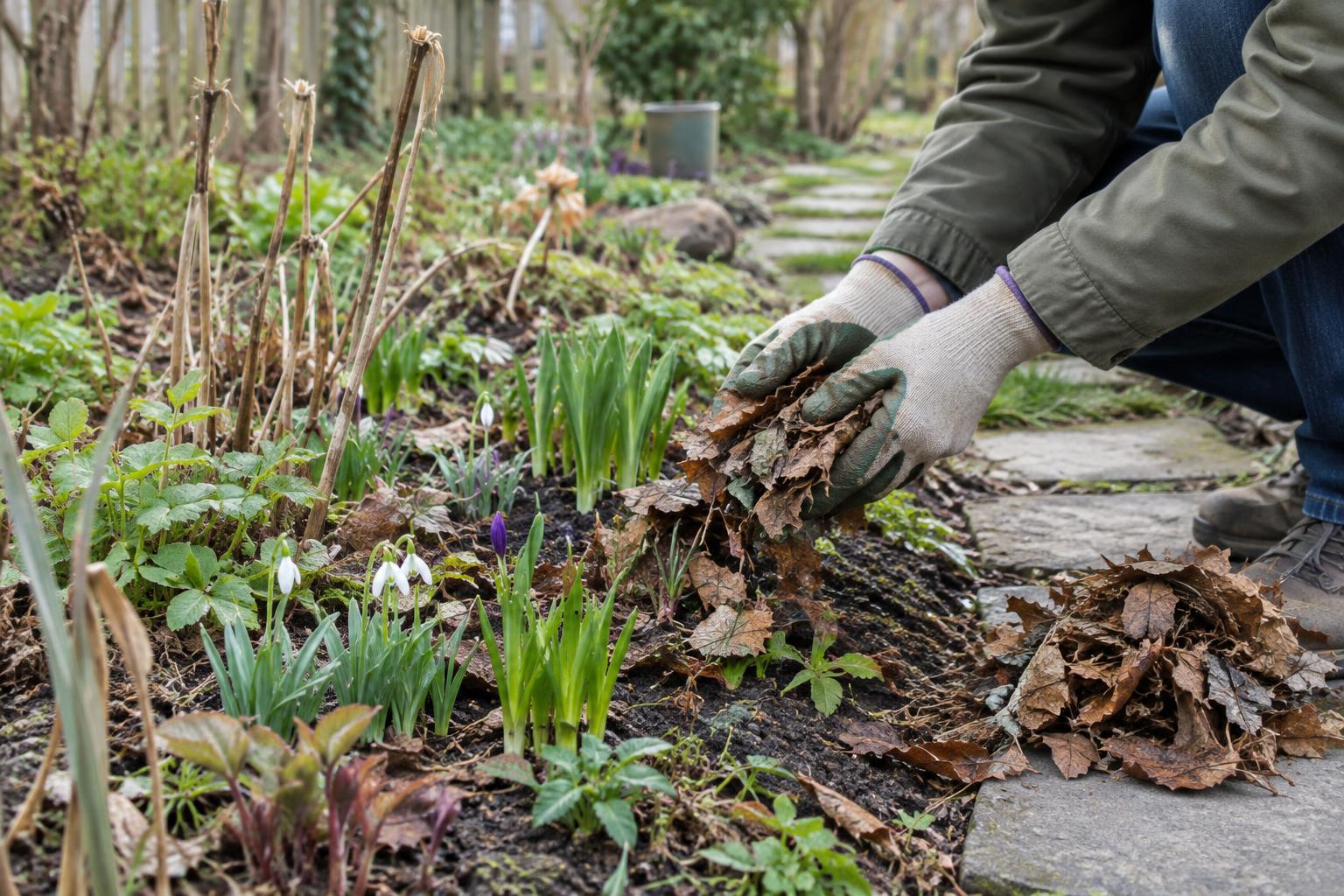
Different jobs disturb soil to different degrees. A bed that is too wet to dig may still be suitable for clearing loose debris from its surface or marking out a planting plan from the path. Wait for crumbly conditions before broad digging, tilling or mixing amendments through the bed. These tasks move a lot of soil and can turn wet clods into stubborn lumps.
For planting, check the depth the roots will occupy. A dry crust over sticky soil is not a good signal to open planting holes throughout the bed. If the soil is ready, handle it gently: loosen only what the task requires, avoid repeated passes with tools and break apart any clods that crumble naturally. If it smears instead, give the bed more time.
Keep spring plans moving while beds dry
Waiting does not have to mean losing a useful gardening day. You can clean tools, check supports, prepare labels, plan plant spacing or start suitable seeds in containers. Inspect paths and drainage routes without digging into wet beds. Where a low area repeatedly stays soggy, note it for later: a raised bed, a change in planting choices or a clearer route for surface water may be worth considering.
Once the soil passes the handful test, begin with a small area and reassess as you go. Conditions can vary across the garden and change after another rain. Treating soil readiness as a quick check before each major task, rather than a one-time spring milestone, helps preserve a workable bed for the rest of the season.