Choose the right time and start from a safe distance
As snow recedes and the ground begins to thaw, walk around each tree or shrub before reaching for pruners. Look at its overall shape, then compare its exposed side with the side sheltered by a wall, fence or other plants. Make a note of broken limbs, leaning stems, stripped bark and foliage that has turned brown. A photo can help you see whether a problem changes over the following weeks.
Early spring does not arrive at the same pace in every garden. Dormant branches may still look bare long after the first mild day, particularly on plants that leaf out late. Avoid judging a plant by its appearance alone. Wait until the worst freezing weather has passed before making non-urgent pruning decisions, and keep an eye on local conditions rather than relying on a fixed calendar date.
Deal with safety first. Stay clear of branches caught in other branches, limbs near utility lines, and trees that have developed a pronounced lean or cracks in major limbs. Do not try to pull down hanging wood or work from a ladder with a saw. A qualified tree professional is the safer choice for large, high or unstable branches.
Inspect branches and buds before deciding what is dead
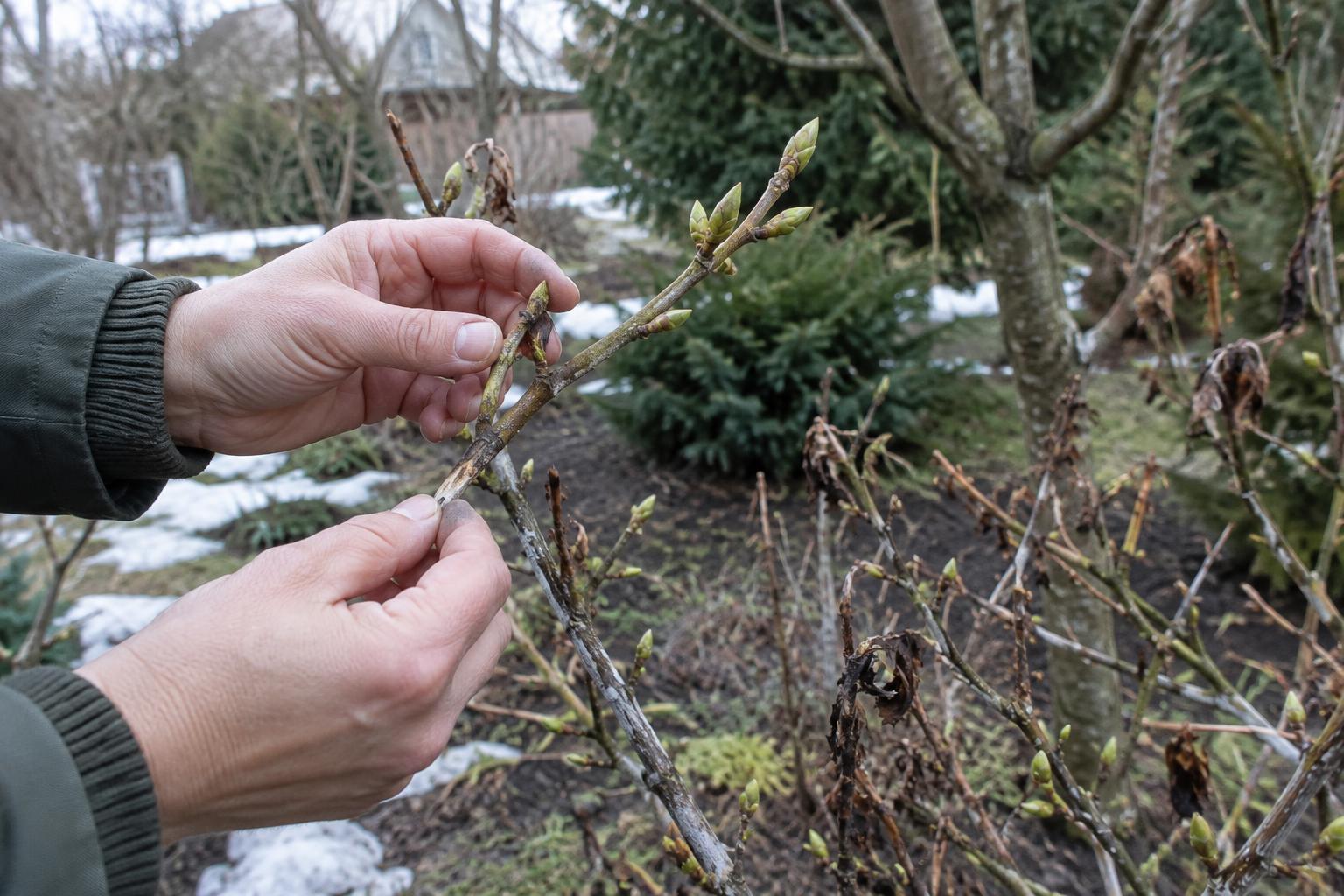
Snow, ice and wind can snap stems or leave them bent. On small plants, check where each damaged branch joins a larger stem. A clean break is usually easier to assess than a branch that has torn bark down the trunk. Look along the remaining stems for plump buds or new shoots; these are encouraging signs, though growth may be uneven across a plant.
If a twig looks lifeless, try gently bending a thin section. Living twigs often have some flexibility, while dead ones may snap dry and brittle. You can also make a very small scrape on a questionable twig to look just beneath the outer bark. Moist greenish tissue suggests that section may still be alive; dry brown tissue suggests it may not be. Test farther down the same branch before deciding how much to remove. Avoid making repeated scrapes on the trunk or large branches.
Take special care with spring-flowering shrubs. Some carry flower buds through winter, so a branch without flowers may have lost its buds while the stem itself remains healthy. Removing every flowerless stem immediately could also remove growth the plant needs for recovery. Mark uncertain branches and check them again once nearby plants have begun leafing out.
Look for bark, root and evergreen problems
Inspect trunks and main stems for splits, rubbed patches and missing bark. Small areas of damage may call only for monitoring, but a deep split or a large wound on a main stem deserves closer attention. Avoid painting or sealing wounds as a routine response. Keep lawn equipment away from injured bark, and watch for changes as growth resumes.
Freeze and thaw cycles can sometimes lift newly planted or shallow-rooted shrubs, leaving roots exposed. If the soil is workable, gently firm it around the roots without piling soil against the stem. Check that mulch is spread over the root area rather than heaped against the trunk. A plant that has shifted substantially, especially a young tree, may need to be repositioned and supported appropriately.
Evergreens can show brown leaf edges or needles after cold, wind and bright sun. Damage on the most exposed side may be winter drying rather than a sign that the whole plant has died. Road salt can also affect plants beside paths and driveways. Check whether buds and inner branches remain healthy, water when the ground is thawed and dry, and wait for new growth before removing all discolored foliage.
Prune what is clearly damaged, and leave the rest time
Broken or clearly dead small branches can be removed with clean, sharp tools. Cut back to a healthy side branch or just outside the branch collar, the slightly raised area where a branch meets a larger stem. Do not leave a long stub or cut flush into the trunk. For a heavy limb, get help rather than risk tearing more bark or losing control of the cut.
For branches that are merely bent or browned, patience often gives a clearer answer. Different parts of one shrub may resume growth at different times. Once new leaves appear, you can trace dead tips back to living wood and make a more accurate cut. Resist the urge to make a badly damaged shrub look symmetrical in one session; preserving healthy growth may matter more than a tidy outline.
If a plant has lost a great deal of top growth, keep aftercare simple. Water during dry spells when the soil has thawed, but avoid keeping it constantly soggy. Hold off on heavy fertilizer while you assess recovery. Check periodically for new shoots, further cracking or dieback, and decide later whether the plant can regain a useful shape.
Make notes for a more resilient garden next winter
Your inspection can reveal patterns worth addressing before the next cold season. Repeated breakage may point to crowded or weakly attached branches. Browning in the same exposed corner may suggest that a sensitive evergreen would benefit from a more sheltered position or protection from drying winds. Damage beside a salted walkway may call for changing how that area is treated.
Record the plant, the type of damage and the side where it occurred. As the season progresses, add what recovered and what did not. These simple observations are more useful than a rushed early-spring verdict: they help you choose where to prune, which plants need extra care and whether a different plant might be better suited to a difficult spot.