Why evergreens may need water in winter
Evergreens keep their leaves or needles through winter, so they can continue to lose moisture, especially in sun and wind. Their roots may not be able to replace that moisture when the ground is frozen. A dry autumn followed by a winter with little rain or snow can make the problem more noticeable, particularly for newly planted trees and shrubs whose roots have not spread far.
Winter watering is not a routine task in every garden. In a climate with regular rain, damp soil may provide all the water an evergreen needs. The aim is to respond to dry, thawed soil—not to follow a fixed calendar. Both needle-bearing evergreens and broadleaf plants such as hollies can benefit from that approach.
Check the soil before reaching for the hose
Look beneath the canopy, where rain may not reach the soil easily. Move aside any mulch and check the soil a few inches down with a finger or hand trowel. If it feels cool and moist, leave it alone. If it feels dry at that depth and the ground is workable, watering may help. A dry surface alone is not enough to judge: wind and sun can dry the top layer while the root zone remains moist.
Pay particular attention to evergreens planted within the past year or two, plants beside walls or under roof overhangs, and shrubs in exposed, windy positions. Established plants in sheltered, moisture-retentive soil are less likely to need extra water. Browning foliage can have several causes and may appear after the damage occurred, so use the soil check rather than leaf color alone to decide what to do.
Choose a thawed, mild part of the day
Water when the soil has thawed enough to absorb water and temperatures are above freezing. Late morning or early afternoon usually gives water time to soak in before evening temperatures fall. If water pools on a frozen surface or runs away instead of entering the soil, wait for another day. Do not try to compensate for a long dry spell by watering over frozen ground.
Check the near-term weather before you start. If substantial rain is expected or a thaw is leaving the soil wet, extra water may be unnecessary. Avoid spraying foliage in freezing conditions and take care not to leave water on paths, steps or driveways where it could turn to ice.
Water the root zone slowly, then stop
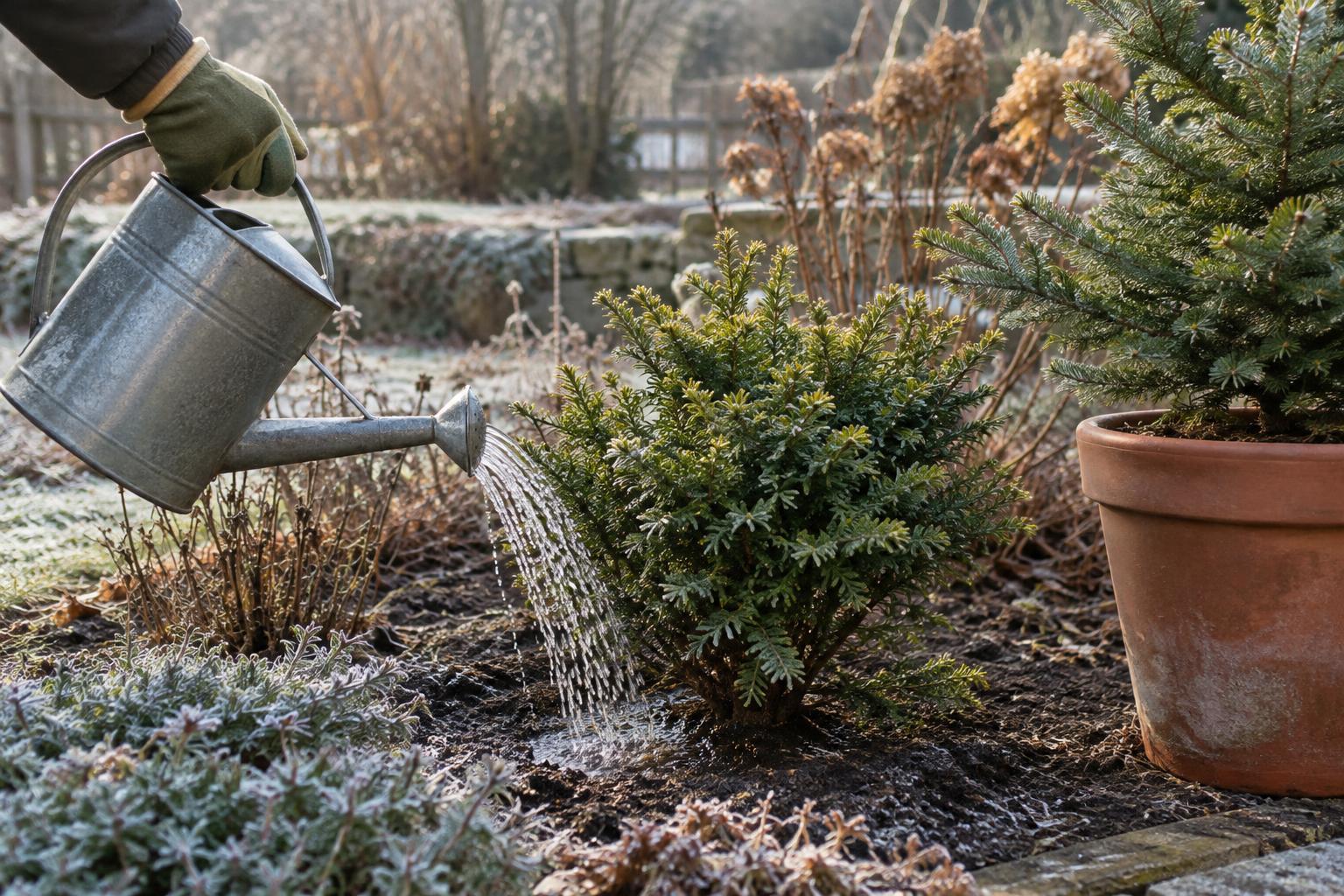
Apply water to the soil around the plant rather than against the trunk. For a tree or large shrub, cover a broad area beneath its branches; roots extend outward, not just straight down. A slow hose flow or watering can gives dry soil time to absorb water. Pause if water runs off, then continue more gently. The goal is to moisten the root zone, not leave puddles.
After watering, check the soil again to see whether moisture has moved below the surface. You may need more time for a large plant or less for a small one, depending on the soil and how dry it was. Stop when the soil is evenly moist. Persistently soggy soil can be hard on roots, so avoid repeated watering without checking conditions first.
Give containers and exposed plants extra attention
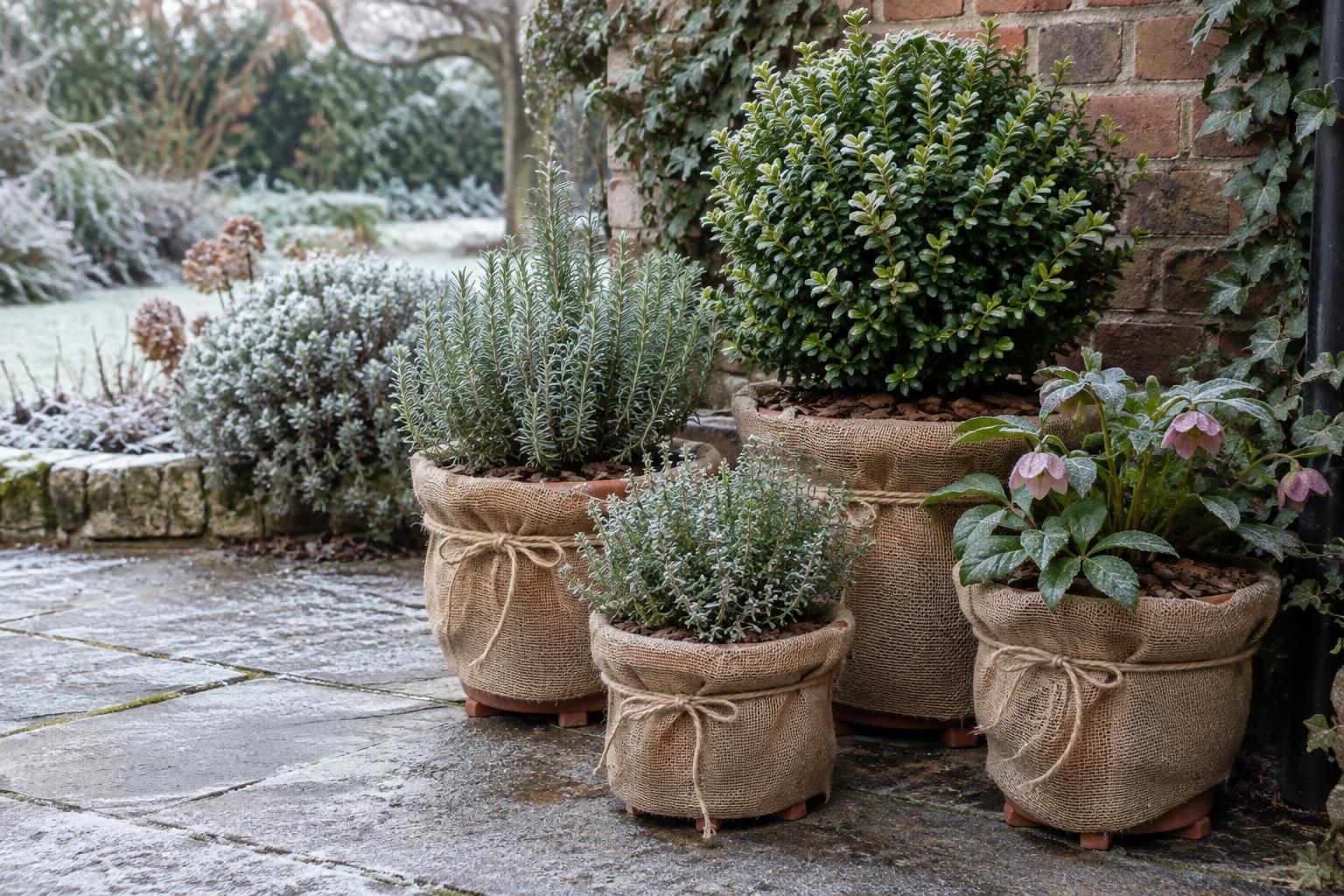
Container-grown evergreens have a limited volume of soil and can dry out faster than plants in the ground, even in winter. Check pots during thawed spells, including those beneath eaves. Water until the potting mix is moist and excess water can drain; empty saucers if they hold water. If a pot is frozen solid, wait until the mix thaws rather than pouring water onto it. Make sure drainage holes remain open.
A layer of mulch over garden soil can help limit moisture loss and moderate temperature swings. Keep it a little away from trunks and stems. In particularly exposed spots, a temporary windbreak may reduce drying winds, but it should not be wrapped tightly around the foliage. These measures support good watering habits; they do not replace checking whether the soil is actually dry.