Start with the plant, the pot, and your winter weather
A plant that survives winter in a garden bed may struggle in a container. Soil in a pot is exposed on all sides, so its roots can experience sharper temperature changes. Pots also dry out or become waterlogged more easily than open ground. Before moving anything, identify which plants are reliably hardy in your area, which need some protection, and which need a frost-free place to spend the season.
Look at the container as well as the plant. A large pot holds more soil and changes temperature more slowly than a small one. Porous or damaged pots may be more vulnerable to cracking when wet soil freezes. Young plants and recently repotted plants can also need extra attention because their roots have had less time to establish. If you are unsure how much cold a plant tolerates, take a cautious approach: give it shelter while keeping the conditions it needs for light and air.
Choose shelter without blocking drainage
Moving pots a short distance can make a useful difference. A position beside a building or behind a fence may reduce exposure to drying wind. Grouping containers together can help shelter the smaller ones, but leave enough space for air to circulate and for you to check their soil. Avoid placing pots where roof runoff will repeatedly soak them.
Good drainage matters throughout winter, especially when growth slows and plants use less water. Check that drainage holes are clear, remove saucers that hold standing water, and raise pots slightly on feet or suitable supports if water cannot escape freely. Do not let a container sit directly in a puddle. For plants that prefer drier winter conditions, a spot protected from heavy rain may be more useful than extra wrapping. Shelter should address the main risk your plants face, whether that is prolonged wet, wind, or severe cold.
Insulate roots and protect tender growth
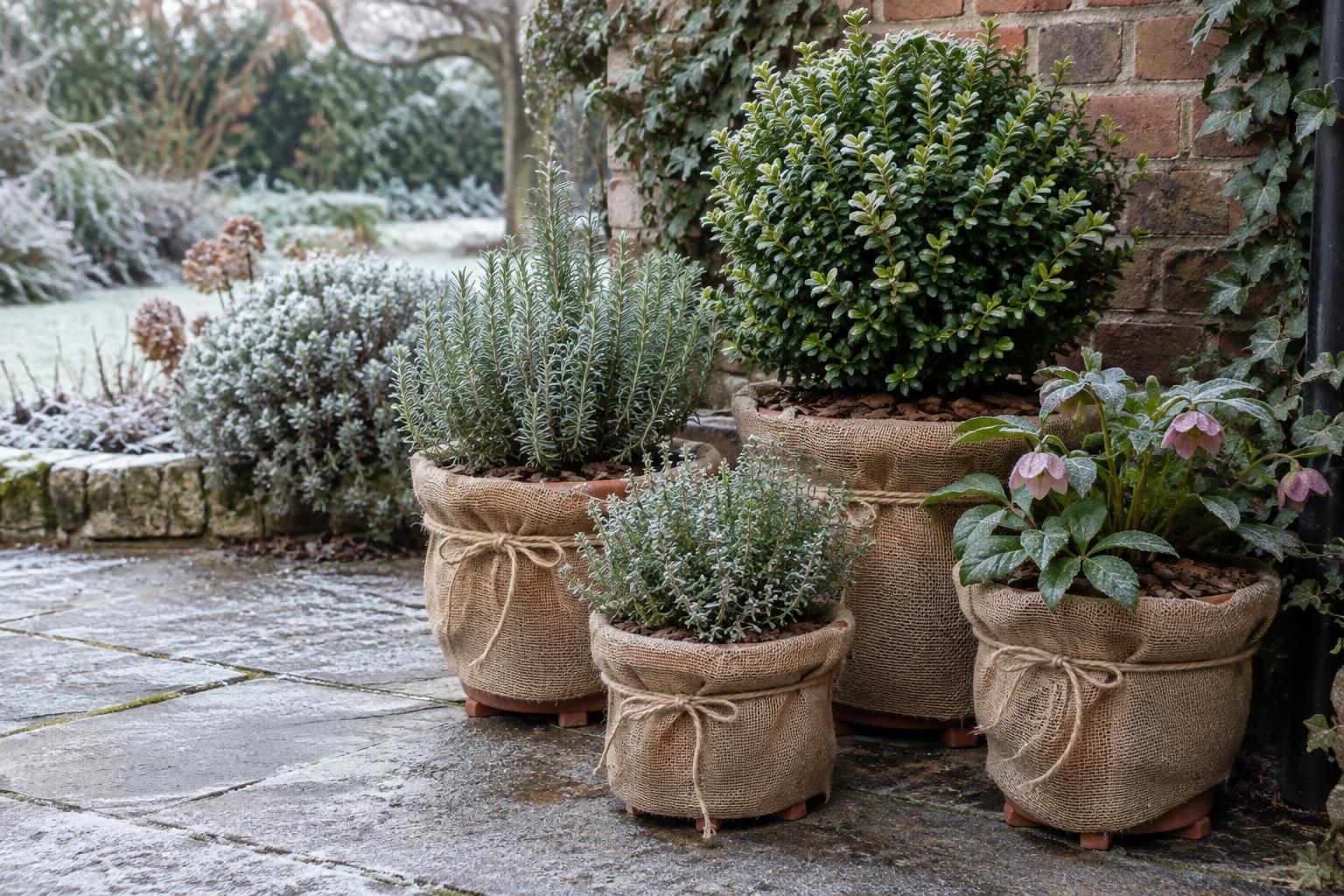
If a hardy plant is staying outside, focus first on its roots. Wrap the sides of the container with an insulating material, or place a smaller pot inside a larger one and fill the gap with dry insulating material. Keep drainage holes open. A layer of mulch on the soil surface can moderate changes in temperature, provided it does not trap moisture against the plant’s crown or stems.
Some plants also benefit from temporary protection over their leaves and stems during a cold spell. A breathable horticultural fleece can be useful, but avoid fastening it tightly around foliage or leaving it on without checking the plant. Remove or open covers when conditions improve so light and air can reach the leaves. A cover is not a substitute for moving a genuinely tender plant into suitable winter quarters.
Water less often, but keep checking
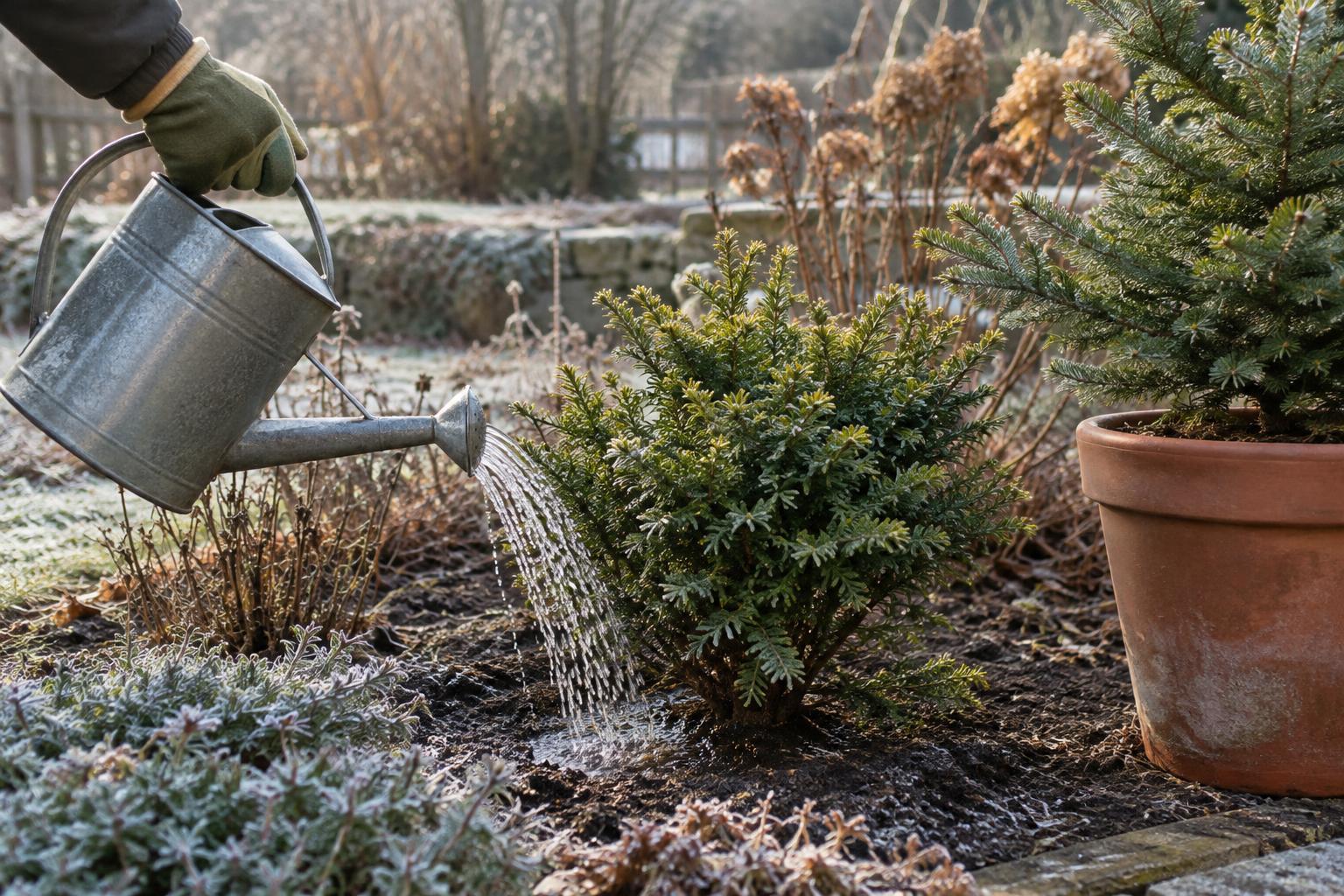
Winter care is not the same as stopping water altogether. Evergreens may continue to lose moisture from their leaves, while dormant plants usually need much less. Check the soil below the surface rather than watering by calendar. If it is dry and the weather is mild enough for water to drain, water modestly and allow excess to run out. Avoid watering into frozen soil or leaving a pot saturated before a freeze.
Inspect containers regularly after wind, heavy rain, or cold spells. Look for blocked drainage, loose coverings, broken pots, and signs that the soil has pulled away from the sides because it is too dry. Hold back on feeding while growth is slow unless a particular plant’s care requirements call for it. The aim is to keep roots in stable, reasonably healthy conditions, not to encourage soft new growth during winter.
Give tender plants an appropriate place, then ease them back out
Plants that cannot tolerate your outdoor winter conditions need a suitable protected space. Depending on the plant, that might be a bright frost-free room, a greenhouse, or another cool sheltered location. Check each plant’s needs before choosing: some need plenty of light through winter, while others rest with little top growth. Inspect plants for pests before bringing them into a shared space, and keep checking them afterward. Warm indoor rooms can be too dry or too dim for plants accustomed to outdoor conditions.
When milder weather returns, resist putting every pot straight back into full sun or an exposed position. Gradually reintroduce protected plants to outdoor light and wind, bringing them under cover again if cold nights remain likely. Remove winter wraps, inspect roots and containers, and resume watering in step with new growth. A little planning at both ends of the season makes container care easier than a last-minute scramble before frost.