Start before a hard freeze
Water left inside a hose, fitting or irrigation component can expand when it freezes. That expansion may split a hose or damage a connector, valve or sprinkler head. Winterizing is mainly about removing trapped water and protecting parts that are exposed to cold. The work is easiest while fittings still turn freely and the ground is not frozen.
The right approach depends on your climate and equipment. In places with sustained freezing temperatures, an in-ground irrigation system may need a more thorough shutdown than a removable hose. In milder areas, you may only need to prepare for occasional cold snaps. Before starting, locate the shutoff valves for your outdoor faucets and irrigation system, and check the instructions for any controller, backflow device or automatic drain valve you own.
Drain and store garden hoses
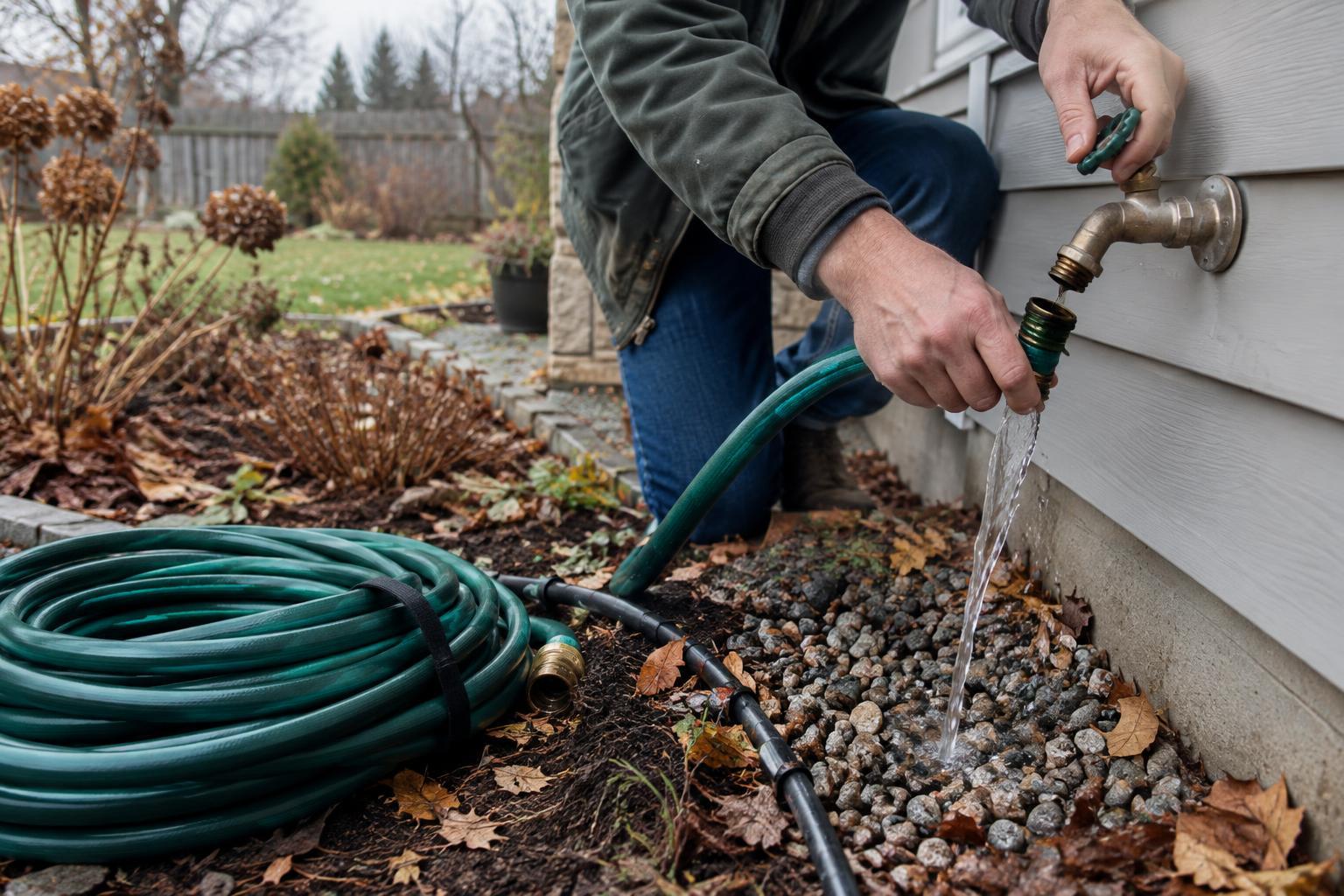
Turn off the faucet, then disconnect the hose. Leaving it attached can trap water near the faucet, even if the hose itself looks empty. Remove spray nozzles, splitters, quick-connect fittings and hose-end timers as well. Open or detach these accessories so any water inside can drain, and store electronic timers according to their instructions.
To empty the hose, stretch it out without sharp bends and raise one end gradually as you work toward the other. Coil it loosely once it has drained. Avoid tight kinks, which can stress an older hose. A shed, garage or other sheltered spot helps keep the hose out of winter sun and weather; if the space freezes, draining it thoroughly is especially important. Take this chance to inspect washers and couplings so worn parts can be replaced before spring.
Prepare outdoor faucets
If an outdoor faucet has an indoor shutoff valve, close that valve first. Open the outdoor faucet to release the water remaining between the shutoff and the spout. Some shutoff valves also have a small drain port; use it only as directed for your setup, with a container ready to catch water. Once drained, follow the valve’s instructions for its winter position.
A frost-free faucet is designed to shut off farther inside the building, but it still needs to drain. A connected hose, splitter or timer can prevent that drainage, so remove attachments before freezing weather. An insulated faucet cover may offer added protection for an exposed fixture, but it is not a substitute for shutting off and draining a faucet when your plumbing arrangement calls for it. If you cannot identify the right shutoff or a faucet continues to drip, have it checked rather than forcing a stiff valve.
Handle drip systems and sprinklers by type
For a simple drip system connected to a hose bib, shut off the supply and disconnect the timer, filter and pressure regulator. Drain removable components and store them where they will not freeze. Open the ends of drip lines where the design allows, and let water escape from low points before closing them again or leaving them as the manufacturer directs. Tubing laid above ground can be coiled and stored if that is practical; tubing left in place should be secured so winter weather does not move it.
An in-ground sprinkler system needs a plan suited to its valves, pipe layout and local winters. Some systems have manual or automatic drains, while others require water to be cleared from the lines with compressed air. Incorrect air pressure or technique can damage components or cause injury, so do not improvise a blowout. Consult the system instructions or use a qualified irrigation service if you are unsure. Backflow prevention assemblies may have separate winterizing requirements and should be handled according to their instructions and local requirements.
Finish with a simple spring-ready check
After draining the system, switch an automatic controller to its off or rain setting as its instructions recommend. Label any shutoff valves or detached components that might be hard to identify later. Store small fittings together, and note any leaks, cracked connectors or uneven sprinkler coverage you noticed during the growing season.
Winterizing does not have to mean dismantling every part of a garden watering setup. The useful goal is to know where water could remain, remove it where you can, and get help with systems that need specialized equipment. When watering season returns, reconnect components carefully and bring the water back on gradually while checking for leaks.