Plan where the snow will go
Before the first heavy snowfall, look at the edges of your driveway, paths and steps. Identify young trees, low shrubs, perennial beds and areas where spring bulbs may be planted. If you can, mark their boundaries with stakes tall enough to remain visible above the snow. A few markers can prevent an accidental pass with a shovel or snowblower across a dormant bed.
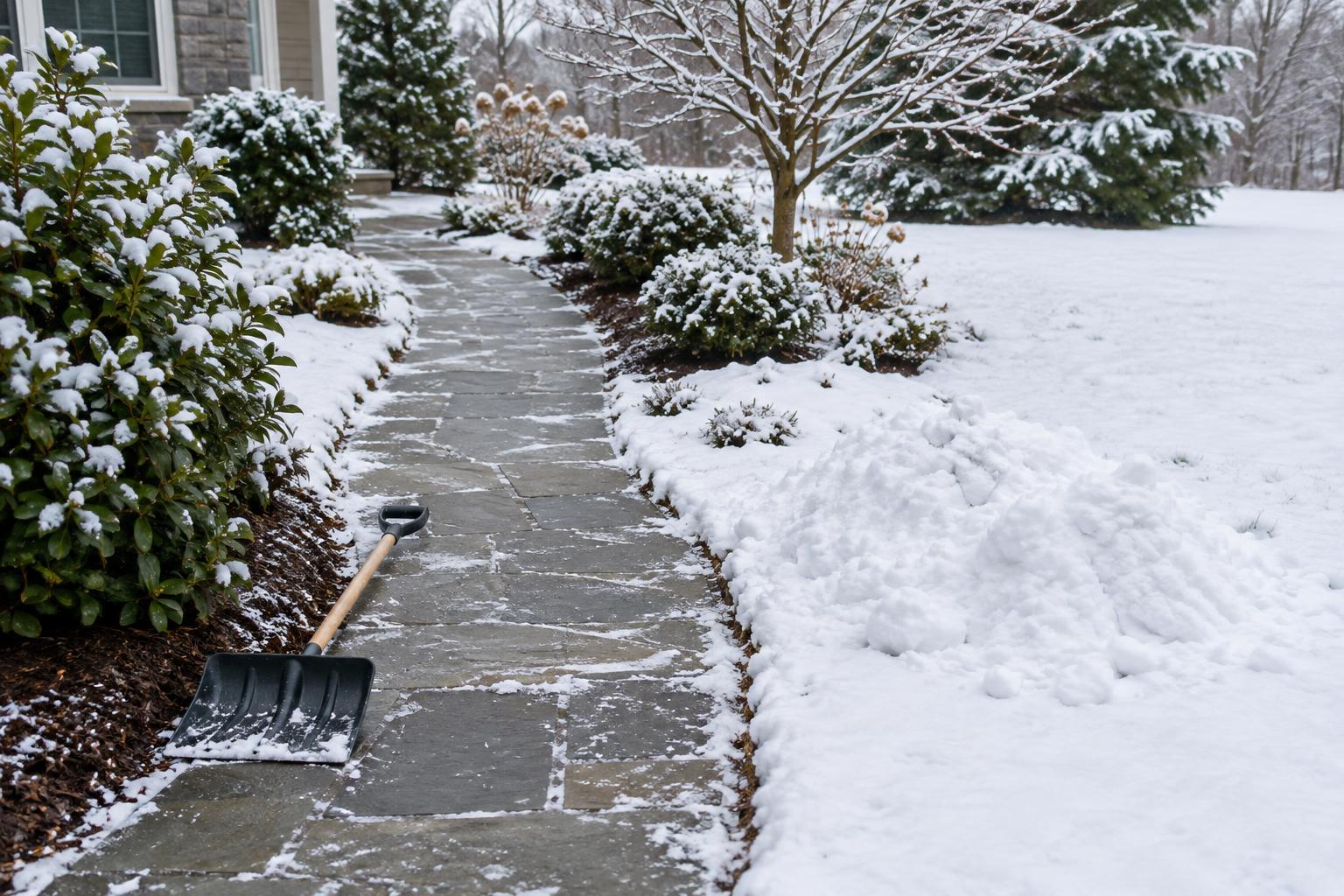
Choose places to pile snow that are away from delicate plants and where meltwater can drain without collecting against a building or refreezing on a walkway. Snow pushed from a driveway may contain grit, road salt or other deicers, so avoid stacking it over garden soil when another location is available. Leave room for future storms: a small pile in an inconvenient spot can become difficult to move once it freezes.
Clear paths without scraping into beds
Remove snow from frequently used paths while it is still loose, if conditions make it safe to do so. A shovel or snow pusher is usually easier to control near planting areas than a powered machine. Keep the blade on the path rather than digging down along the border. If you cannot see the edge, use your markers as a guide and leave a narrow strip of snow instead of risking damage to roots, stems or edging.
When using a snowblower, direct the discharge toward an open area rather than onto shrubs. Repeated blasts can bend branches and build a dense pile that is slow to melt. Do not throw heavy, compacted snow onto plantings, particularly evergreens. A light, natural covering can help insulate plants, but a mound scraped from pavement has a different weight and may carry materials you would rather keep out of the bed.
Handle ice with a light touch
For a small icy patch, try a suitable scraper or ice chopper used gently on the paving surface. Work from an exposed edge instead of striking downward near a planted border. If you use traction material such as sand or grit, apply only what is needed and sweep up excess after the thaw where practical. Traction material may improve footing, but it does not melt ice.
Deicers can help on walking surfaces, yet products differ in how they work and none should be treated as harmless to nearby plants. Follow the label, use the smallest effective amount and keep granules out of beds and off foliage. Avoid spreading deicer just before clearing snow, which can move the treated slush into the garden. If a path regularly drains toward valued plants, consider changing where you shovel or using traction material there instead. In very cold conditions, a product may not work as expected, so check its labeled temperature range rather than adding more.
Protect branches while snow is on the plants
It is often best to leave light, fluffy snow on shrubs and trees. If branches are noticeably bending under a heavy load, gently brush loose snow away with your hands or a soft broom, working from the outer branches upward so you do not pull them down farther. Stand clear of larger limbs that could shift unexpectedly.
Leave branches alone when snow is frozen onto them. Tugging or knocking off ice can break twigs or tear bark. Let the ice melt on its own, and keep people away from overhanging branches that appear unstable. For a shrub that repeatedly spreads into a path under snow, consider a temporary support before the next storm or a change to its placement or pruning plan during an appropriate season.
Check the garden as the snow melts
After a thaw, look for snow piles that are trapping water against plants or sending runoff across paths. Move remaining snow only if it can be done without digging into soft, wet soil. Once the ground is workable, sweep leftover grit from paved areas and note where deicer-laden snow was piled. If you see damaged stems, wait until you can clearly distinguish broken growth from healthy growth before tidying the plant.
Use what you learn to make next winter easier. A wider path edge, clearer markers or a designated snow-storage area can reduce the need to work close to plants in poor visibility. The goal is not to keep every flake out of the garden. It is to keep access routes usable while avoiding heavy snow piles, rough tools and unnecessary deicer near the plants you want to see thrive in spring.