Start with your garden, not a rule
There is no single winner between seeds and transplants. A seed is inexpensive, easy to store and available in a wide range of varieties. A transplant, sometimes called a seedling or a start, is a young plant that has already completed its earliest growth. It can save time in the garden, particularly when outdoor growing weather is brief. The better choice depends on the crop, your local conditions and how much attention you can give young plants.
Ask three questions before buying: How long does this crop need to grow? Does it tolerate having its roots disturbed? Can I provide suitable conditions while it is young? Your answers may differ from one bed to the next. Many gardeners sow some crops directly outdoors, buy a few established plants and start selected seeds indoors. That mix is often more useful than committing to only one method.
When seeds make more sense
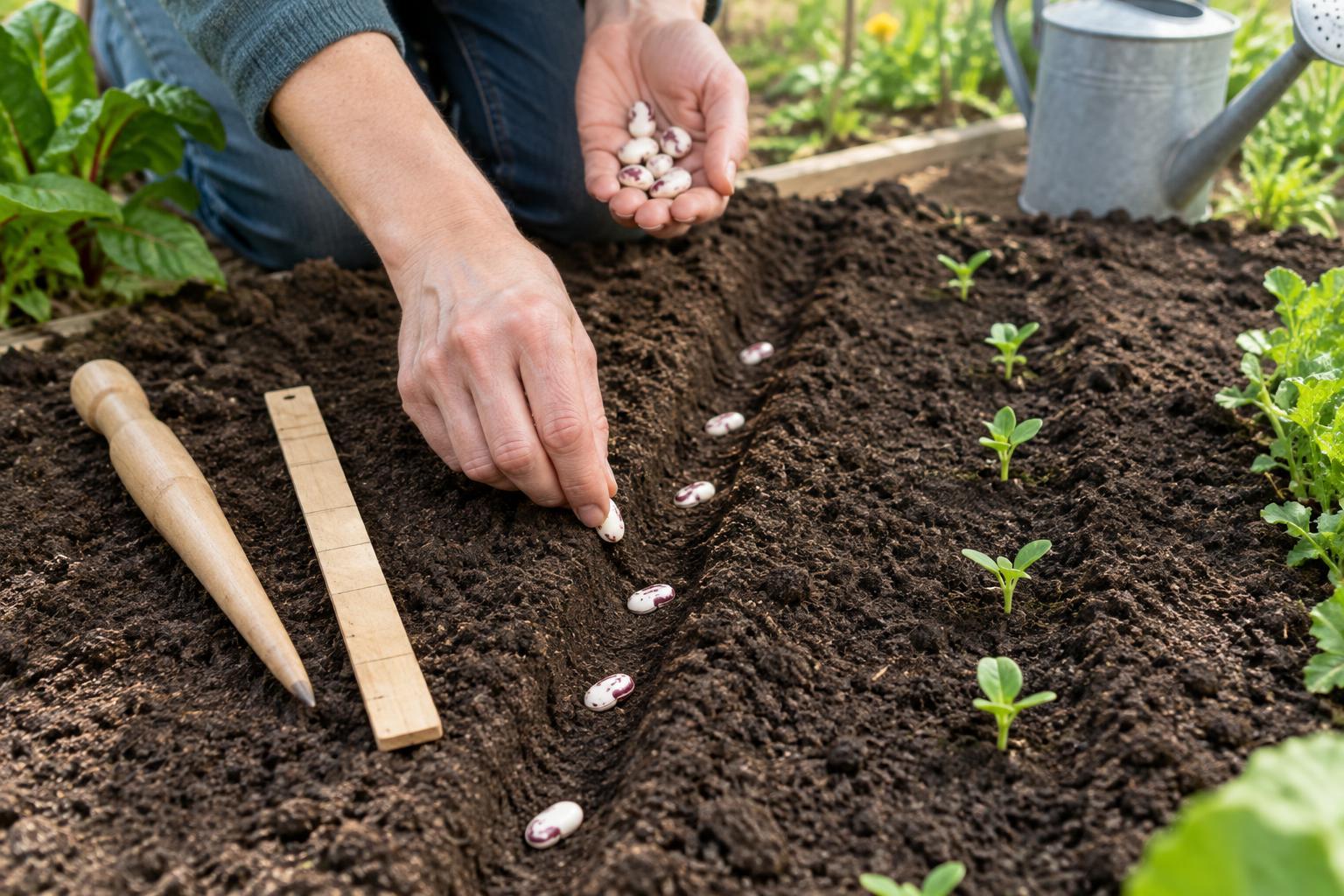
Direct sowing works especially well for crops that grow quickly or dislike transplanting. Radishes, peas, beans and many leafy greens are commonly sown where they will grow. Carrots are usually best started in place because their developing roots can be disrupted by moving them. Squash and cucumbers can also be direct-sown once conditions are warm enough, although their suitability for this approach depends on the length of your season.
Seeds are useful when you want to fill a long row, grow several varieties or make repeated small sowings rather than harvest everything at once. They do require patience and close attention at first. The soil must be suitable for the crop, and the surface should stay appropriately moist while seeds germinate. Check the packet for sowing depth, spacing and temperature guidance; a seed planted too deeply or into unsuitable conditions may never emerge.
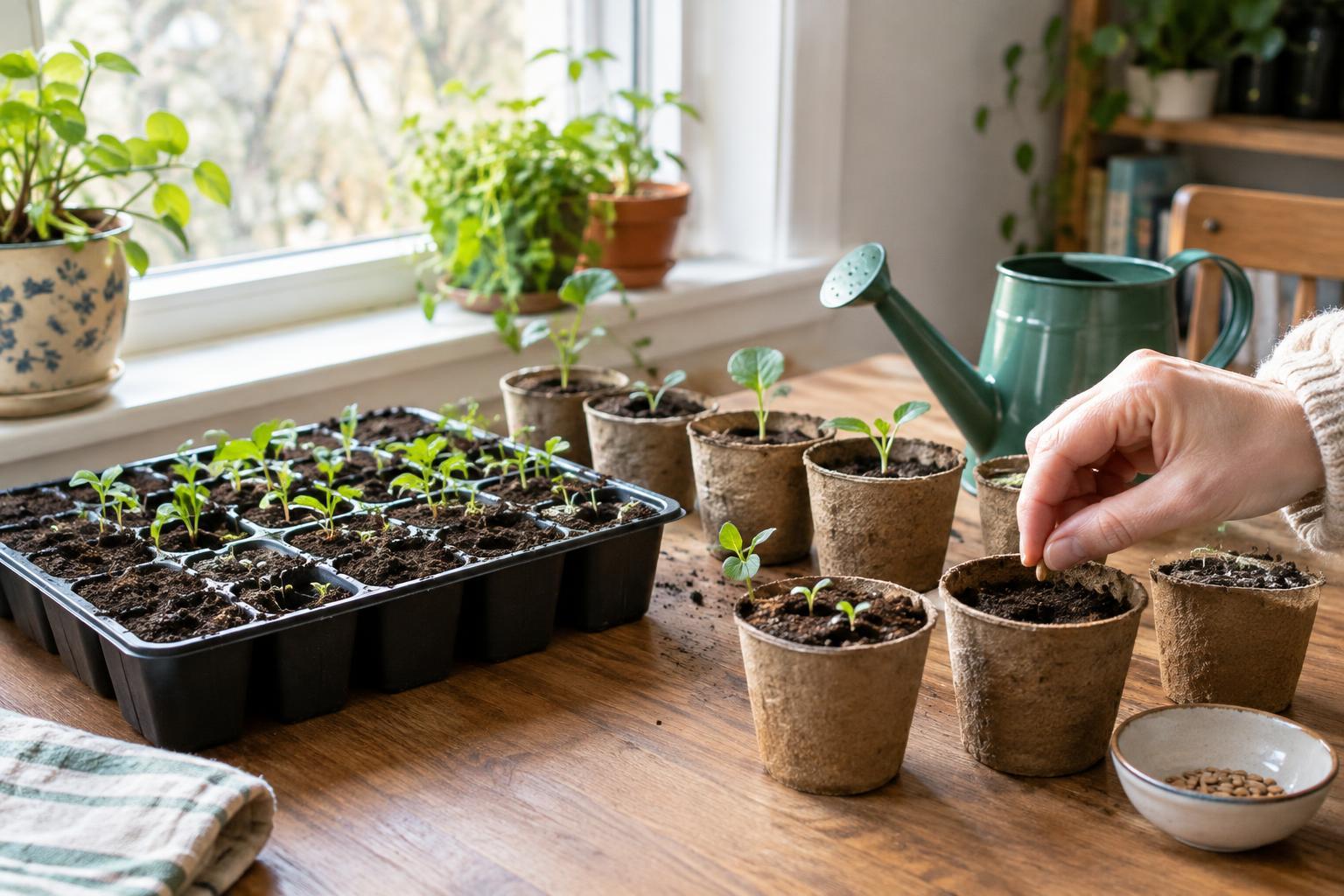
You can also start seeds in containers before moving them outside. This offers more control over their early growing conditions, but it adds work. Seedlings need adequate light, careful watering and a gradual introduction to outdoor conditions before planting. If you lack a bright growing setup or time to tend trays, buying a few healthy transplants may be simpler.
When transplants earn their space
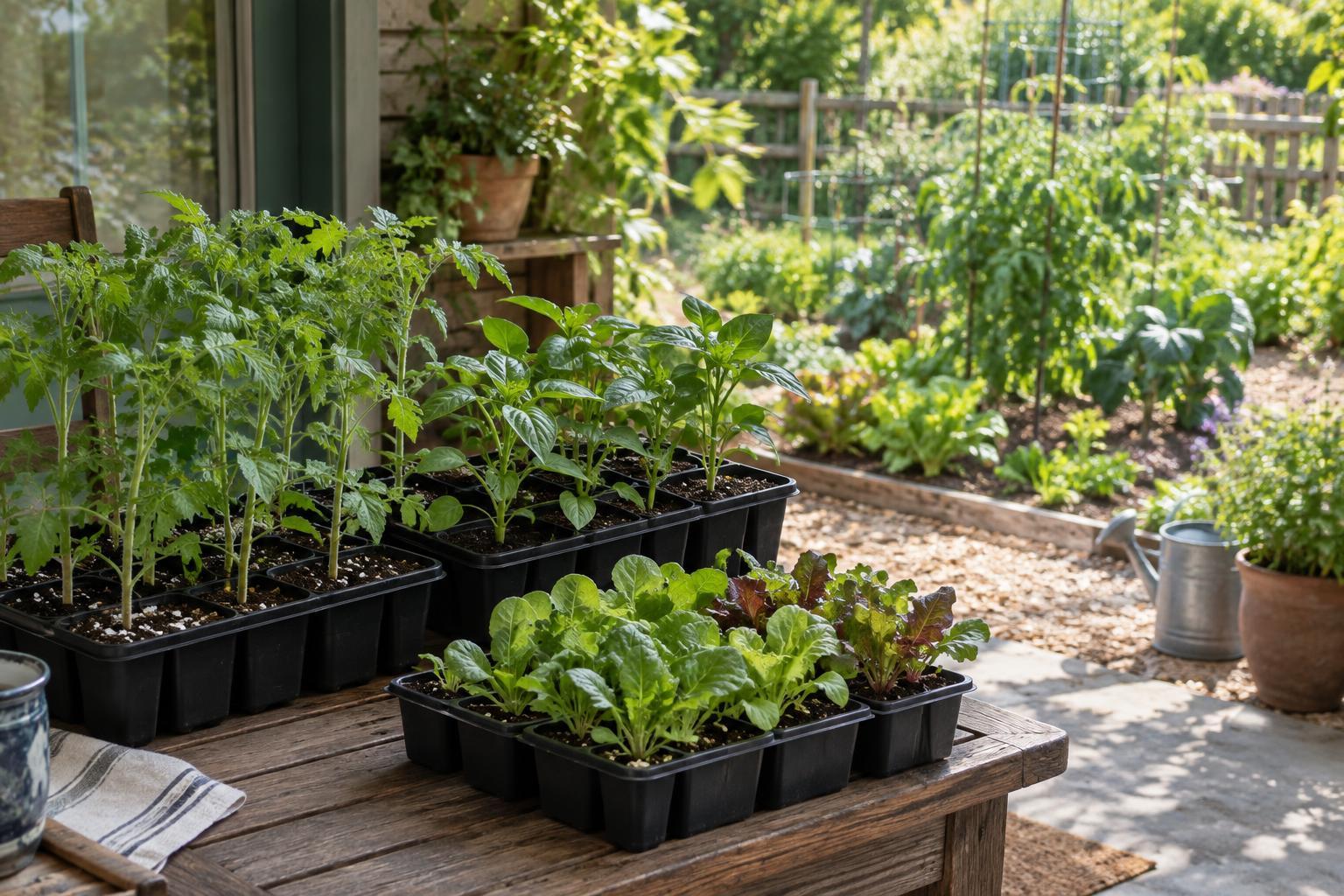
Transplants are helpful for crops that need a longer period of growth before harvest, such as tomatoes and peppers in many climates. They can also give you a quicker start with herbs or flowers when you want to see the shape of a planting sooner. Buying starts lets you skip indoor seed care, though the price per plant is generally higher and the range of varieties may be narrower than a seed catalog offers.
Look for sturdy plants with healthy-looking foliage and room to grow in their containers. Avoid choosing a plant solely because it is the largest on the bench: a smaller, well-established start may settle in better than one that has spent too long in a cramped pot. If roots are densely circling the container, the plant may need extra care to establish. Check that the crop is suitable for planting outdoors in your area before bringing it home.
Even a strong transplant needs a gentle transition. Plants raised in sheltered conditions may need to be hardened off by spending gradually longer periods outside, with protection from harsh sun, wind or cold at first. Water after planting and keep an eye on soil moisture while roots establish. A head start is valuable, but it does not remove the need to match planting time to the weather.
Let the season and your routine decide
Your growing season can change the calculation. Where soil warms early and remains suitable for months, direct sowing warm-season crops may be straightforward. Where warmth arrives late or fades quickly, an established transplant may have more time to mature outdoors. Cool-season crops have their own timing: some can be sown while conditions are mild, rather than waiting for the warmest part of the year. Local planting guidance and seed-packet instructions are better starting points than a calendar date borrowed from another climate.
Consider your schedule, too. Direct-sown seeds need regular checks during germination, and young seedlings may need thinning so they have enough space. Transplants reduce that early wait but need careful planting and watering. If you travel often or have limited time, choose crops and methods you can tend consistently. A modest number of well-cared-for plants is more useful than a crowded bed started with the best intentions.
A simple way to use both
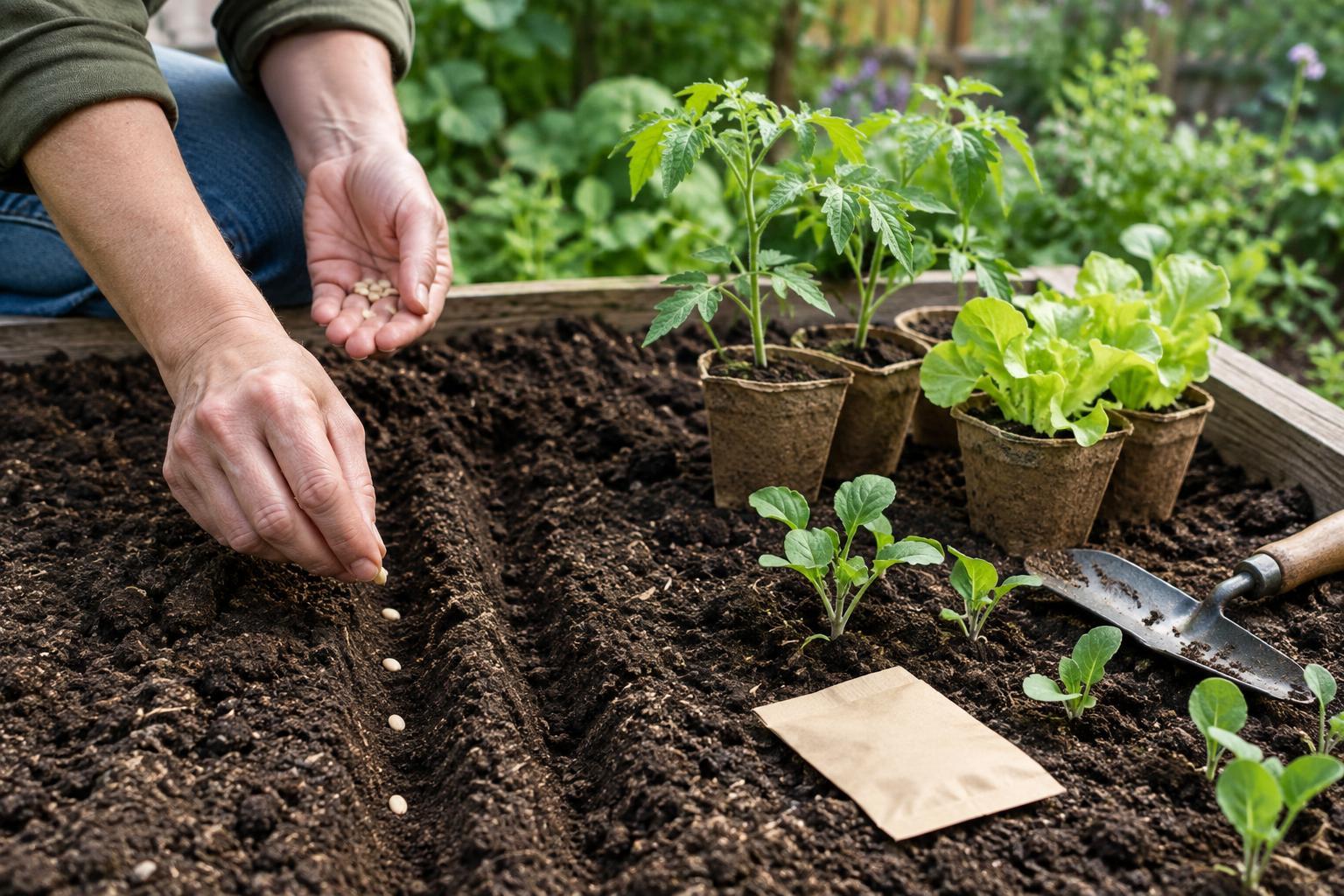
For a manageable first plan, direct-sow a few short-season crops, choose transplants for one or two longer-growing favorites, and experiment with starting a small tray of seeds if you have a suitable spot. Label what you plant and note when it goes into the garden. Those observations will help you adjust next time without expecting every crop to behave the same way.
Seeds and transplants are tools, not competing philosophies. Choose seeds when a crop establishes well in place or when variety and quantity matter most. Choose transplants when an early start or convenience is worth the extra cost. Giving each plant the conditions it needs after planting matters more than how it began.