Start with the seed and the soil
Direct-sowing means planting seeds in the bed or container where the plants will grow, rather than starting them indoors and transplanting them later. It works especially well for many root crops and for plants that establish readily outdoors. Before sowing, check the seed packet for planting depth, final plant spacing, row spacing and suitable soil conditions. Those directions are a better starting point than a single rule applied to every crop.
Prepare a patch of loose, reasonably level soil. Remove large stones, clumps and weeds that could make it difficult for small seedlings to emerge or compete for space. Water very dry soil before planting, then let excess water drain. The aim is a surface that holds moisture around the seed without becoming a compacted crust. If the soil is cold or saturated, waiting for more suitable conditions may be more useful than adjusting the sowing depth.
Set a depth the seed can emerge from
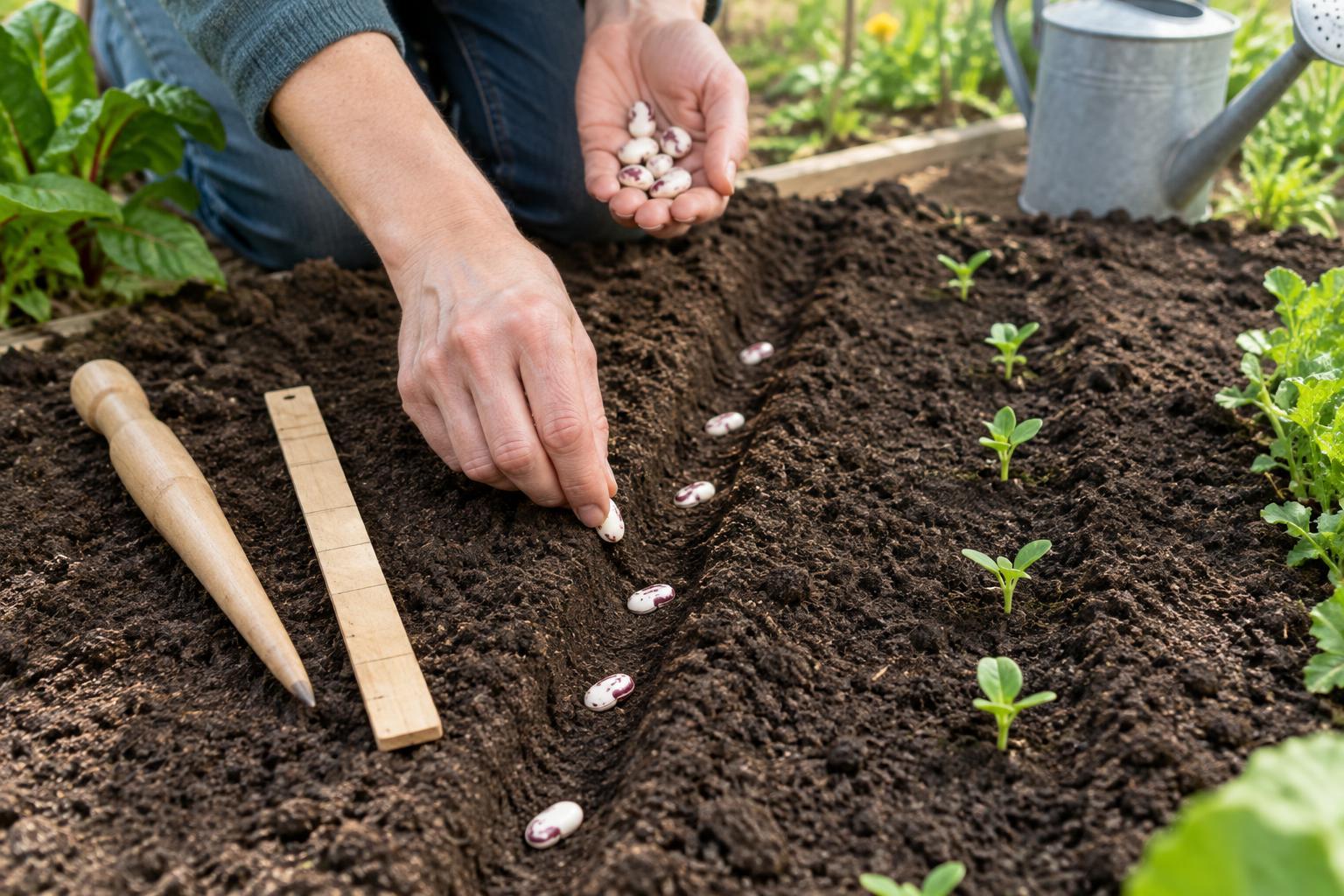
A seed needs contact with moist soil, but it also needs enough stored energy to reach the surface. As a rough guide when no specific instructions are available, cover many seeds with soil to a depth of about two to three times their diameter. Treat that as a fallback, not a replacement for the packet: some tiny seeds need only a light press onto the surface because they require light to germinate. Others have particular depth requirements.
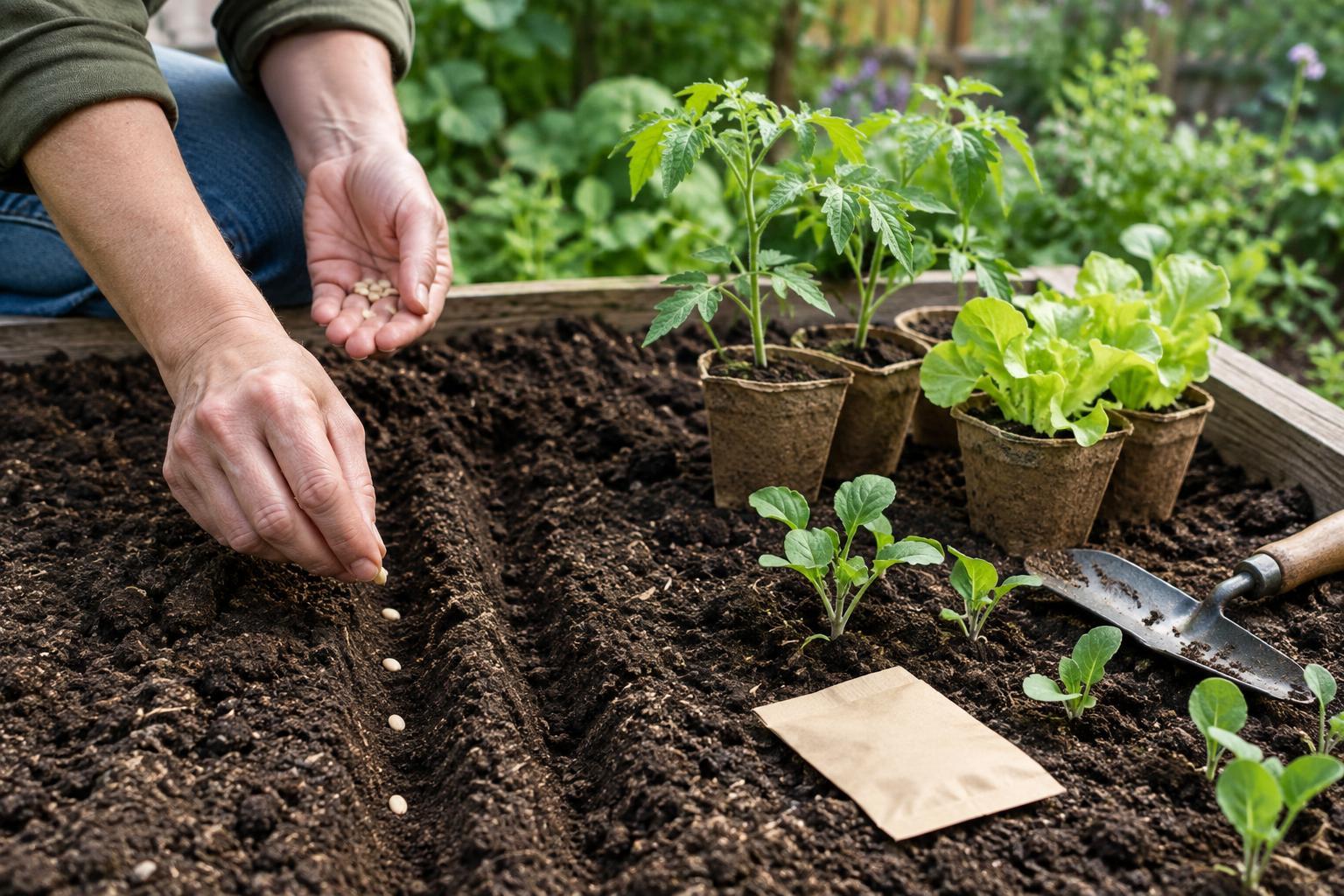
Make a shallow furrow with a finger, stick or the edge of a trowel, using a ruler if the depth is hard to judge. Set the seeds in place, cover them with fine soil to the recommended depth and gently firm the surface for good soil contact. Avoid burying small seeds beneath coarse mulch. In heavy soil that tends to crust, a fine covering can make emergence easier, provided it still suits the seed’s directions. Label the spot before the first seedlings appear.
Plan spacing for mature plants, not just seeds
Spacing affects how much light, water and growing room each plant has later. Read packet spacing as two separate measures where both are given: the distance between plants in a row and the distance between rows. For a small bed, you may not need formal rows, but the recommended distance between mature plants still matters. Consider how you will reach plants for watering, weeding and harvesting without stepping on the growing area.
Some seeds are easy to place individually at their final spacing. Tiny seeds are harder to handle, and not every seed will germinate, so gardeners often sow them a little closer and thin the seedlings later. This does not mean scattering a thick layer of seed. Try to distribute seeds as evenly as you can; mixing very fine seed with a little dry sand may make it easier to see where you have sown, though it will not guarantee even spacing.
Water gently and thin at the right time
After sowing, water with a gentle spray or a watering can fitted with a fine rose so the seeds stay in place. Keep the soil consistently moist while they germinate, checking the surface rather than watering by a fixed schedule. A strong stream can wash shallow seeds into piles or expose them. In containers, make sure excess water can drain away; outdoors, watch for both drying winds and prolonged wet weather.
Once seedlings are large enough to identify and handle, thin crowded patches to the spacing on the packet. Choose sturdy seedlings and remove the extras carefully, disturbing the ones you keep as little as possible. Snipping unwanted seedlings at soil level can be useful where roots are closely tangled. Thinning may feel wasteful, but it gives the remaining plants the space you planned for when you sowed them.
Adjust the method to your space
A long, straight row is not essential. You can sow in short rows, a grid or small clusters if each surviving plant will have suitable room at maturity. In a container, check both the spacing and the expected root space; fitting seeds across the surface is not the same as having enough room to grow them on. For plants harvested while young, closer spacing may be practical, but thin or harvest promptly before crowding becomes a problem.
Keep a simple note of the crop, variety, sowing location and depth you used. If emergence is patchy, that record helps you consider likely causes, such as uneven moisture, a crusted surface or seeds placed too deeply. Direct-sowing becomes easier with practice: follow the seed’s needs, make a consistent furrow, allow room for mature plants and adjust what you do next time based on what grows well in your garden.