Start with the shade you actually need
Before comparing products, note when you use the patio most. A dining table used at midday needs a different shade pattern from a reading chair occupied in the late afternoon. Watch where shadows fall over a few days, paying attention to low sun that may shine beneath an overhead cover. If you are planning a new patio, mark out the likely seating and walking areas first; shading the entire paved surface may be unnecessary.
Think about comfort beyond direct sun. A cover can make a seat more inviting, but it may also darken a nearby room or restrict views of the garden. Decide whether you want a permanent outdoor-room feel, shade that can be adjusted through the day, or something you can remove when the season changes. Those priorities will narrow the choice faster than appearance alone.
Choose a pergola for a defined outdoor room
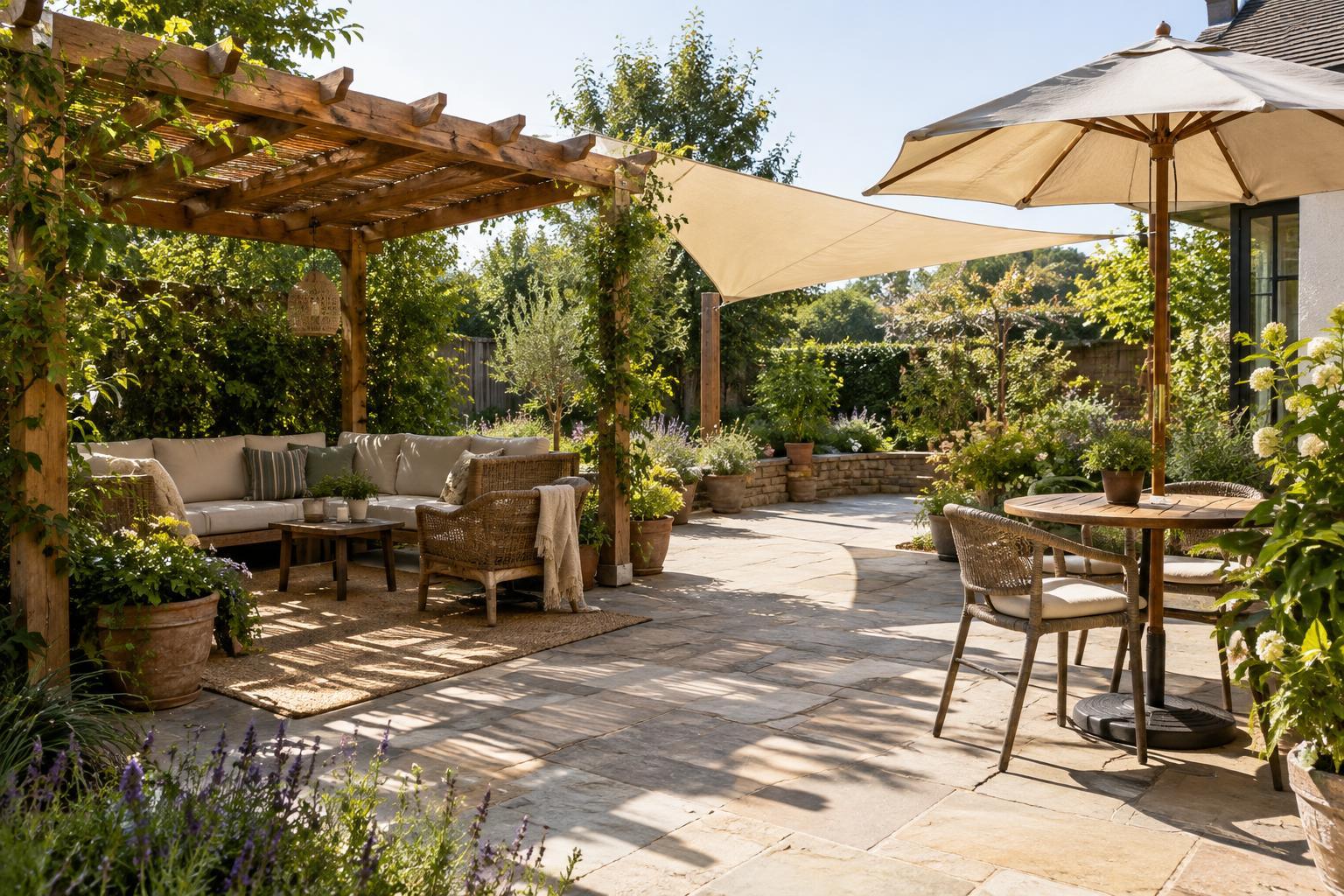
A pergola gives a patio a strong visual framework. It can define a dining area, support suitable climbing plants, and hold features such as adjustable slats or a purpose-made canopy. An open pergola, however, is not automatically a reliable shade source: widely spaced beams may cast attractive stripes while leaving people in full sun for much of the day. Consider the roof design and the sun’s angle before treating it as a practical cover.
The trade-off is commitment. Posts need appropriate foundations, and an attached pergola brings questions about the wall, drainage, and access for maintenance. Check any local requirements and use qualified help where structural work calls for it. Plants can soften the structure, but they also need pruning and may drop leaves onto furniture. A pergola is a good fit when you want the patio’s layout to feel settled and are willing to plan for installation and ongoing care.
Choose a shade sail for broad, light-looking coverage
A shade sail can cover an awkwardly shaped seating area without filling it with posts. Its high corners often give a patio an open feel, and overlapping sails can add coverage where one piece leaves gaps. The shape on paper is not the whole shaded area, though: the sun moves, and a sail’s edges may not shade the places you expect. Test the proposed corner positions with string or a sketch, then consider the patio at the hours you use it.
Tension and anchor points matter. A sail needs suitable fixings and enough clearance to avoid doors, branches, and people’s heads. Fabric and installation details vary, so check the product’s guidance on wind, rain, and removal rather than assuming every sail can stay up year-round. A sail suits a space where you want generous overhead shade and can provide sound anchor points, but it offers less day-to-day adjustment than an umbrella.
Choose an umbrella for flexible, targeted shade
An umbrella is often the simplest way to shade a table or a pair of chairs. You can choose a center-pole design for a table with a suitable opening, or an offset design when you want the pole away from the seating area. Tilt and rotation features can help with changing sun, though the shade still has to be repositioned as the day progresses.
Check the base as carefully as the canopy. Its size and weight need to suit the umbrella and its location, especially on an exposed patio. Also allow room to open the canopy without striking a wall, roof edge, or planting. Many umbrellas are best closed when unattended or in windy conditions; follow the maker’s instructions. An umbrella is a practical choice if you rent, expect to rearrange the furniture, or only need shade over one small activity zone.
Make the final choice around your patio
Compare the options against a short list: the hours you need shade, the area to cover, available anchor or foundation locations, and the effort you can give to upkeep. Include the view from inside the house. A large fixed cover may be welcome on a bright patio but less appealing if it shades a room you value for daylight. In a windy spot, consider how easily you can secure, close, or remove the shade when needed.
You do not have to solve the whole patio with one feature. An umbrella may handle afternoon glare beside a pergola, while a small sail can shade a play or lounging area away from the main table. Start with the place people actually sit, leave comfortable routes around the furniture, and choose the least complicated option that provides useful shade at the right time.