Start with the weather your furniture will face
A sheltered porch and an exposed patio ask different things of the same chair. Before comparing materials, note where the furniture will stand, how much direct sun it receives and whether rain can drain away. Think about your climate’s recurring conditions, too: humid summers, salty coastal air, strong winds or winters with repeated freezing and thawing. Furniture that works well in one setting may need more care in another.
Consider how you will use and store each piece. A dining set left outside year-round needs different attention from folding chairs brought out for occasional meals. If you have room to store cushions but not frames, choose frames suited to outdoor exposure and cushions you can move easily. The best material is not necessarily the one that needs the least care; it is the one whose care routine you can realistically keep up.
Compare metal for weight, heat and corrosion
Aluminum is a practical choice when you want furniture that is easy to rearrange. It does not rust like iron or ordinary steel, although finishes and fittings can still wear, especially in harsh conditions. Its light weight is less helpful on a windy, open site: look for a sturdy design, and plan where loose chairs will go during storms. Dark metal left in direct sun can also become uncomfortably hot to touch.
Steel and iron offer weight that can help furniture feel steady, but exposed metal may rust when protective coatings are chipped or worn. In wet or coastal settings, inspect joints and scratches rather than judging a piece by its finish alone. Stainless steel can be an option, though fittings, finish and upkeep still matter. Whatever metal you choose, check how the frame joins together and whether water can collect in hollow parts.
Choose wood with maintenance in mind
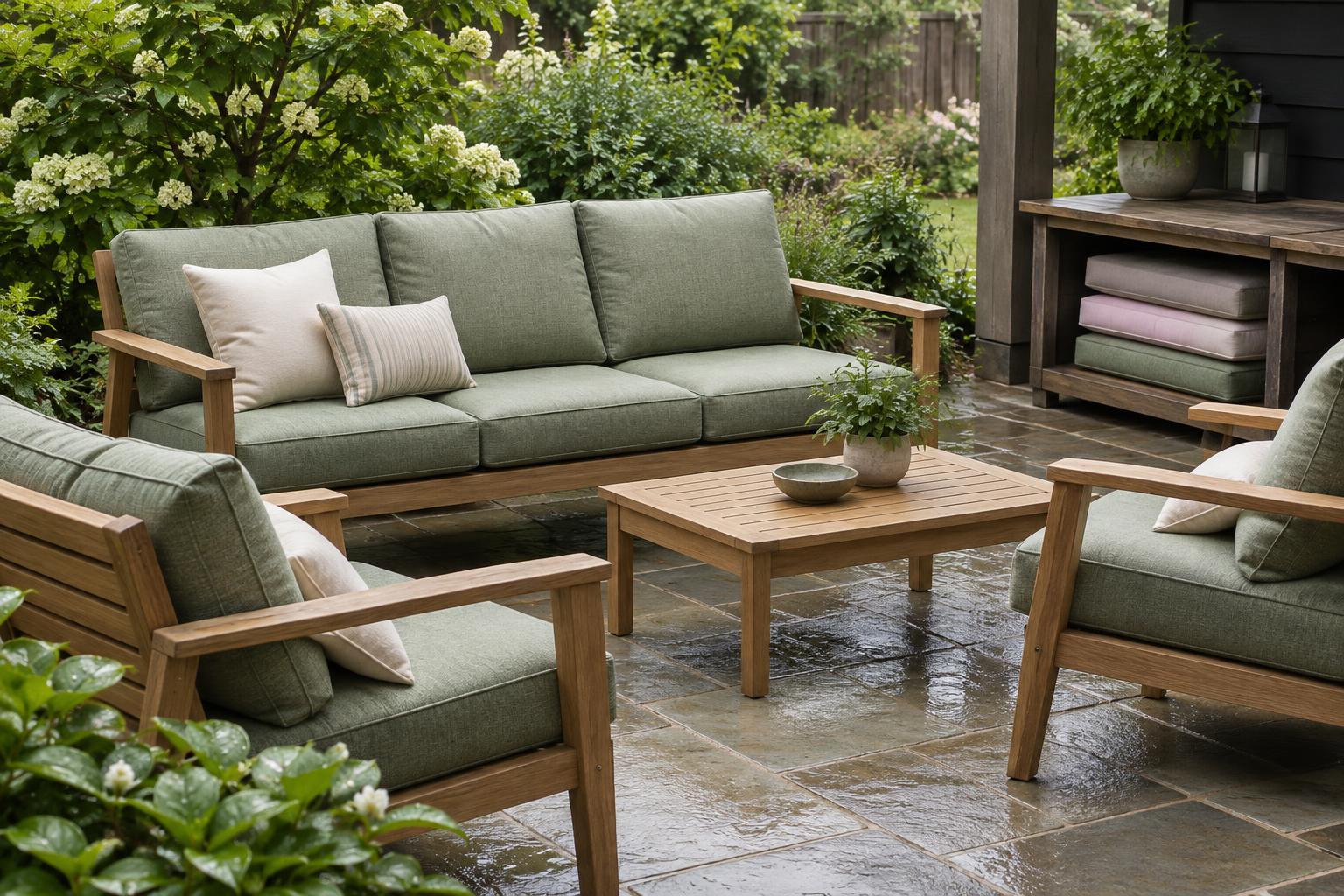
Wood gives an outdoor room a warm look, but species and construction make a difference. Teak is often chosen for its outdoor durability; other hardwoods, including eucalyptus and acacia, vary in how well they handle exposure. Product labels alone cannot tell you how a chair will behave on your patio. Look for solid joints, smooth edges and a care guide suited to the specific wood and finish.
Most outdoor wood benefits from cleaning and periodic inspection. Some finishes need renewing to maintain their appearance, while unfinished wood may change color as it weathers. Persistent dampness is particularly worth avoiding: use a well-drained surface and let furniture dry before covering or storing it. If you enjoy maintaining wood, that routine may be worthwhile. If you want to put furniture away with minimal effort, another material may be a better fit.
Look closely at plastic and woven designs
Plastic and recycled-plastic furniture can be easy to clean and need little surface treatment. Quality still varies. Check that seats feel supportive, edges are finished well and the piece is stable on your patio surface. In very sunny locations, color and surface appearance may change over time; in windy locations, a lightweight chair may need securing or storing. A heavier piece may be easier to live with than one you must constantly retrieve.
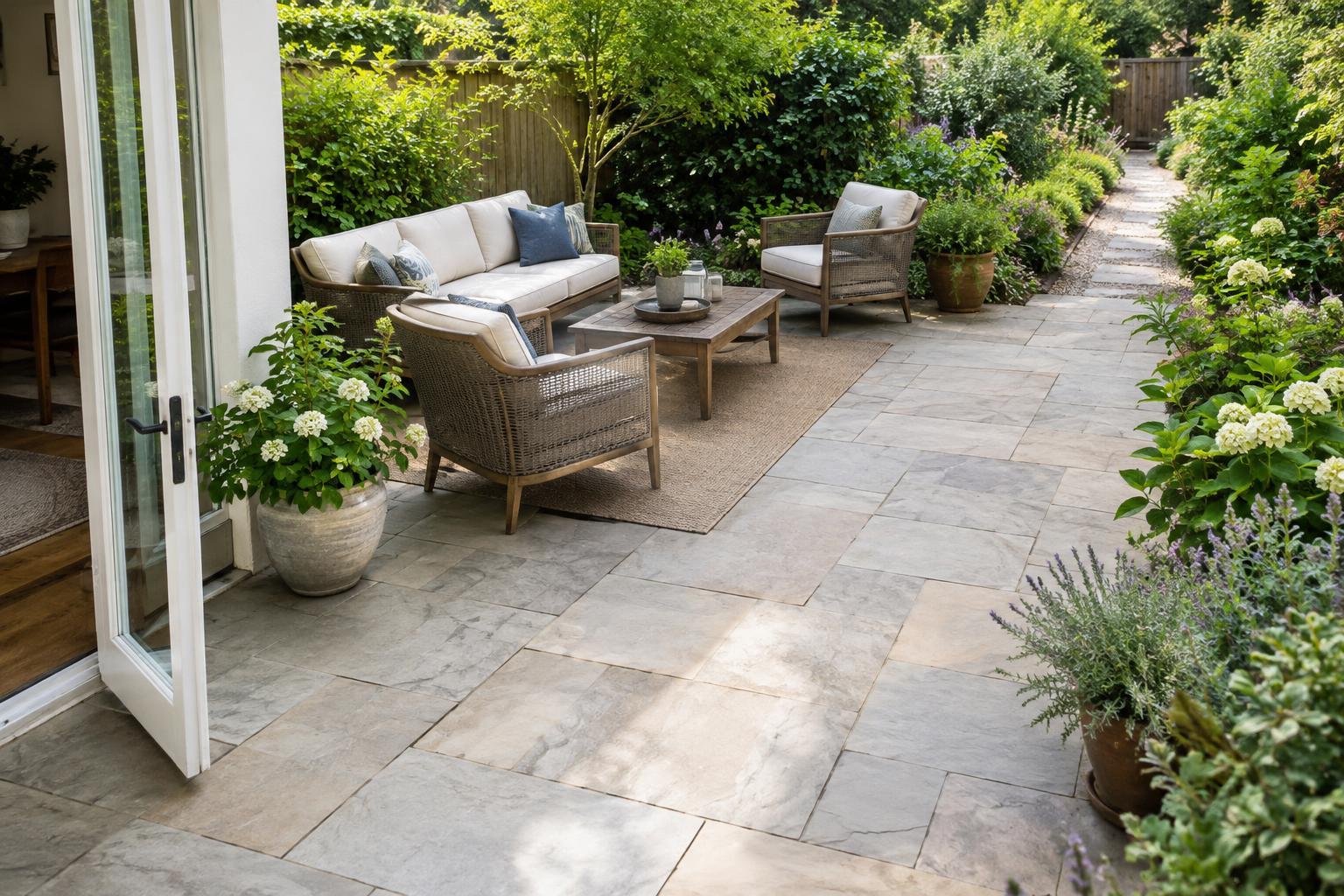
Woven outdoor furniture can create a softer, more relaxed look. Many pieces use synthetic strands around a metal frame, so assess both parts rather than the weave alone. Loose strands can catch on clothing and may be difficult to repair neatly. Natural woven materials are better reserved for protected spaces unless the maker specifies otherwise. Whatever the weave, choose a design you can clean between the strands and allow to dry after rain.
Make comfort and care part of the decision
Frames are only part of the purchase. Cushions may make a durable chair pleasant for long meals, but they introduce another care routine. Look for removable covers if you expect spills, and check the maker’s cleaning instructions before buying. Even fabrics intended for outdoor use can stay damp after rain. Giving cushions a dry, ventilated storage spot helps keep them ready to use and makes a sudden shower less of a chore.
Before choosing a full set, try sitting in the furniture if possible. Check seat height, arm position and how easily you can move a chair across your paving. Then match the material to your most demanding condition: stable pieces for wind, surfaces you can maintain in humidity, and a storage plan where winters are hard. A smaller set that fits your space and care habits is often more useful than a larger one chosen for looks alone.