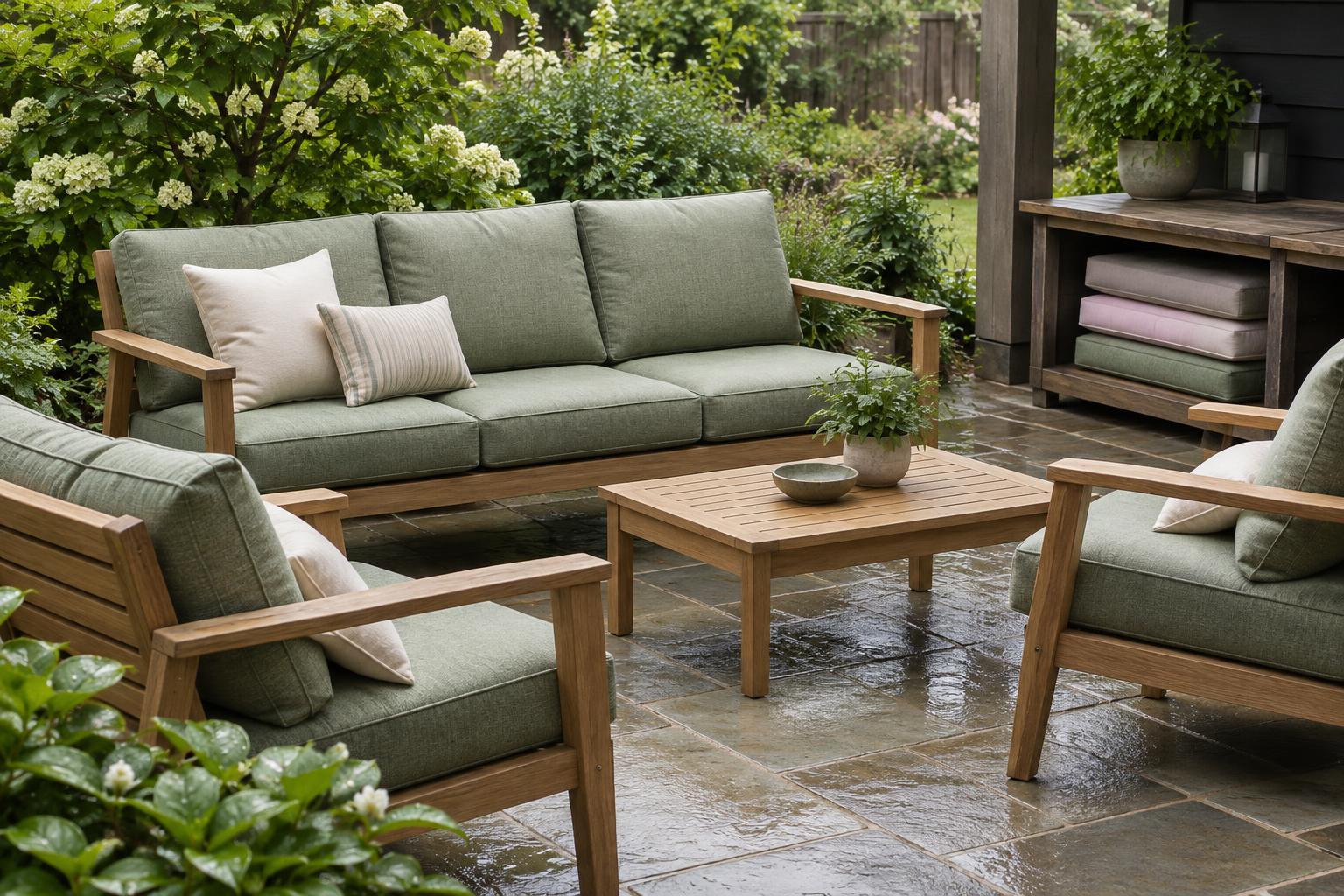
Start with your patio’s conditions
The best outdoor cushion is not necessarily the one with the toughest-sounding label. A cushion on a covered porch faces different demands from one beside an uncovered pool. Before shopping, notice when your seating gets direct sun, whether rain blows onto it, and how quickly the area dries. Also consider how often you will use the furniture and where you can put cushions when the weather turns.
Weather-resistant usually means a cushion is designed to tolerate some exposure, not that it can stay wet indefinitely. Water-resistant fabric may shed a brief shower, while heavy rain can still reach the filling through seams or zippers. Even a fabric that resists moisture needs a chance to dry. If you have little sheltered storage, prioritize cushions that are easy to move and quick to dry.
Look closely at fabric and construction
Outdoor cushion covers commonly use synthetic fabrics such as acrylic, polyester or olefin. The fiber name alone does not tell the whole story: weave, dye method, finish and stitching also affect how a cover handles sunlight, moisture and wear. If fading is a concern, look for a fabric described as fade-resistant and consider whether the color runs through the fibers rather than sitting mainly on the surface.
Check the details you will handle every day. Removable, washable covers can make routine cleaning easier. Sturdy seams, accessible zippers and ties or other fastenings help a cushion remain useful and stay in place. A smooth fabric may be easier to brush free of crumbs and leaves, while a textured one may better suit the look you want. If you can examine a sample, feel it against your skin and check that it does not seem too stiff for lounging.
Choose filling and fit for the way you sit
Comfort depends as much on the inside as the cover. Dense filling may give a supportive seat, but it can take longer to dry if water gets trapped inside. Filling intended to drain and dry readily may be a better choice for exposed furniture. Whatever the material, check that the cushion recovers its shape after you press it and that the cover fits without pulling tightly at the seams.
Measure the furniture rather than relying only on a cushion’s general label. Note the seat’s width, depth and any curves or arms, then check back-cushion height separately. A cushion that overhangs the front of a chair may slip; one that is too thick can leave too little room to sit comfortably. For benches and sofas, several smaller cushions can be easier to handle and store than one long cushion. If your patio is windy, secure ties or a snug fit may matter as much as fabric performance.
Build a simple cleaning routine
Small, regular tasks prevent most cushion care from becoming a major project. Brush off loose dirt and leaves, and blot spills promptly with a clean cloth rather than rubbing them deeper into the fabric. For a general wash, follow the care label first. If it allows mild soap and water, test the solution on an inconspicuous spot, clean gently and rinse away residue. Avoid strong cleaners unless the manufacturer’s directions specifically permit them.
Let covers and inserts dry thoroughly before putting them back on furniture or into storage. Stand cushions on edge in an airy place so both sides can dry; turn them if needed. When covers are removable, follow their washing instructions and avoid forcing a damp or shrunken cover over an insert. If a cushion develops a persistent musty smell, check the filling as well as the surface. Cleaning a cover will not solve moisture trapped inside.
Protect cushions between uses
Putting cushions away before prolonged rain is often easier than drying them afterward. A deck box, shed or indoor shelf can work, provided the space stays reasonably dry and cushions go in clean and fully dry. Avoid sealing damp cushions in plastic, which can hold moisture against the fabric. During a stretch of good weather, you can leave cushions out for convenience, but bringing them under cover when they are not in use reduces unnecessary exposure.
Rotate cushions when possible so the same side does not always face the strongest sun or take the most wear. Check seams and fastenings occasionally, and repair a small opening before it lets more water into the filling. Thoughtful placement and modest upkeep will do more for everyday comfort than any single product claim: choose cushions suited to your space, then give them a dry place to rest.