Start with the routes people already take
Before moving furniture into place, stand at each door and look toward the places people need to reach: the garden, a gate, a grill, a shed or a seating area. Walk those routes rather than imagining them on a sketch. The most convenient path is often a fairly direct one, and people may cut through a seating group if the planned walkway takes an awkward detour.
Identify one main route that should stay clear even when the patio is busy. Then consider shorter routes to chairs and any features used regularly, such as a hose tap or storage box. A walkway does not have to run straight across the space, but it should be easy to follow without turning sideways around table corners or stepping over chair legs.
Measure furniture as it is used, not as it sits empty
A dining chair takes up more space when someone pulls it out and sits down. A lounge chair may extend when reclined, while an umbrella base can occupy the gap that looked like a handy shortcut. When planning, mark out the full working footprint of each piece. You can place cardboard where a table might go, then pull out the chairs you intend to use and walk around them.
Leave extra room wherever people carry food, water or garden tools. There is no single clearance that suits every household or piece of furniture; a route that feels comfortable for one person may not work for someone using a mobility aid or walking alongside a child. Test the layout with the people who use the space, and prioritize a level, unobstructed main route where possible.
Place seating beside the flow of traffic
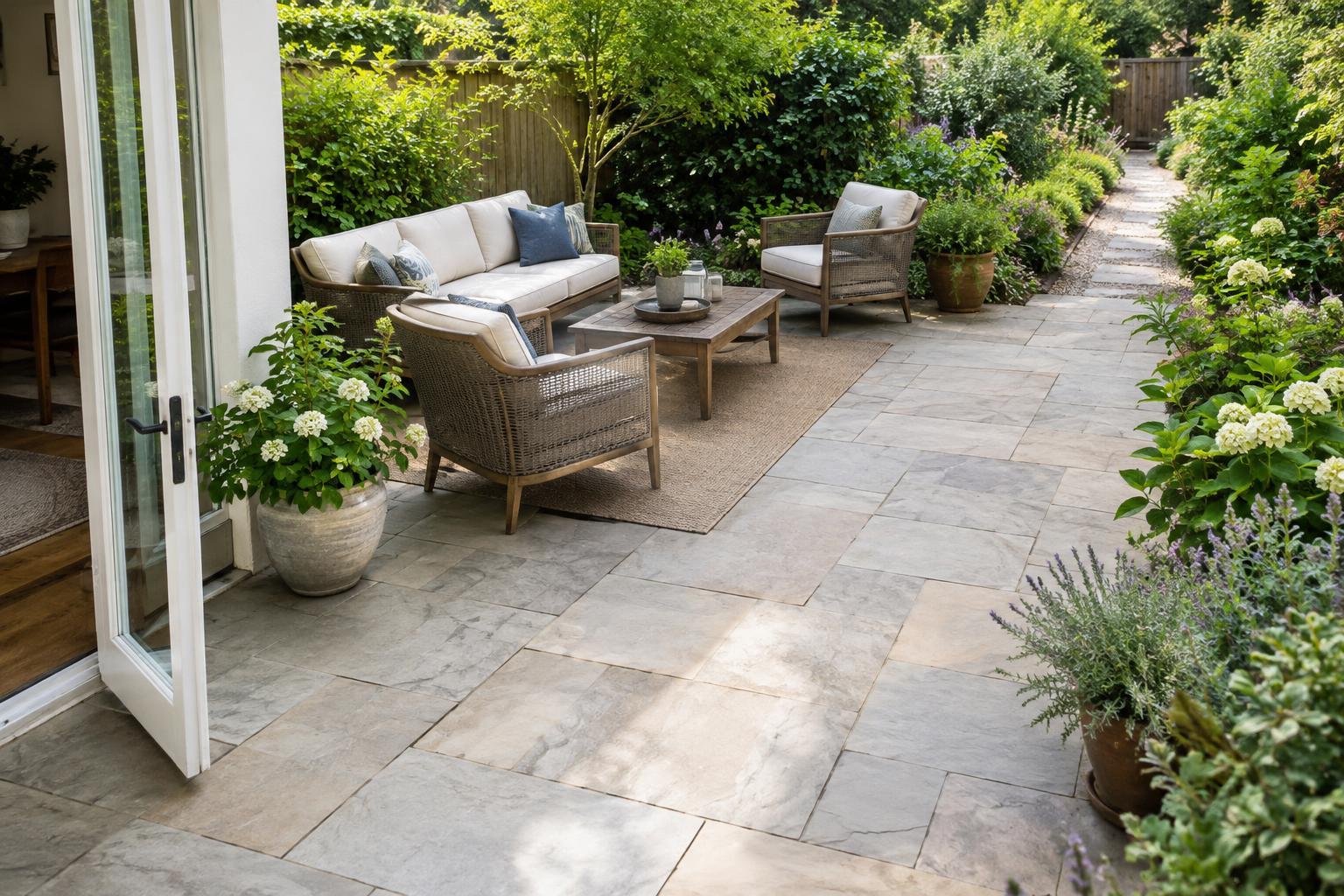
Instead of centering every furniture group on the patio, try positioning seating to one side of the main walkway. A sofa or bench along an edge can define a conversation area while leaving the middle open. On a narrow patio, a small table with chairs on two sides may fit more naturally than a larger table surrounded by seating. If chairs must sit near a path, orient them so people can stand up without stepping directly into it.
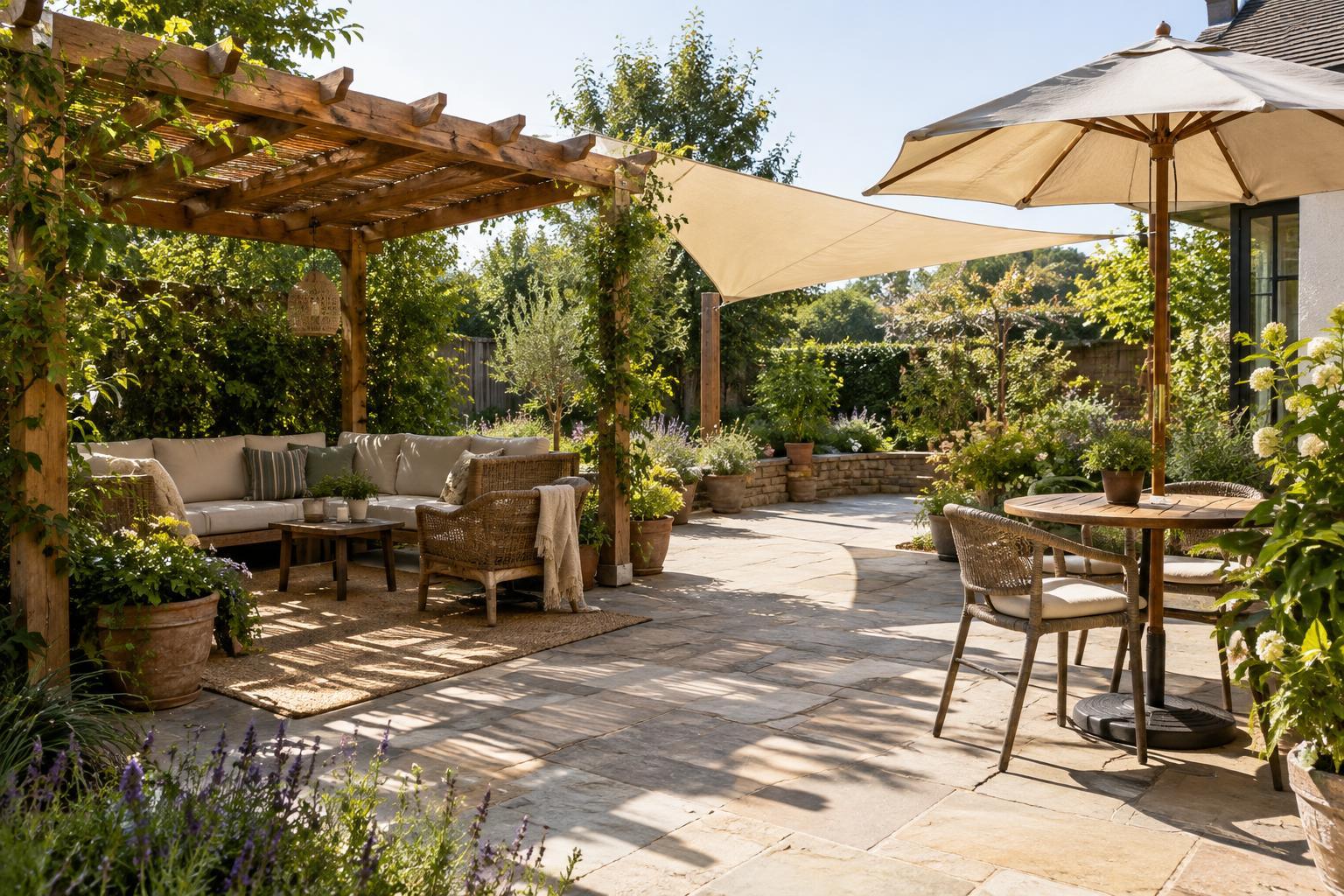
Think of the patio as a few connected zones rather than one area to fill. A dining zone can sit nearer the kitchen door, while a quiet chair might face the garden farther away. Leave a simple route between them. Furniture can still feel grouped and inviting without forming a barrier: a rug or low table can visually anchor a seating area, provided its edges do not create a tripping point along the walkway.
Choose pieces that suit the available space
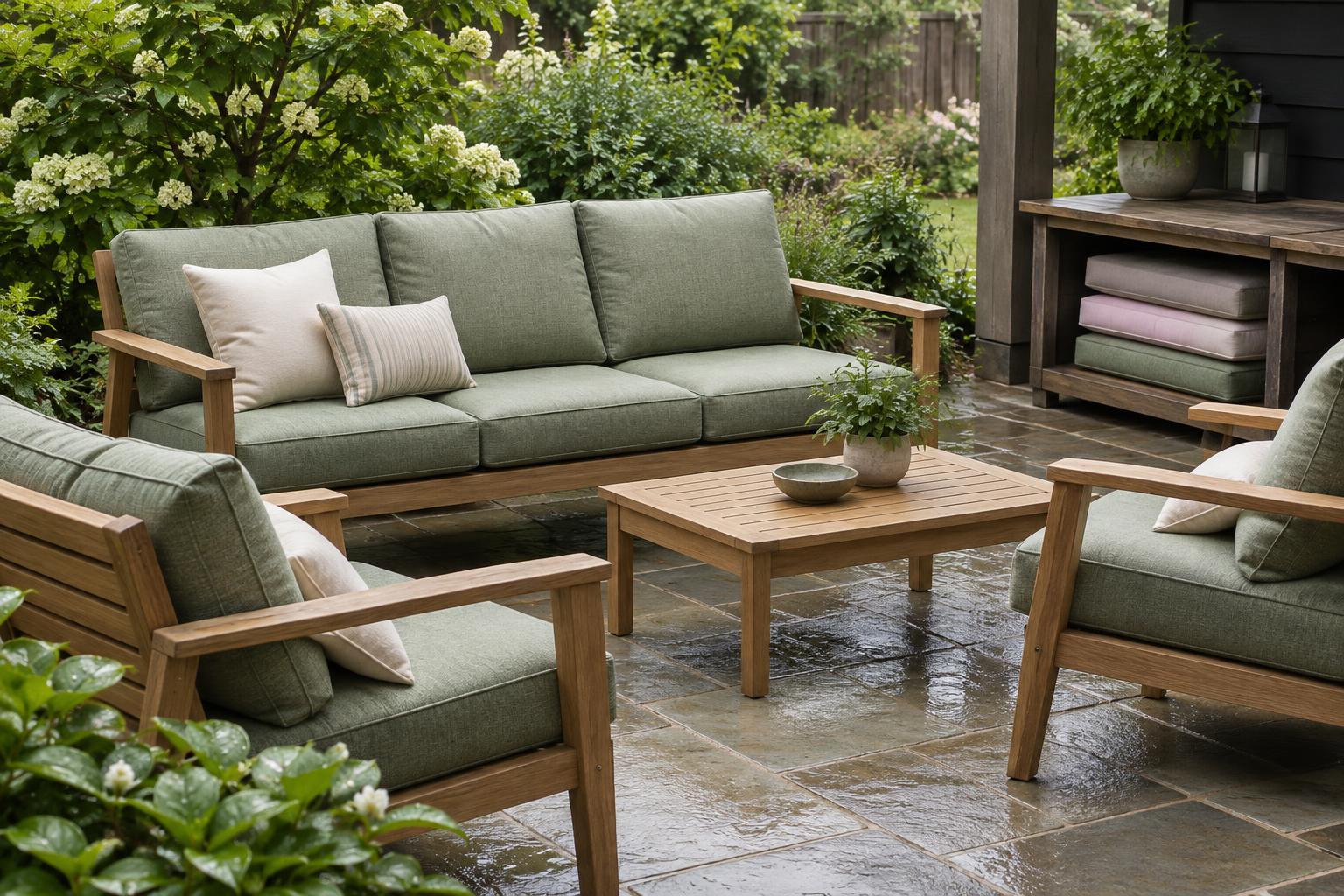
Large furniture can be comfortable, but oversized pieces may leave no room to approach or use them. Compare the patio’s usable area with the furniture’s full footprint before buying. Compact chairs, a slimmer table or a bench that stays against a wall can preserve more circulation space than several deep armchairs. Folding or stackable chairs are useful when extra seats are needed only occasionally.
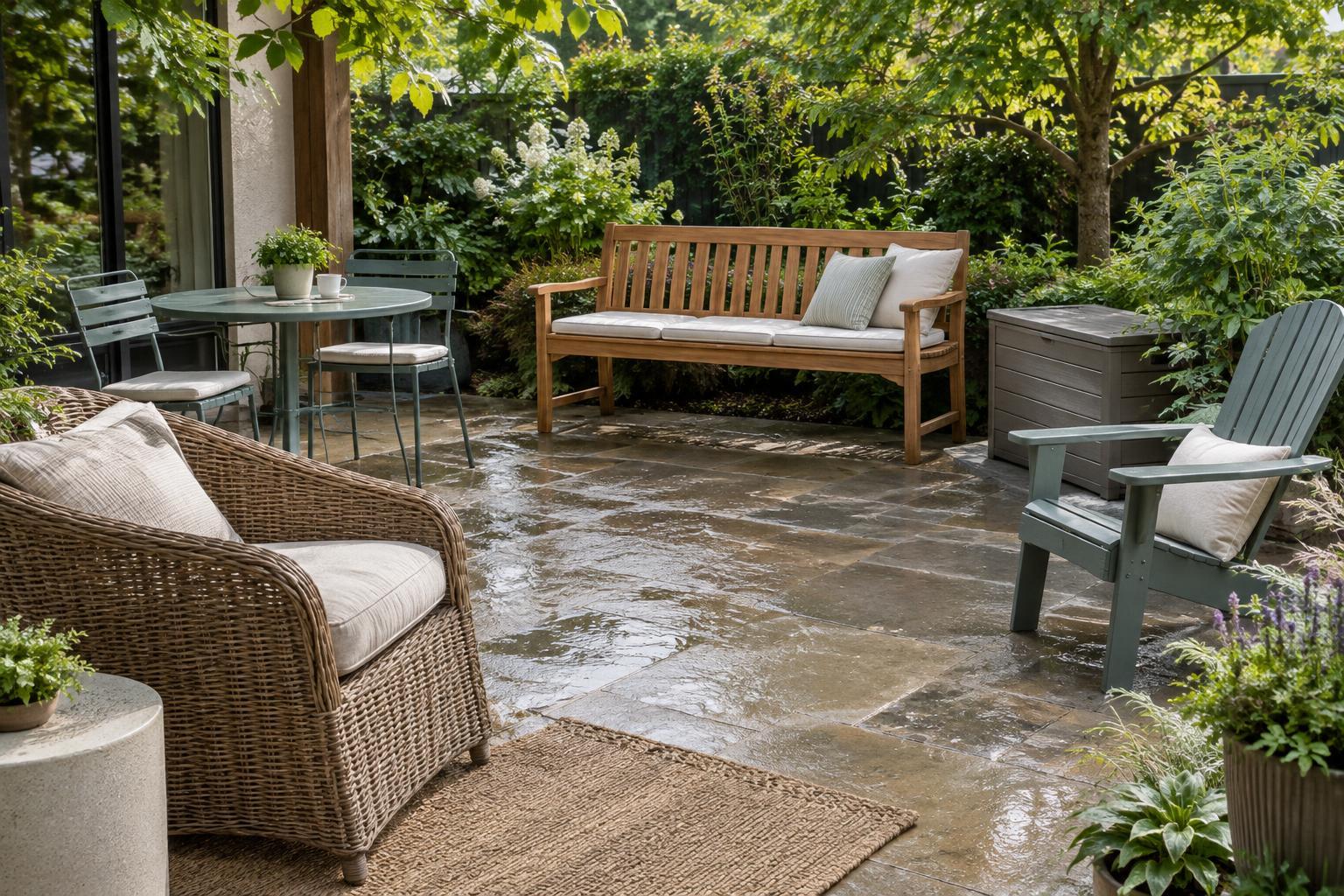
Keep movable accessories in mind too. Planters, side tables, lanterns and outdoor storage often migrate into open gaps over time. Give each item a deliberate position away from doors and the main path. Where space is limited, a few well-placed pieces generally make the patio easier to use than a crowded arrangement that has to be rearranged for every gathering.
Try the layout, then adjust it
Once the furniture is in place, walk through the patio with chairs occupied and doors open. Carry an empty tray to see whether corners feel tight. Check that guests can reach a seat without squeezing behind someone else, and that a person standing up does not block the only way through. If a route is awkward, shift the furniture before adding decorative pieces.
Repeat the check when the space changes. Umbrellas, seasonal planters and extra chairs can narrow a once-clear path. A good arrangement is not necessarily symmetrical or permanent; it is one that lets people move naturally, settle comfortably and enjoy the outdoor room without treating every trip across it as an obstacle course.