Why new plants need closer attention
A newly planted tree, shrub or perennial has not yet spread many roots into the soil around it. Even when the surrounding ground feels damp, the root ball it arrived in may dry out faster than expected. The goal during establishment is to keep that root ball and the nearby soil comfortably moist, not constantly soaked.
Watering needs vary too much for one fixed schedule. A small perennial in sandy soil during hot, windy weather may need attention sooner than a shrub planted in cool, moisture-retentive soil. Plant size, rainfall, drainage and the season all matter. Use a calendar as a reminder to check your plants, rather than as an instruction to water every time.
Check the soil before you water
Push a finger or a small trowel a few inches into the soil near the edge of the root ball. For a larger shrub or tree, check in more than one spot, including the root ball and the surrounding soil. If the soil feels dry at that depth, it is usually time to water. If it feels cool and damp, check again later. Soil that is wet and sticky needs time to drain.
The surface alone can be misleading. A light shower may darken the top layer without reaching the roots, while mulch can make damp soil look dry. Check after rain rather than assuming it was enough. Wilting can also be ambiguous: a plant may droop in afternoon heat and recover by evening, or it may wilt because its roots are sitting in waterlogged soil. Looking below the surface helps you choose the right response.
Water the whole root zone, slowly
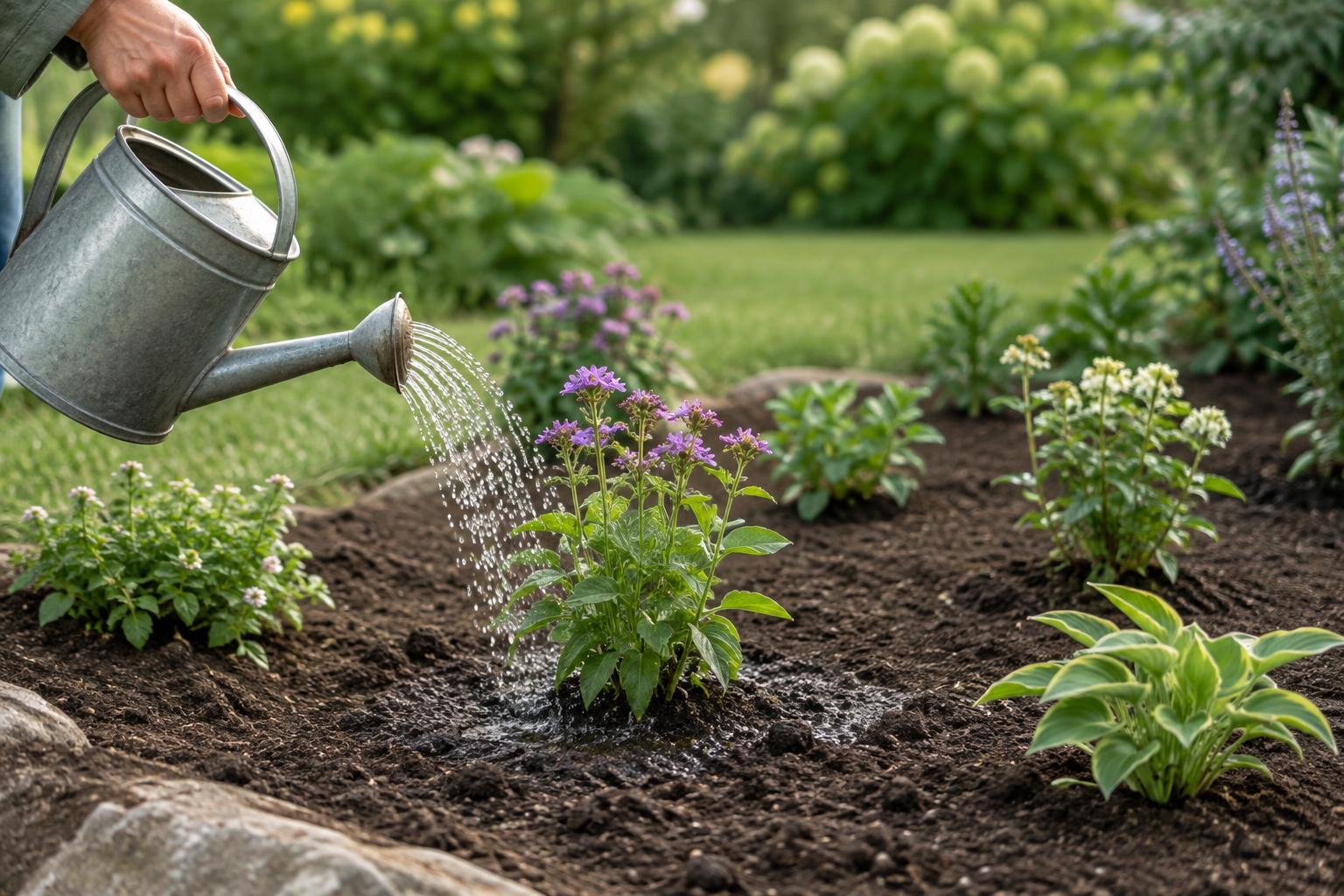
Apply water at the base of the plant, allowing it to soak into the root ball and the soil immediately around it. A gentle hose flow or watering can gives water time to penetrate instead of running across the surface. Pause if puddles form, then continue once the water has soaked in. Afterward, check that moisture has reached below the surface; a brief sprinkle often wets only the topsoil.
For a newly planted tree or shrub, a shallow ring of soil around the planting area can help hold water where it is needed, provided water can still drain away. Do not pile soil or mulch against the stem or trunk. A layer of mulch over the surrounding soil can slow evaporation and reduce competition from weeds, but leave a small clear space around the plant’s base.
Aim for a thorough watering followed by a chance for the soil to breathe, rather than repeated small splashes. In heavy clay, add water more slowly and wait longer between waterings if the soil remains damp. In sandy or very free-draining soil, moisture may disappear sooner, so check more often.
Adjust your checks to the plant and the weather
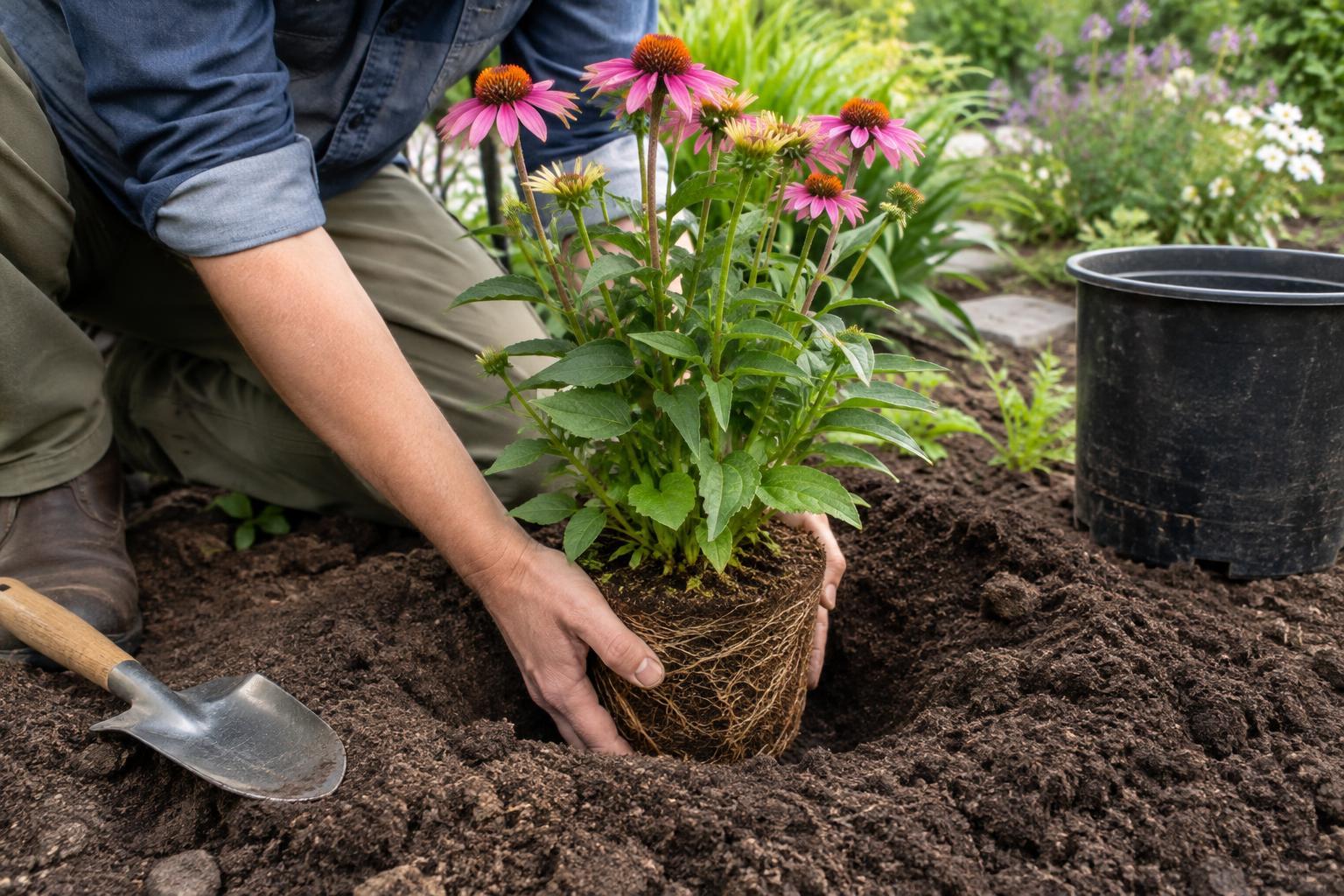
Newly planted perennials have smaller root zones and may dry out quickly, especially while they are putting on new growth. Trees and shrubs usually need water applied over a wider area as their roots begin to extend beyond the original root ball. Container-grown plants moved into garden soil can have a noticeable boundary between potting mix and native soil; check both sides of that boundary while roots grow across it.
Check more frequently during warm, dry or windy spells and less frequently during cool, damp weather. Plants set into the ground in a mild season may need less supplemental water than those planted just before summer heat. If your site is poorly drained, make sure excess water can move away before adding more. A plant that prefers dry conditions still needs help after planting, but it may suffer if kept continually wet.
Water early in the day when practical. This gives you a chance to notice how the plant responds and lets any wet foliage dry. Directing water toward the soil also reduces waste. If you use drip irrigation, occasionally check beneath the surface to confirm that water is reaching the root ball rather than only the soil beside it.
Ease off as roots spread
Establishment is gradual, not a date on the calendar. A plant is making progress when it produces healthy new growth and can go longer between waterings without showing signs of stress. That does not mean new leaves alone prove its roots are established; keep checking soil moisture, especially through its first periods of dry weather.
Over time, shift from concentrating water on the original root ball to moistening a broader area around the plant. Reduce supplemental watering as the roots become better able to draw moisture from the surrounding ground, while continuing to check during prolonged dry spells. By responding to the soil rather than following a rigid timetable, you can help new plants settle in without leaving them thirsty or waterlogged.