Start with the plant, not the pot
An attractive container can make a plant look at home on a windowsill or patio, but its first job is to support the roots. Before choosing one, consider how large the plant is now, how it grows and where it will live. A compact herb, a trailing houseplant and a vigorous patio shrub do not need the same amount of root space. The plant label, if you have one, may offer a useful guide to its expected size.
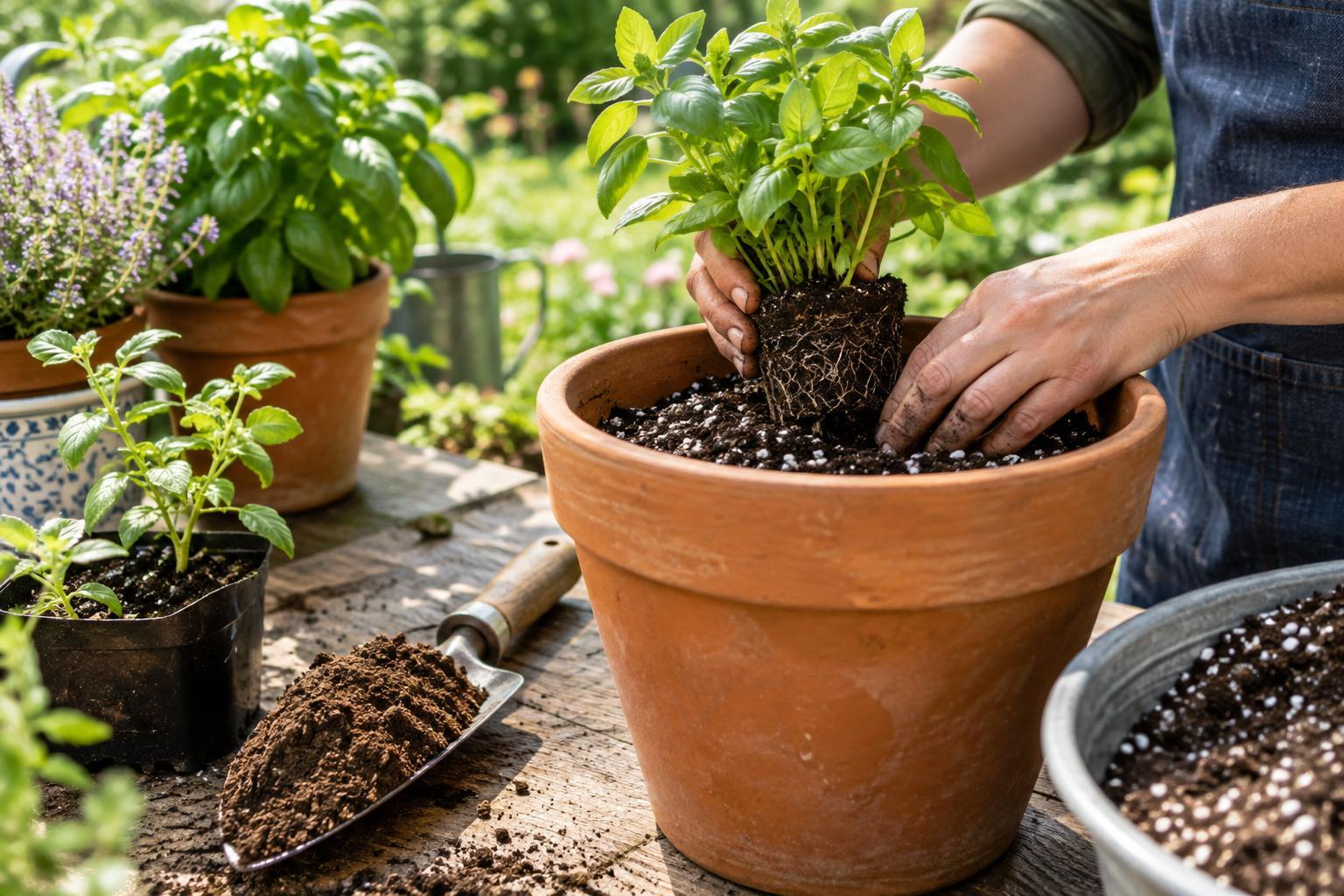
For a plant you are moving from an existing pot, choose a new container only somewhat wider than the current root ball. That gives roots room to expand without surrounding them with a large volume of soil that may stay wet for too long. If you are planting several plants together, allow room for each one’s mature spread as well as its roots. You can move a growing plant into a larger pot later rather than trying to anticipate years of growth at once.
Look for usable depth and width
Pot shape matters as much as the size printed on a label. Shallow containers can work well for plants with modest root systems, while deeper ones give larger plants more room and may help them stand securely. Check the space inside the pot: a thick rim or a sharply tapered base can make the usable planting area smaller than it first appears.
If you are unsure whether an established plant needs more room, ease it carefully out of its pot and look at the roots. Roots circling tightly around the outside or growing through the drainage holes can be signs that the plant would benefit from repotting. Soil that dries very quickly despite thorough watering may be another clue, although heat, wind and the type of potting mix also affect drying. A few visible roots are not, by themselves, an emergency; judge the overall condition of the plant.
Make sure excess water has an exit
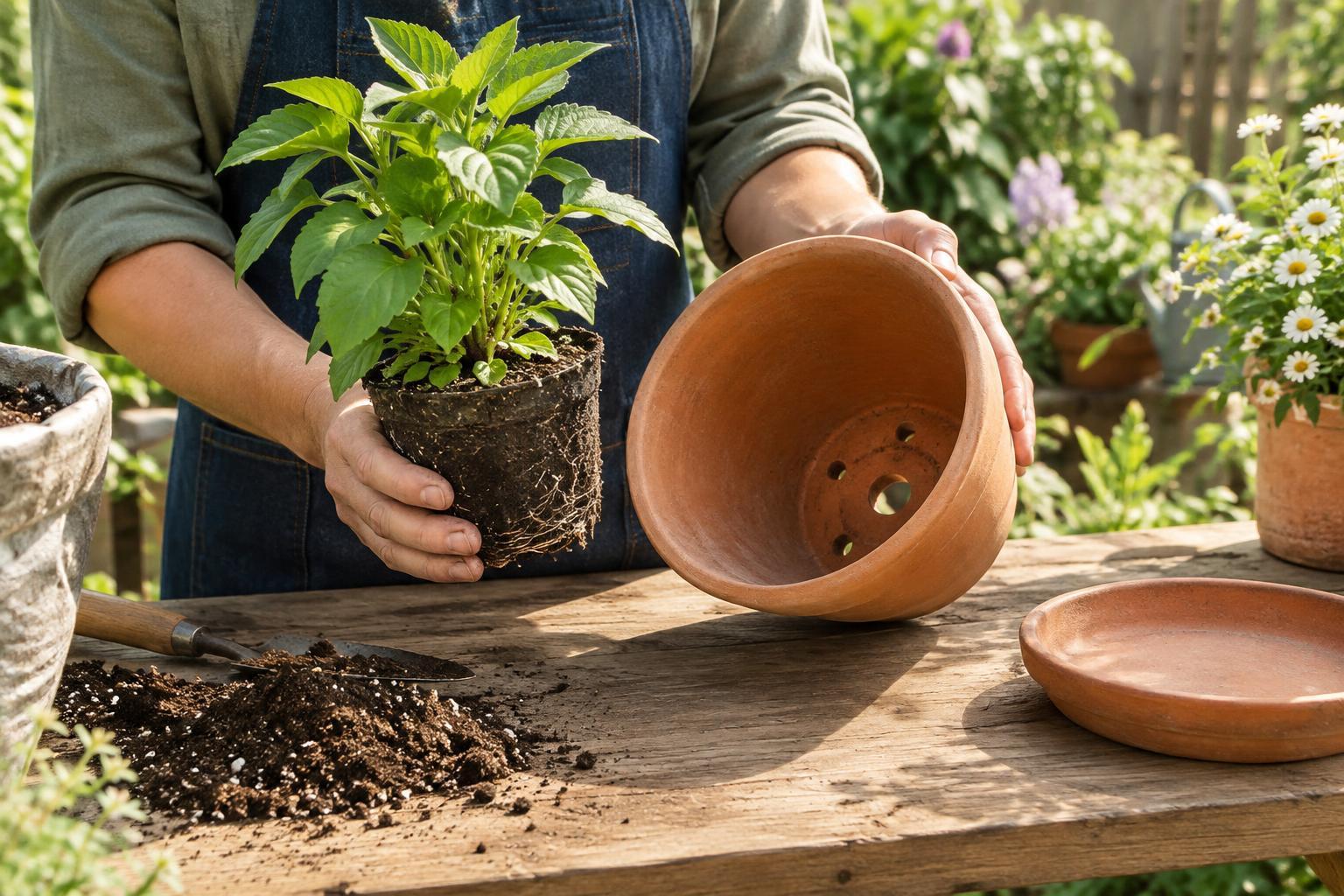
For most plants grown in potting mix, drainage holes are essential. They let excess water leave the root zone after watering or rain. A decorative pot without holes is best used as an outer cover: keep the plant in a smaller pot with holes, remove it for watering if needed, and empty any water that collects inside the cover.
Check where the holes sit before buying. They should be open, not blocked by a fitted insert or pressed flat against a surface that prevents water from escaping. Pot feet or a stand can help a patio container drain freely. A saucer protects indoor surfaces, but standing water should be tipped away after watering. Adding gravel to the bottom of a pot is not a substitute for drainage holes; it takes up space that roots and potting mix could use.
Match the material to the setting
Container materials change how a pot behaves and how easy it is to handle. Unglazed clay allows moisture to leave through its sides, so the mix may dry faster; it can be useful where a plant prefers to dry between waterings, but it may demand closer attention in hot weather. Glazed ceramic and plastic tend to hold moisture longer. Their weight also differs: a heavy pot can steady a tall plant, while a lighter one is easier to move.
For outdoor containers, think about local weather as well as appearance. A dark pot in strong sun may heat up, and any pot left outside through freezing weather needs to be suitable for those conditions. Large containers become much heavier once filled with damp mix, so choose their location before planting. Whatever material you select, drainage, appropriate size and a potting mix suited to the plant matter more than a particular finish.
Set up the container for easier care
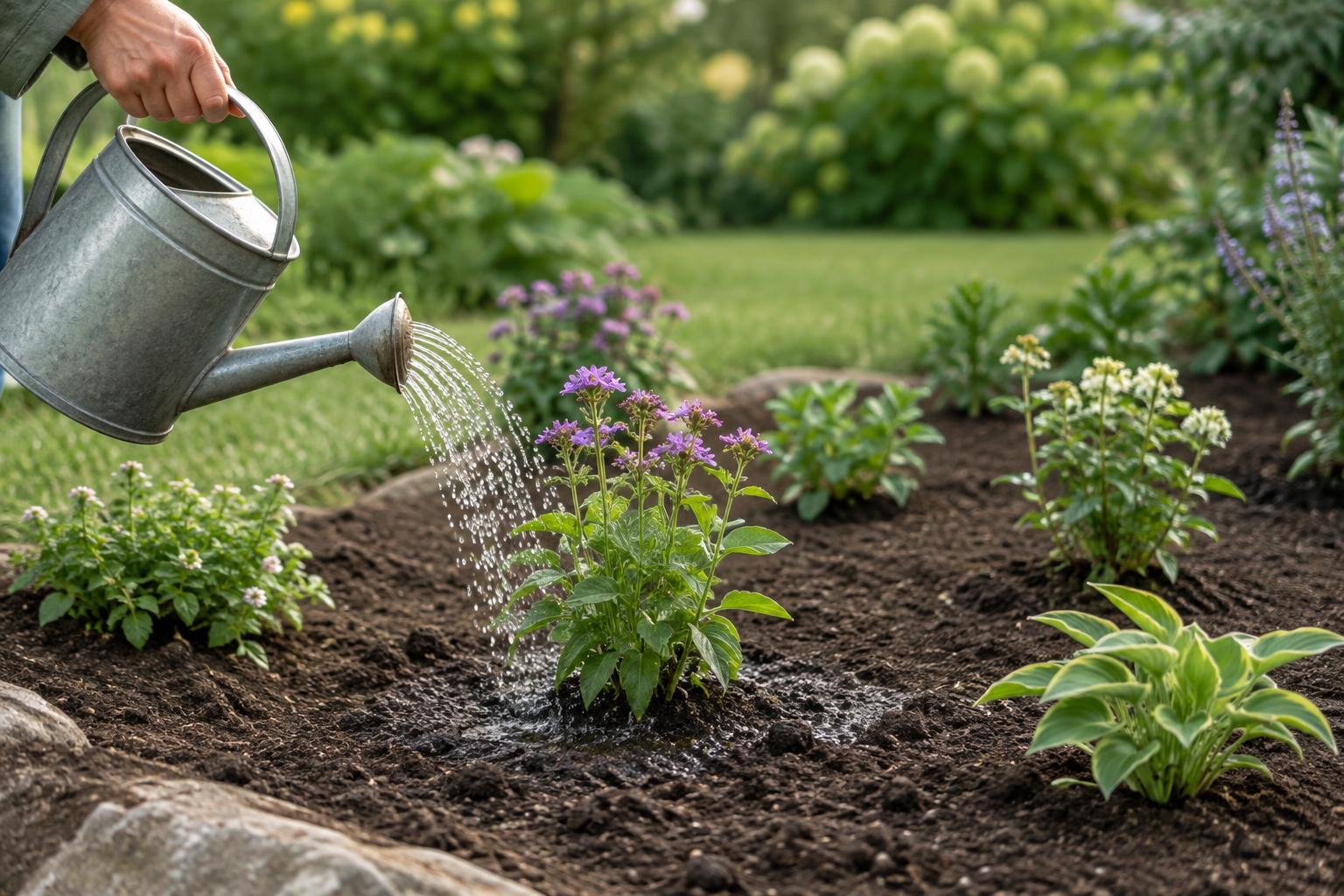
Use potting mix rather than ordinary garden soil in a container. Potting mixes are generally designed to hold some moisture while leaving space for air and excess water to move through. Set the plant at about the same depth it grew previously, leaving a little space below the rim so water can soak in instead of running over the edge. Water after planting and check that water can flow out of the bottom.
After that, let the plant and conditions guide your routine. Feel the mix below the surface before watering rather than relying on a fixed schedule: small pots, sunny positions and windy balconies often dry more quickly than sheltered containers. Watch for persistent sogginess, rapid drying or roots becoming crowded. The right container is not necessarily the biggest one available; it is one that gives the plant enough room now, drains reliably and lets you care for it comfortably.