Why a container changes the rules
In the ground, roots can spread into a large volume of soil. Water can move downward and outward, while worms and other soil life help maintain its structure. A container gives roots a much smaller space, with a bottom and sides that restrict where water and air can go. The material inside the pot needs to hold enough moisture for the plant without staying so wet that roots struggle to breathe.
That is why garden soil and potting mix are not interchangeable. Garden soil may be excellent in a bed but become dense in a pot, especially after repeated watering. It can also contain weed seeds or organisms that are less troublesome outdoors than they are in the close quarters of a container. For most patio pots, window boxes and indoor planters, a mix labeled for container growing is the simpler choice.
What potting mix does differently
Potting mix is designed to balance moisture retention with spaces for air. Ingredients vary, but a general-purpose mix often combines lightweight organic materials with components that help it resist compaction. The bag may be labeled “potting soil,” even when it contains little or no field soil; the more useful clue is whether it is intended for containers.
Choose a mix by thinking about the plant and the pot. A general-purpose mix suits many flowers, herbs and vegetables. Succulents and other plants that dislike lingering moisture usually benefit from a faster-draining mix. Seed-starting mix has a fine texture that helps small seeds make contact with moisture, though seedlings will eventually need more room and nutrients. Check the label for added fertilizer: some mixes include a starter supply, while others rely on you to feed plants later.
Peat-free and other lower-peat options are available in many places, but their ingredients and watering behavior can differ. Rather than assuming every bag performs the same way, feel the mix after watering and watch how quickly it dries in your particular pot.
Can you use soil from the garden?
You can grow plants in garden soil in a container, but it is often harder to manage than a prepared mix. Clay-rich soil may pack tightly and drain slowly; very sandy soil may dry quickly and offer little reserve of moisture. Blending a handful of garden soil into a potting mix is sometimes done for large outdoor planters, but it does not remove the need to check drainage and weight. For small pots and seedlings, sticking with a container mix is generally easier.
Avoid filling a pot with soil dug from a bed simply because it is free. Once wet, it can make a large planter difficult to move, and a dry-looking surface may hide soggy material below. Soil sold for filling raised beds is also not necessarily suited to pots: raised beds have far more room for roots and water movement. Read the intended use on the bag before buying.
Set up the pot for healthy roots
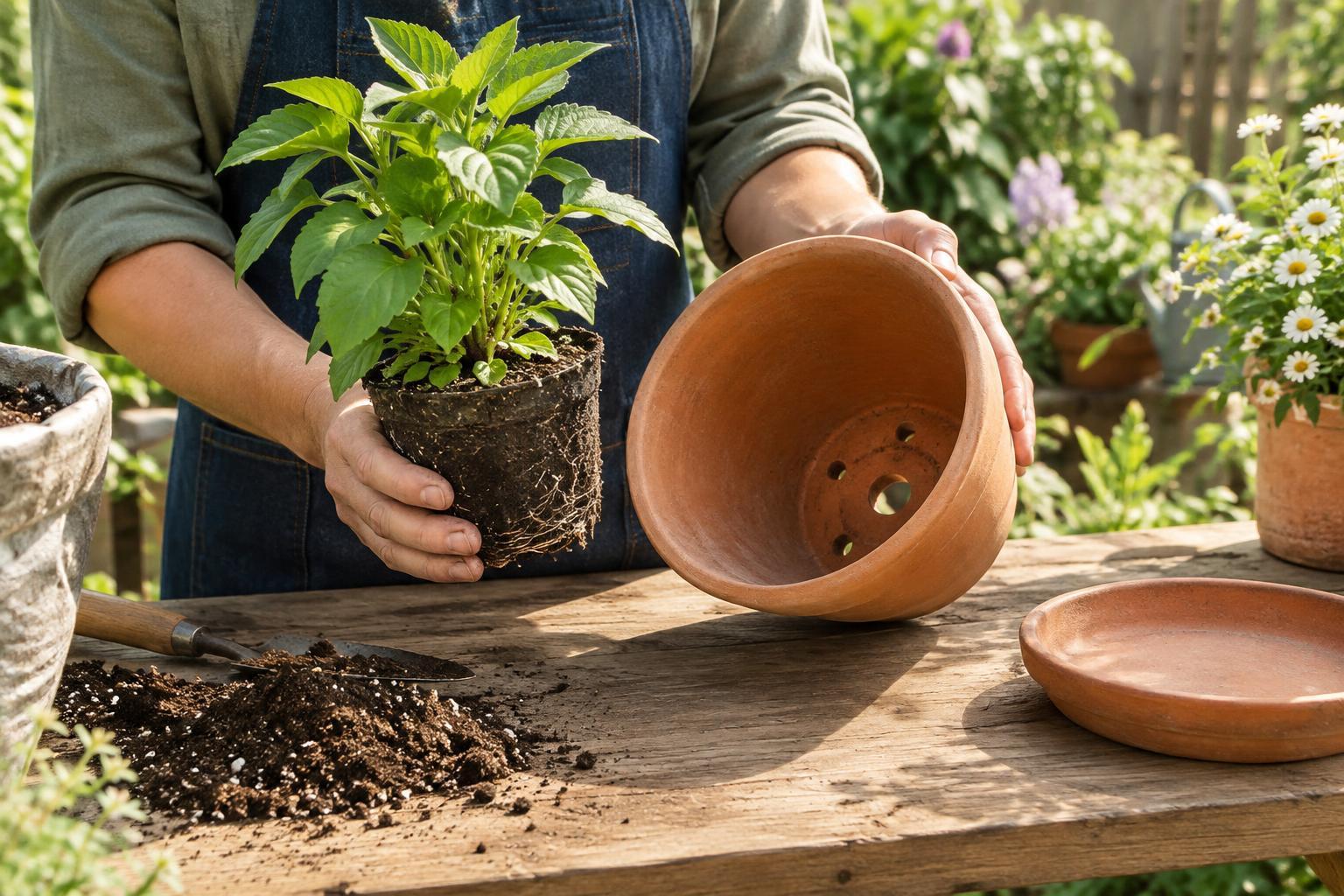
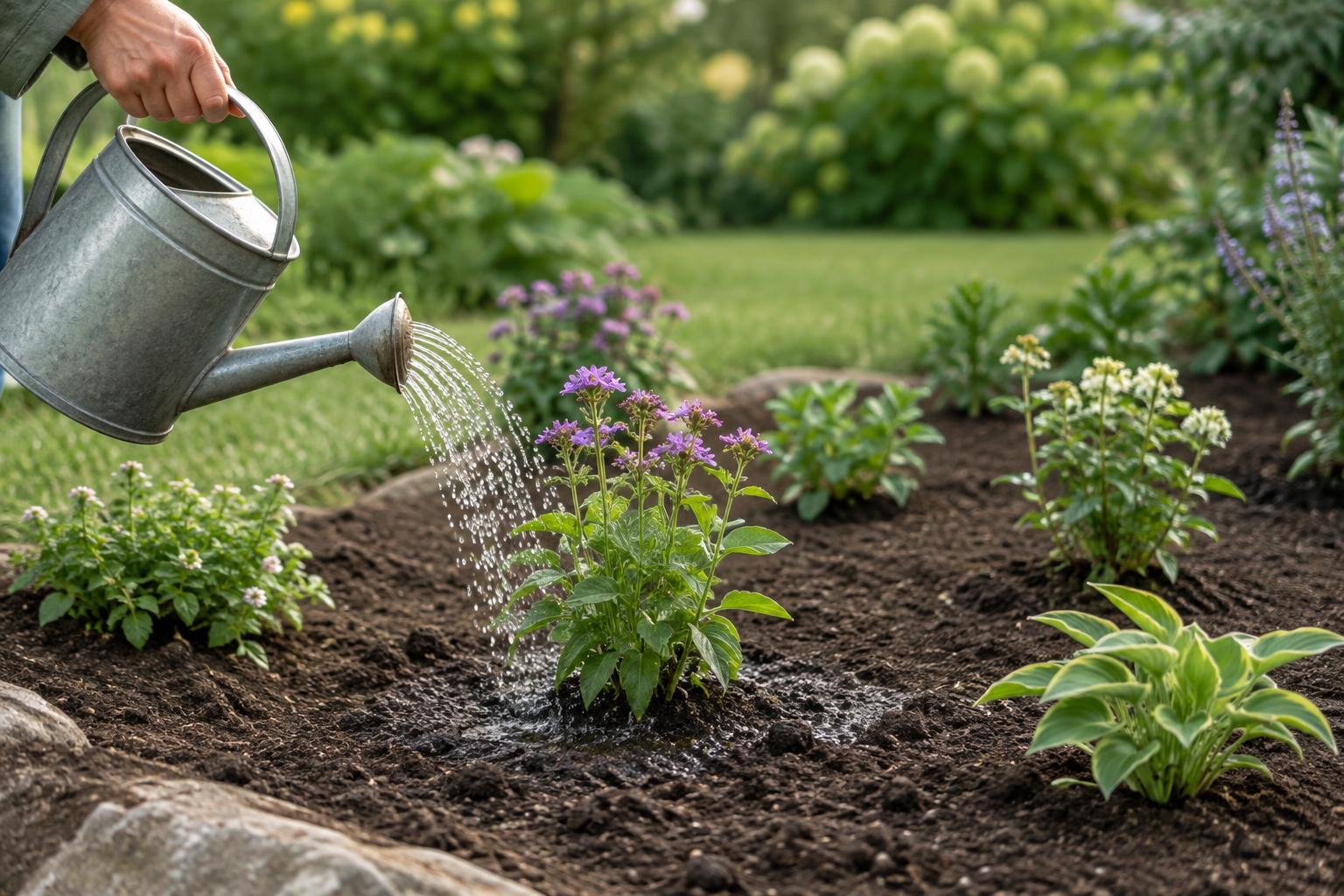
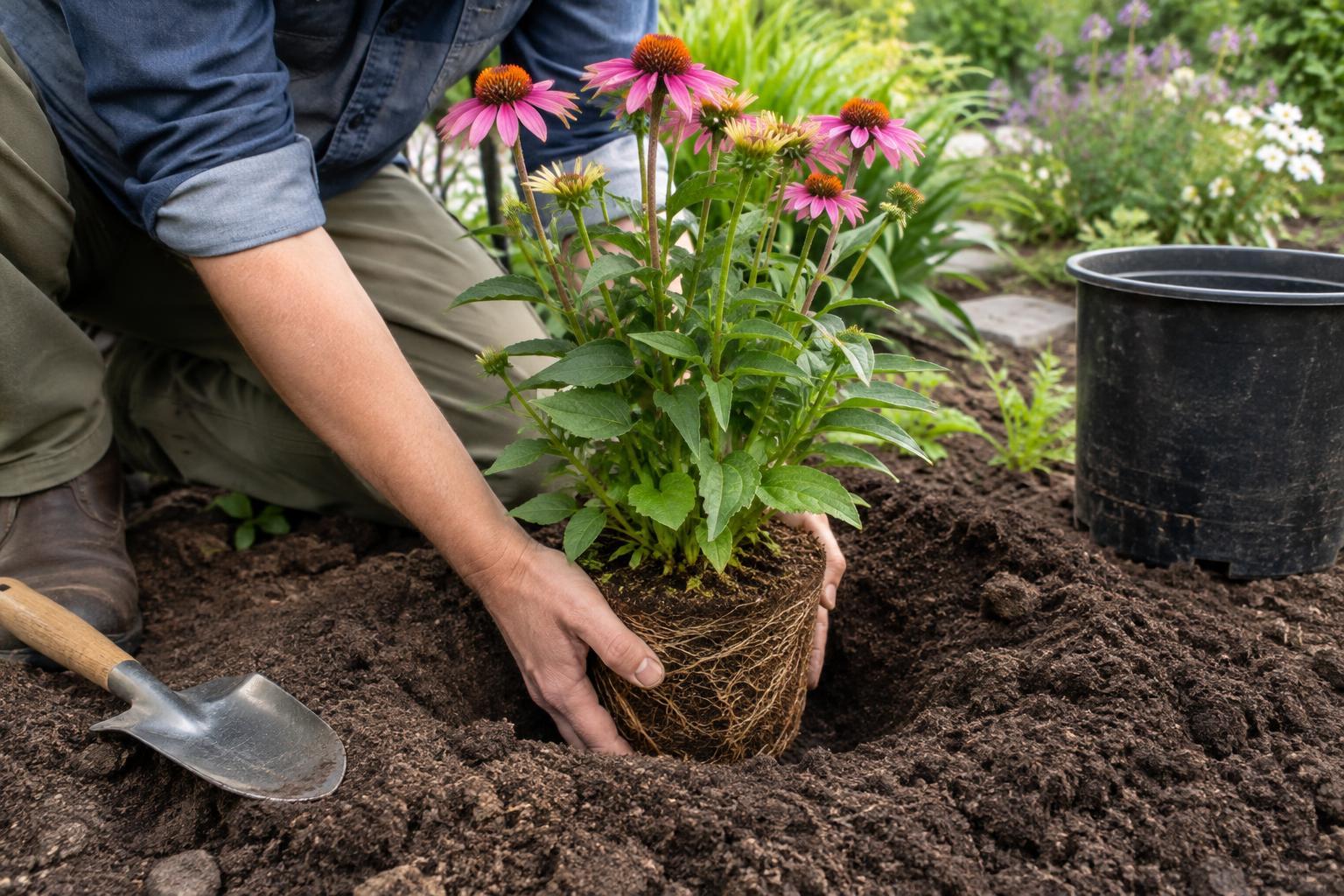
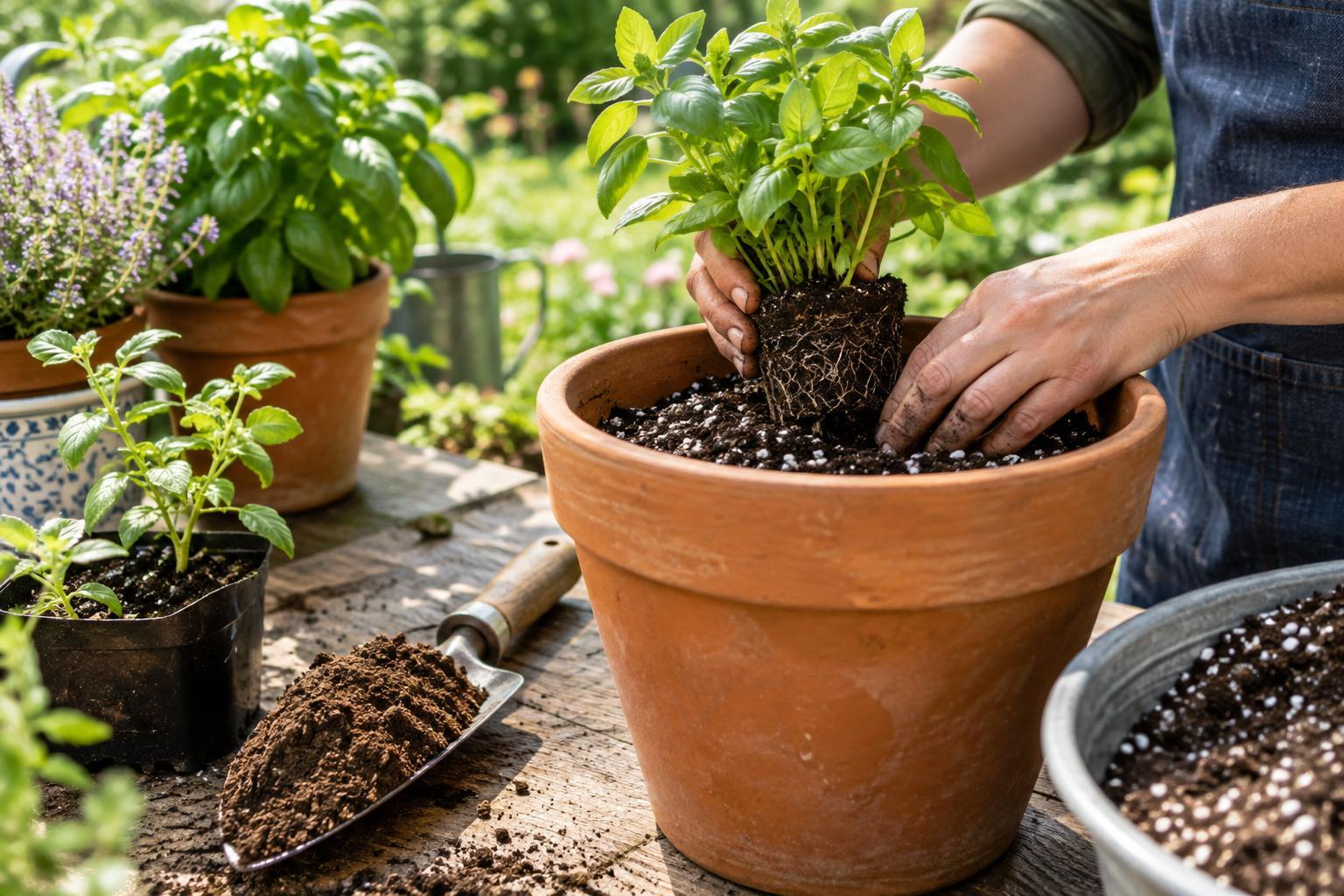
Start with a container that has drainage holes. Fill it with lightly moistened mix, leaving enough space at the top to water without washing material over the rim. Set the plant at roughly the same depth it grew before, gently firm the mix around its roots, and water until excess runs out. Empty any saucer that keeps the base of the pot standing in water for long periods.
A layer of gravel at the bottom is not a substitute for drainage holes. It takes up space that roots could use and does not reliably fix a waterlogged pot. If mix escapes through a large hole, cover the opening with a small piece of mesh that lets water pass. Then learn the pot’s watering rhythm by checking below the surface with a finger: sun, wind, plant size and container material can all change how quickly it dries.
Refresh the mix as plants grow
Potting mix changes over time. Roots fill the available space, organic ingredients break down, and repeated watering can wash nutrients away. If water runs straight through a root-bound pot, growth slows, or the mix stays unusually soggy, lift the plant out and inspect the roots and material. Repotting into a suitable container with fresh mix may help; sometimes removing and replacing the top layer is enough for a large established planter.
Used mix need not always be discarded. If the previous plants were healthy, you can loosen it, remove old roots and blend in fresh mix for less demanding outdoor plantings. If a plant had a serious disease problem, avoid carrying that material straight into a new pot. Whatever mix you choose, treat it as one part of container care: the right pot, attentive watering and nutrients suited to the plant matter just as much.