Why leave wood in the garden?
A fallen branch may look like garden waste, but it can become a small, changing habitat. Beetles and other invertebrates shelter beneath loose bark and in softening wood. Fungi help break the wood down, while birds and other animals may search it for food. As a log decays, it also holds moisture and gradually returns organic matter to the soil.
You do not need a large garden or a pile of heavy trunks to make use of deadwood. A few branches tucked into a planted bed can offer cover. The aim is not to make every corner untidy: choose a place where wood can decay without getting in the way of paths, gardening tasks or outdoor seating.
Choose wood and a location with care
Start with fallen branches or logs from your own garden when possible. Untreated wood is the simplest choice; avoid painted, pressure-treated or otherwise chemically treated timber. If you bring wood from elsewhere, consider whether moving it could also move pests or disease. Check local guidance before collecting wood from public land or natural areas, where fallen material may already be part of the habitat.
Place logs where they are unlikely to roll or trip someone, and keep decaying wood away from buildings, stored firewood and other structures you want to protect. In areas where wildfire is a concern, follow local advice on keeping combustible material away from structures. A partly shaded spot near shrubs or planting often stays damper than an exposed lawn. If you prefer a drier habitat, a sunny position can offer different conditions. Either can be useful; variety matters more than finding one perfect spot.
Make a simple log pile
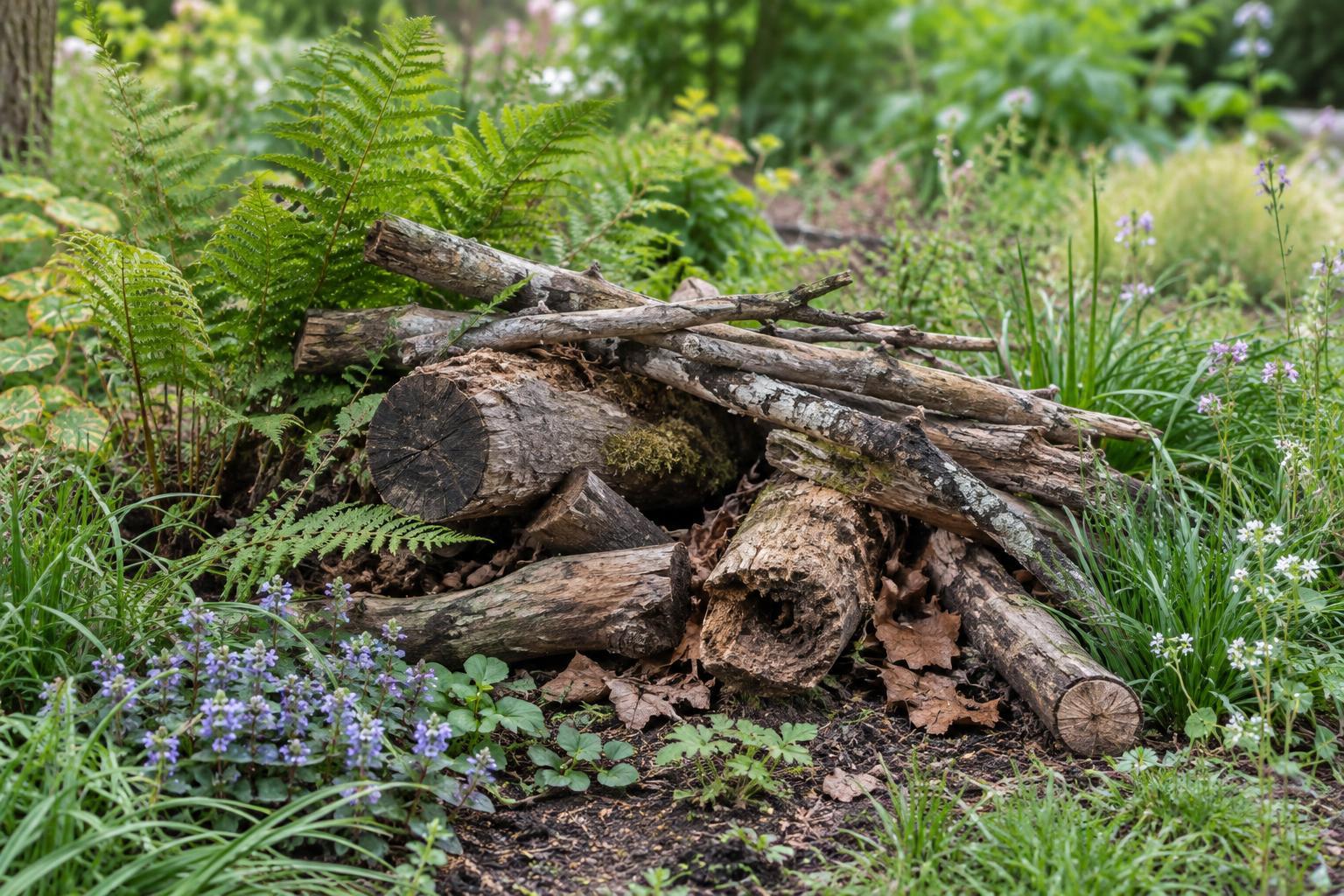
For a small habitat pile, lay the heaviest pieces on the ground first and wedge them so they cannot shift. Add a few smaller branches across them, leaving gaps rather than stacking everything tightly. Some pieces can touch the soil and stay damp; others can sit higher and dry more readily. Even one stable log with a little leaf litter beside it is a worthwhile start.
You can place some wood at the back of a border, where nearby plants provide cover and soften its appearance. Leave part of the pile open to air and rain rather than wrapping or enclosing it. If you want a more deliberate design, use a low arrangement of similar-sized logs as an edge to a planted area, provided it remains stable and does not obstruct access.
Combine deadwood with living plants
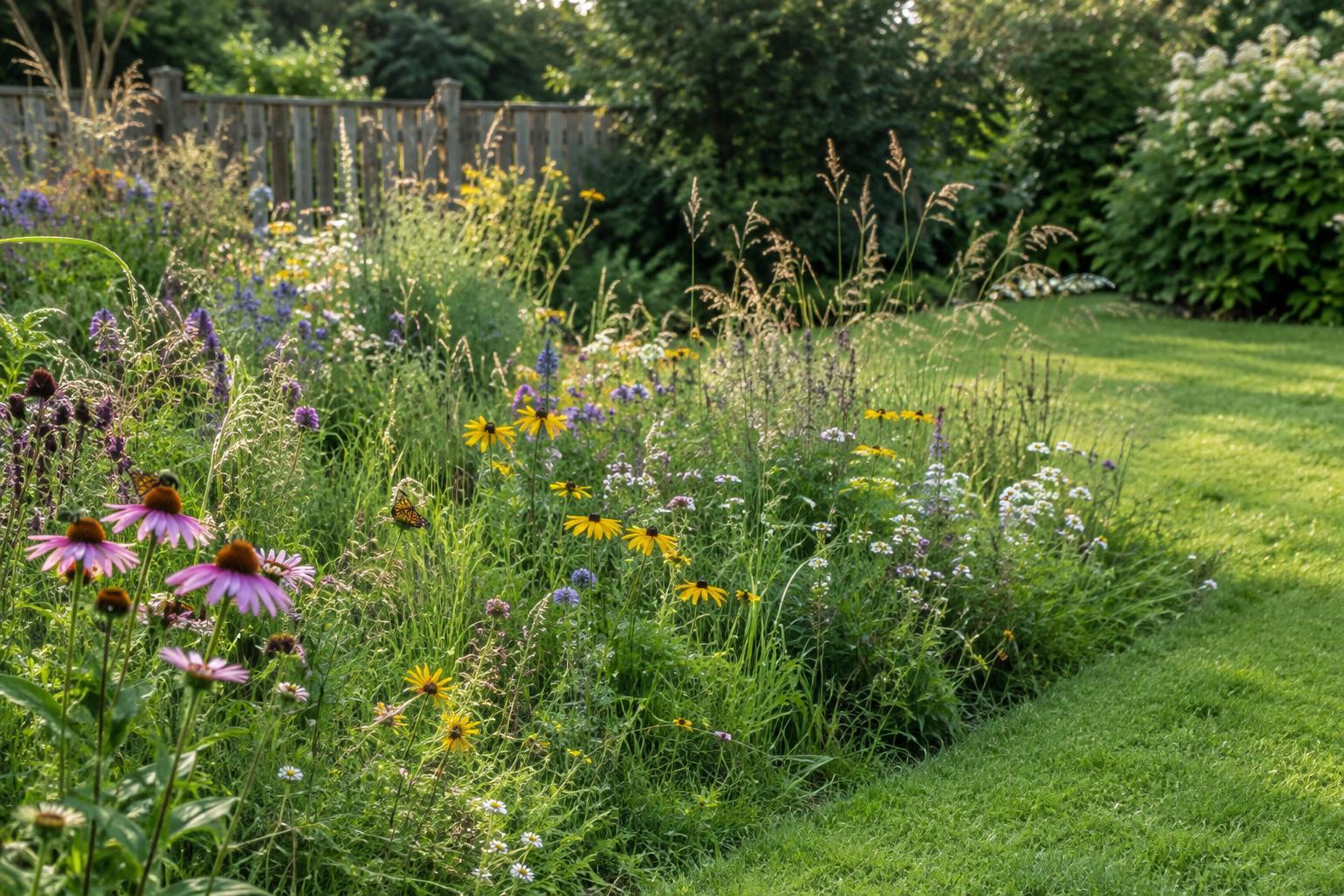
A log pile works best as one part of a varied garden. Nearby shrubs, grasses and flowering plants provide cover and additional places for wildlife to feed and shelter. Ground-cover plants can help a small pile feel integrated into a border, while a layer of fallen leaves around its base creates another sheltered surface. Leave some soil and wood exposed so the arrangement has a mix of conditions.
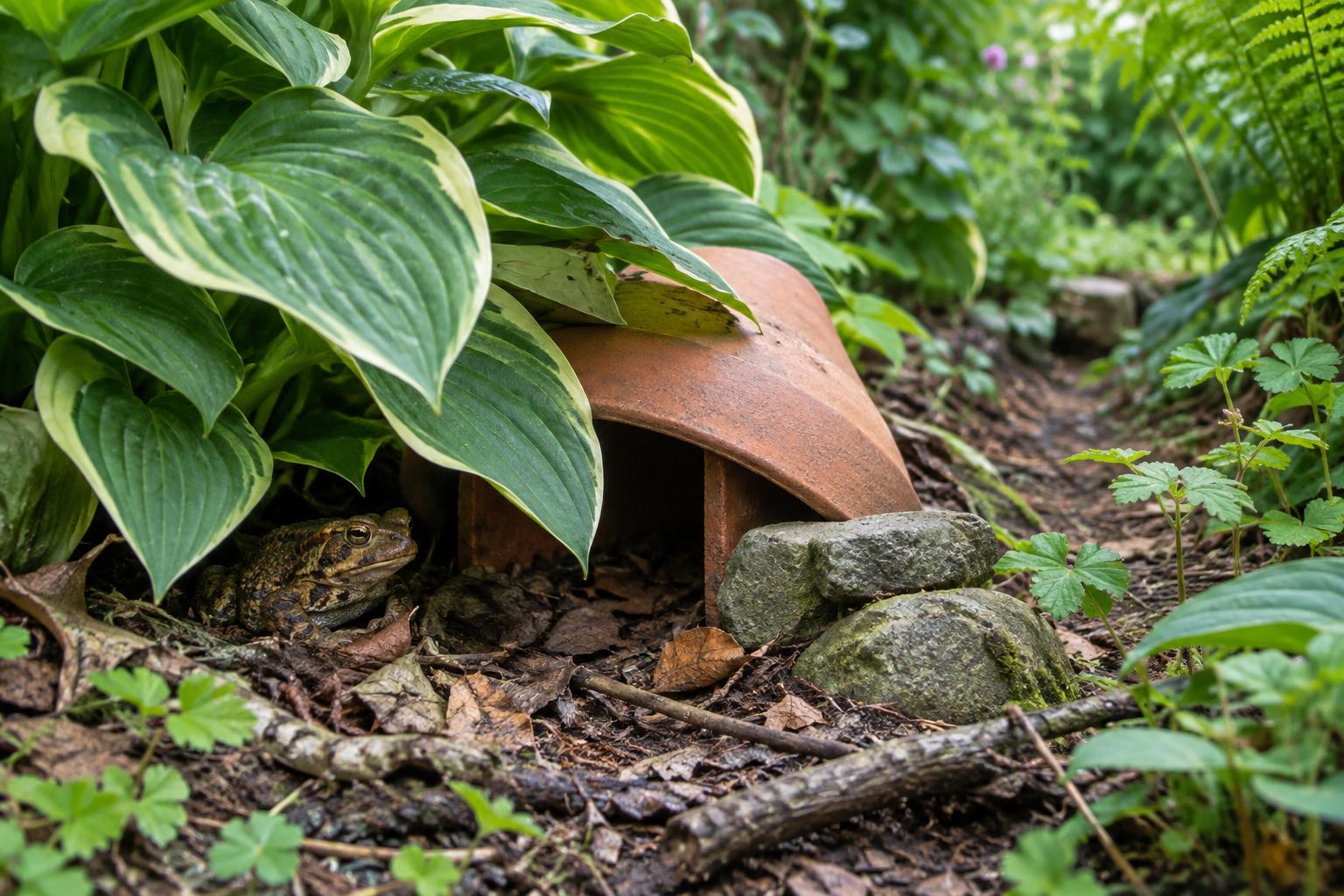
Choose plants suited to your climate, soil and available light rather than trying to copy a single habitat recipe. In a dry garden, the shaded side of a log may retain moisture longer than the surrounding ground. In a damp garden, raised branches may offer a comparatively dry refuge. Let those differences guide where you put the wood.
Maintain the habitat lightly
Deadwood habitat is meant to change. Bark loosens, branches settle and logs soften over time. Check occasionally that nothing has become unstable or blocked a path, but resist the urge to turn the pile over regularly. Moving it can disturb animals using the spaces inside or underneath.
If you need to relocate a pile, work gently and avoid doing it simply to keep the wood looking neat. Add a fallen branch now and then if space allows, so the garden contains wood at different stages of decay. Where a tree or large limb is still standing and may be unsafe, treat that as a separate safety decision rather than a habitat project. A modest pile of soundly placed fallen wood is enough to begin.