Start with a manageable patch
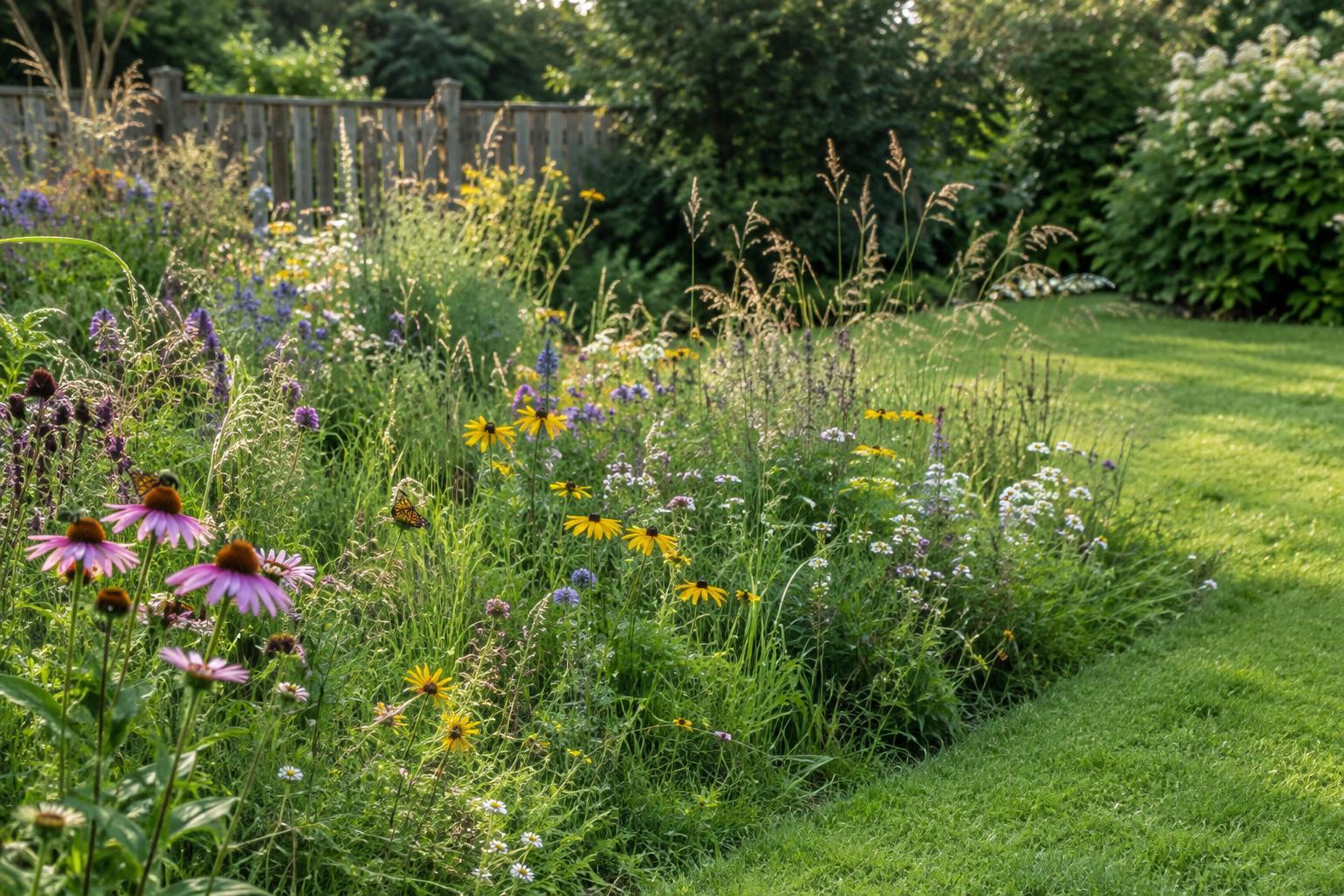
A wildlife-friendly meadow does not have to replace your entire lawn. A sunny strip along a fence, an awkward corner or an area you rarely walk on can be a good starting point. Keep lawn where you need space for play, seating or regular access. A modest patch is easier to prepare thoroughly and maintain while you learn which plants suit your conditions.
Watch the site before choosing plants. Note how many hours of direct sun it receives, whether water collects after rain and whether the soil dries quickly. Most flowering meadow plants need good light, but a damp or partly shaded area can support a different mix of suitable species. Check for buried utilities before digging, and consider local rules about vegetation height. A mown border or a narrow path can make the planting look intentional and keep access clear.
Remove the grass and reduce competition
Successful meadow planting begins with limiting competition from established turf. For a small area, cut and lift the sod with a spade, taking care to remove grass roots. For a larger patch, an opaque cover secured tightly over the grass can block light until the turf dies. The time this takes varies with the season and the vigor of the grass; lift an edge to check rather than planting by the calendar alone. Remove persistent weeds before sowing, especially those that spread from underground stems or roots.
Aim for a firm, mostly bare surface where seed can touch the soil. Rake away loose dead material and fill deep holes, but avoid repeatedly turning the soil: that can bring buried weed seeds to the surface. Do not add fertilizer as a routine step. Rich soil often favors fast-growing grasses and weeds over slower meadow flowers. If you are planting into a site with particularly difficult weeds, preparing one section at a time may be more effective than rushing to seed the whole area.
Choose plants for your place
A useful meadow mix includes flowers with different bloom periods, along with grasses or other plants that provide structure and cover. Look for species suited to your region, soil moisture and sunlight. Local native-plant groups, reputable nurseries and regional extension resources can help you check whether a plant belongs in your area. Read seed-mix labels carefully: a packet described as a “wildflower meadow” may contain plants from many regions, including short-lived flowers that will not form a lasting planting.
You can use seed, small plants or both. Seed is usually practical for a broad area, while young plants help you place particular species where you want them. Avoid known invasive plants and be cautious with mixes that do not list their contents. A meadow can also include a few bare or sparsely planted spots; not every inch needs to be filled. The goal is a varied planting that offers flowers, seeds and shelter over time, rather than an instant, uniform display.
Plant carefully and expect a slow start
Sow when conditions in your climate give seedlings a reasonable chance of establishing. In many places, a cool, moist period is easier than the hottest, driest part of the year, but follow the needs of the species you choose. Some seeds require a period of cold before they germinate. Scatter seed evenly over prepared ground, press it into the surface and follow any species-specific guidance on covering it. Burying small seeds too deeply can prevent them from sprouting.
Keep the soil from drying out completely during germination if rain is scarce, using gentle watering that does not wash seed away. Young plants may need occasional water through dry spells while their roots develop. The first growing season can look sparse or weedy: many perennial meadow plants invest in roots before producing many flowers. Learn to recognize your intended seedlings so you can remove unwanted plants without pulling out the meadow you planted.
Maintain a meadow without making it a lawn
A meadow needs care, but not weekly lawn-style mowing. During establishment, cut or pull weeds before they set seed, taking care not to smother small meadow plants with clippings. Once the planting is established, many meadows benefit from an occasional cut to prevent woody growth and keep vigorous plants from dominating. The best timing and frequency depend on your plants and climate. Remove most cut material so it does not form a thick mat over new growth.
If space allows, leave some standing stems and seed heads through the quiet season, then cut sections at different times rather than clearing everything at once. This preserves some cover while other areas regrow. Watch the patch each year: add suitable plants where gaps persist, remove invasive newcomers promptly and adjust your approach if one species takes over. A wildlife-friendly meadow is an evolving planting, and a small, well-tended patch can be a worthwhile place to begin.