Decide where leaves can stay
A layer of fallen leaves can give small animals places to shelter and can help protect the soil surface. As leaves break down, they add organic material to the ground. The useful question is not whether to clear every leaf, but where leaves can remain without getting in the way.
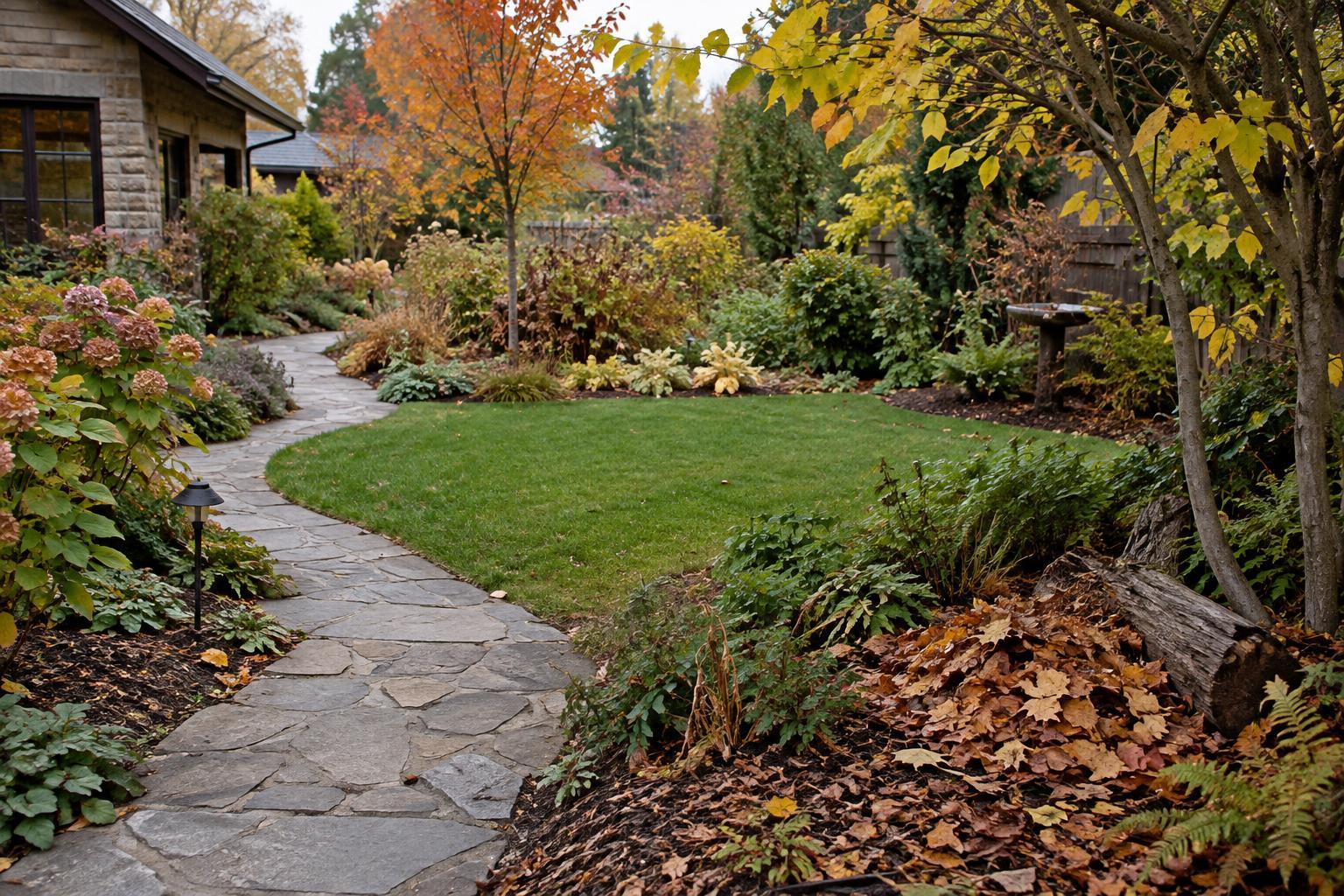
Start with quiet areas that need little foot traffic: beneath established shrubs, along a hedge or at the back of a planted border. Look at each spot after rain. If leaves tend to wash into a drain, collect against a doorway or sit in standing water, move them somewhere better suited to a leaf layer. Keep steps and frequently used paths clear so they remain easy to see and walk on.
Move leaves gently instead of removing them all
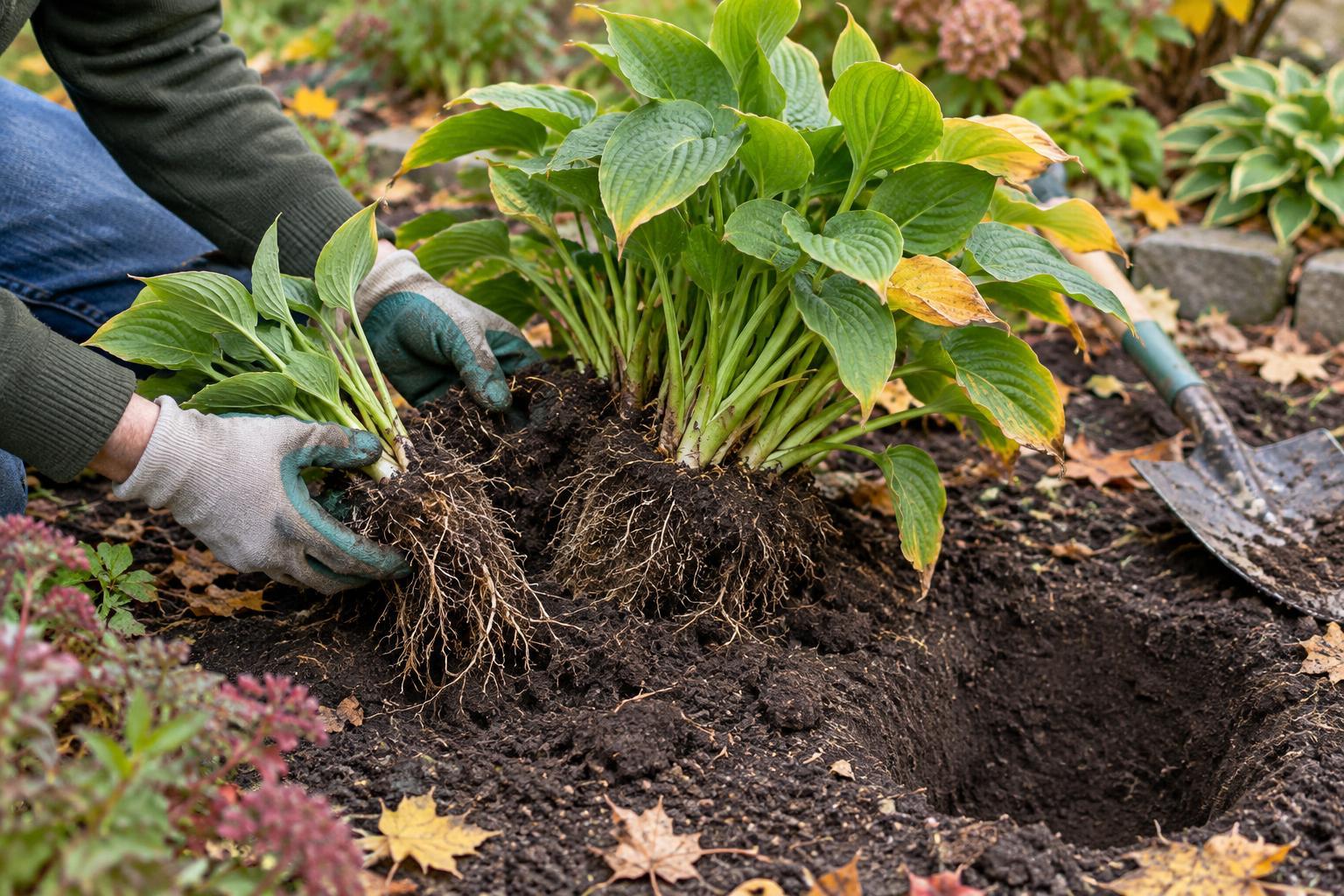
Leaves from a patio or path can often be relocated to a planted area. Rake or sweep them into a loose layer rather than packing them down. Leave a little space around the crowns of small plants, where a thick, damp covering may make it harder for new growth to emerge. Check low-growing plants occasionally and lift away leaves that are burying them.
A lawn is a useful place to make choices rather than follow one rule. A light scattering may break down without much attention; a dense, wet mat can block light from the grass beneath. Move excess leaves into borders or a leaf pile. If you use a mower to chop leaves, check the area first for small animals, and avoid running over thick piles where they may be hidden.
Make a leaf pile that can stay undisturbed
If you have more leaves than your beds can hold, choose a sheltered corner for a separate pile. A spot beneath shrubs or beside a fence can keep it out of the main garden view. A low, open pile is simple to build; a loose enclosure made from suitable garden materials can help contain leaves in a windy place. Avoid placing it against a building opening, over a drain or where runoff could carry the leaves away.
Try not to turn a habitat pile every time you add to it. You can place new leaves beside the older material or add a thin layer on top without digging through the centre. If your aim is to make leaf mould for gardening, keep a separate pile that you can manage more actively. This gives one area a chance to remain relatively undisturbed while another supplies material for the garden.
Keep the habitat useful and the space workable
A wildlife-friendly approach still needs occasional maintenance. Remove litter or other unwanted debris before adding leaves to a pile. Keep leaves out of drainage channels and away from surfaces where they become slippery. If wind repeatedly scatters a pile, shift it to a calmer spot or contain it more securely rather than clearing it away altogether.
When you need to move an established pile, work slowly and in small sections. Small animals may shelter among the leaves, particularly when conditions outside are harsh. If practical, leave part of the pile in place and move the rest to a nearby suitable spot. Avoid assuming that a pile is empty just because you cannot see anything on its surface.
Adjust the plan as the garden changes
The right amount of leaf cover depends on your plants, weather and available space. In a small garden, one quiet corner and a thin layer under shrubs may be enough to make use of fallen leaves. In a larger space, you might maintain several patches and leave some of them undisturbed for longer. There is no need to make every bed look the same.
Revisit your choices as new growth appears and as paths become busier. Pull leaves back from plants they are covering, replenish patches that have thinned and keep access routes clear. This selective approach lets you retain the practical benefits of tidying while giving fallen leaves a useful place in the garden.