Start with the views you want to change
Before buying a screen or planting a hedge, sit in the places where you actually use the patio. Check the view from a dining chair, a lounge chair and any doorway that opens onto the space. A neighbor’s upper window may overlook a seating area, while a path at ground level may expose only one corner. Privacy is usually easier to create when you address those specific sightlines rather than enclosing the entire patio.
Note when privacy matters most. An afternoon dining spot may need screening from one direction, while a morning coffee seat may already feel sheltered. Consider what you want to keep seeing, too: a garden bed, a tree or an open stretch of sky. Mark the area that needs coverage with temporary items such as chairs or movable planters, then walk around the patio and look out from inside the house. This simple test can reveal whether a proposed screen would block a useful view or make a doorway feel cramped.
Choose the lightest effective barrier
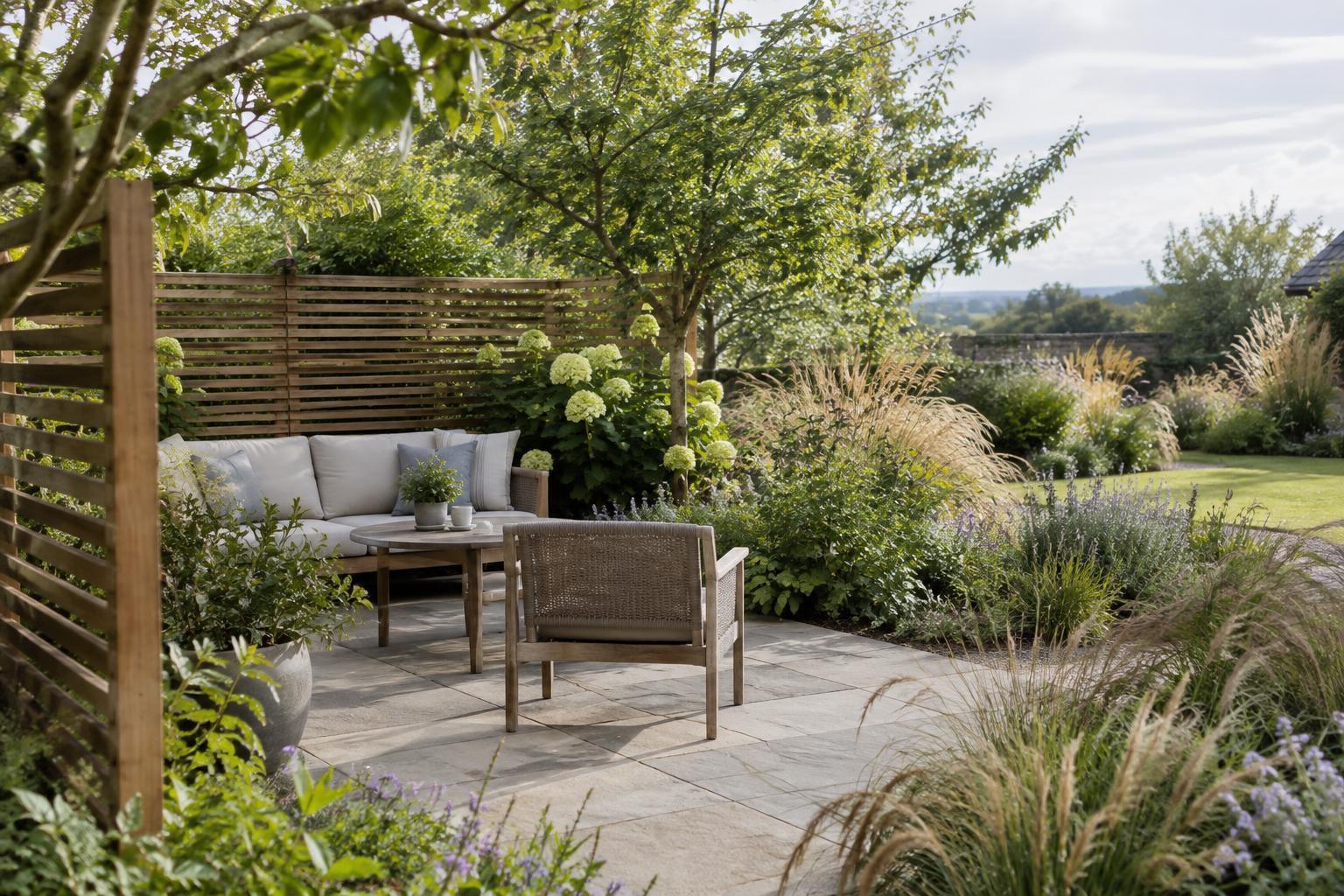
A solid barrier offers strong visual separation, but it can also cast shade and make a small patio feel boxed in. Slatted panels, open trellises and spaced planters can soften a view while letting in some light and air. The right choice depends on the angle of the view: narrow gaps that seem private straight on may offer little cover from the side. If possible, test a panel’s orientation before making it permanent.
Think about height as well as opacity. A low screen beside a seated dining area might be enough to interrupt a view from a nearby path. An elevated sightline may call for a taller feature or an overhead element, provided it does not overwhelm the space. Keep circulation clear around furniture and steps, and avoid placing a barrier where it creates an awkward, hidden corner. For inspiration on how patterns and color can change the feel of an outdoor room, browse Drawing and Art Journal before settling on a decorative screen.
Use plants where they suit the space
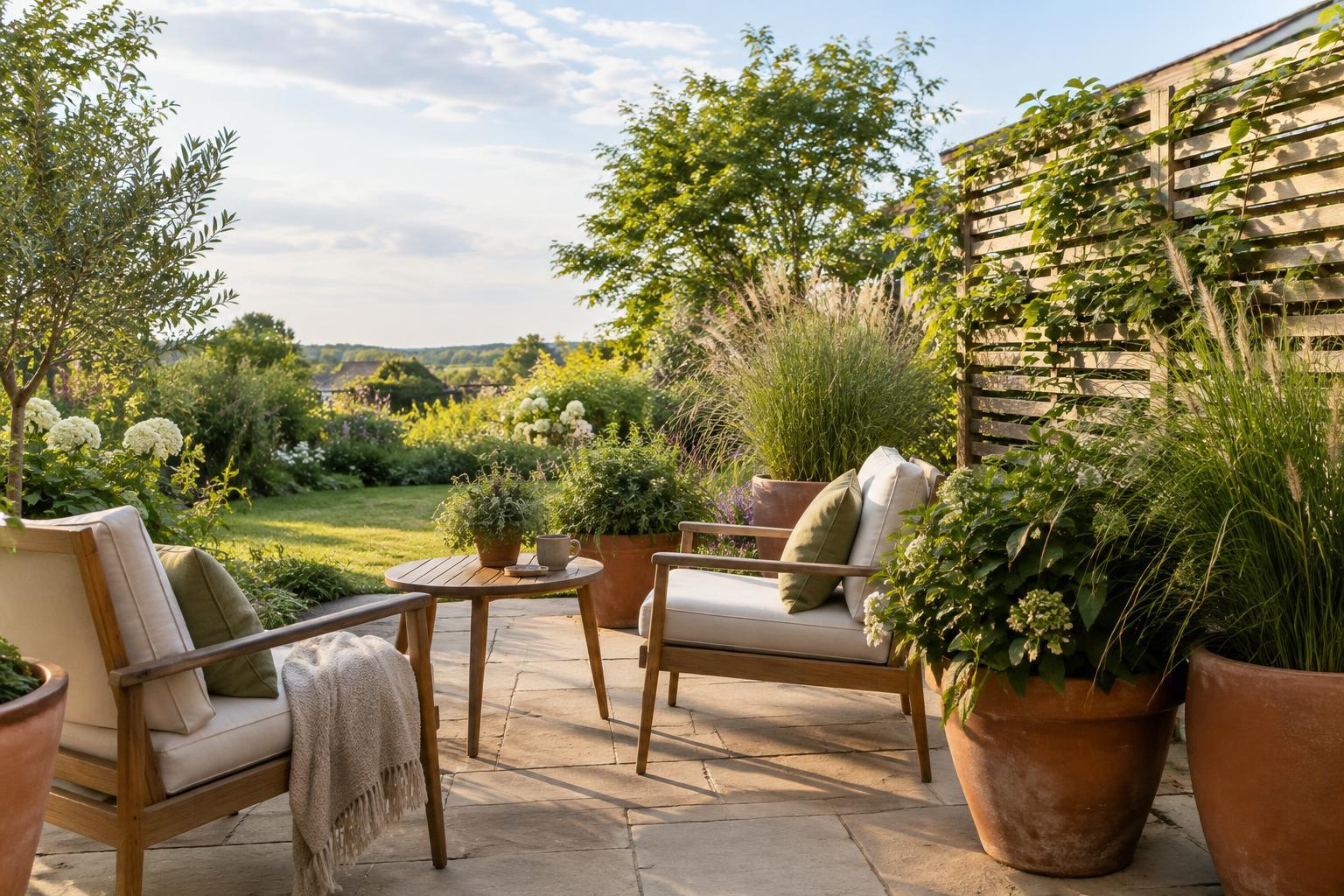
Plants can create a softer edge than a built screen, but they need room to grow. In-ground shrubs may eventually provide substantial cover, while containers offer flexibility for renters or patios where digging is impractical. Before choosing a plant, consider its mature width, growth habit and likely needs in your climate. A narrow patio can quickly become crowded if a plant extends into the walking route.
Decide whether you need privacy throughout the year. Deciduous planting may provide welcome shade and screening during the growing season while opening the space to more winter light. Evergreen plants can offer more consistent cover, though they still need suitable conditions and care. For container planting, allow for watering access and choose pots that are stable for their location. A small group of planters at the key sightline may do more useful work than a long row that consumes the whole patio edge.
Make the finished space comfortable to use
Privacy features affect more than visibility. A tall panel can change airflow, shade nearby plants or become a surface that needs regular cleaning. Freestanding screens and large planters should be appropriately stable, especially in exposed locations; lightweight items that are easy to move may also be easy for wind to move. Before installing posts or attaching a structure, check practical constraints such as underground services, property boundaries and any applicable local requirements.
Aim for layers rather than one imposing solution. A partial panel near the seating area, a planter at the patio edge and a well-placed umbrella may create a comfortable sense of retreat while preserving an open view elsewhere. Leave enough space to pull out chairs, carry food outside and tend the planting. If you are considering an illustrated panel or mural as part of the design, browse Artists and Movements · Drawing and Art Journal for visual styles to explore.
Finally, revisit the layout at different times of day before committing to permanent work. Light, shadows and the way people use nearby spaces can change which sightlines feel exposed. A patio that feels private while remaining easy to move through is more likely to be a place you enjoy using.