Decide whether a plant needs dividing
Perennials do not need dividing on a fixed schedule. A clump may grow well for years without attention, while another may outgrow its space or leave a gap at its center. Consider dividing when a plant has become crowded, produces fewer flowers than it used to, or spreads into a path or neighboring plants. If it is healthy and fits its space, leaving it alone is often the easier choice.
First, identify the plant and its growth habit. Perennials that form spreading clumps are generally easier to separate than plants with a single woody crown or a deep taproot. Fall division often suits plants that finished flowering earlier in the season. Plants blooming in fall may be better divided at another time so they can flower undisturbed. If you are unsure what a plant is, observe it through another season before digging.
Choose a window before the ground freezes
The aim is to give new divisions time to establish roots while the soil is still workable. Choose a stretch of mild weather rather than a hot, dry spell or a day when the ground is saturated. In colder climates, begin earlier in fall; where winters are mild, the workable window may be longer. Local conditions matter more than a calendar date.
Water the clump a day or two before lifting it if the soil is dry. Moist soil is easier to dig, and hydrated roots are less likely to dry out during the job. Prepare the new planting spots before you start so divisions spend as little time as possible out of the ground. If you cannot replant them promptly, keep the roots shaded and moist, not soaking in a bucket of water.
Lift and separate the clump
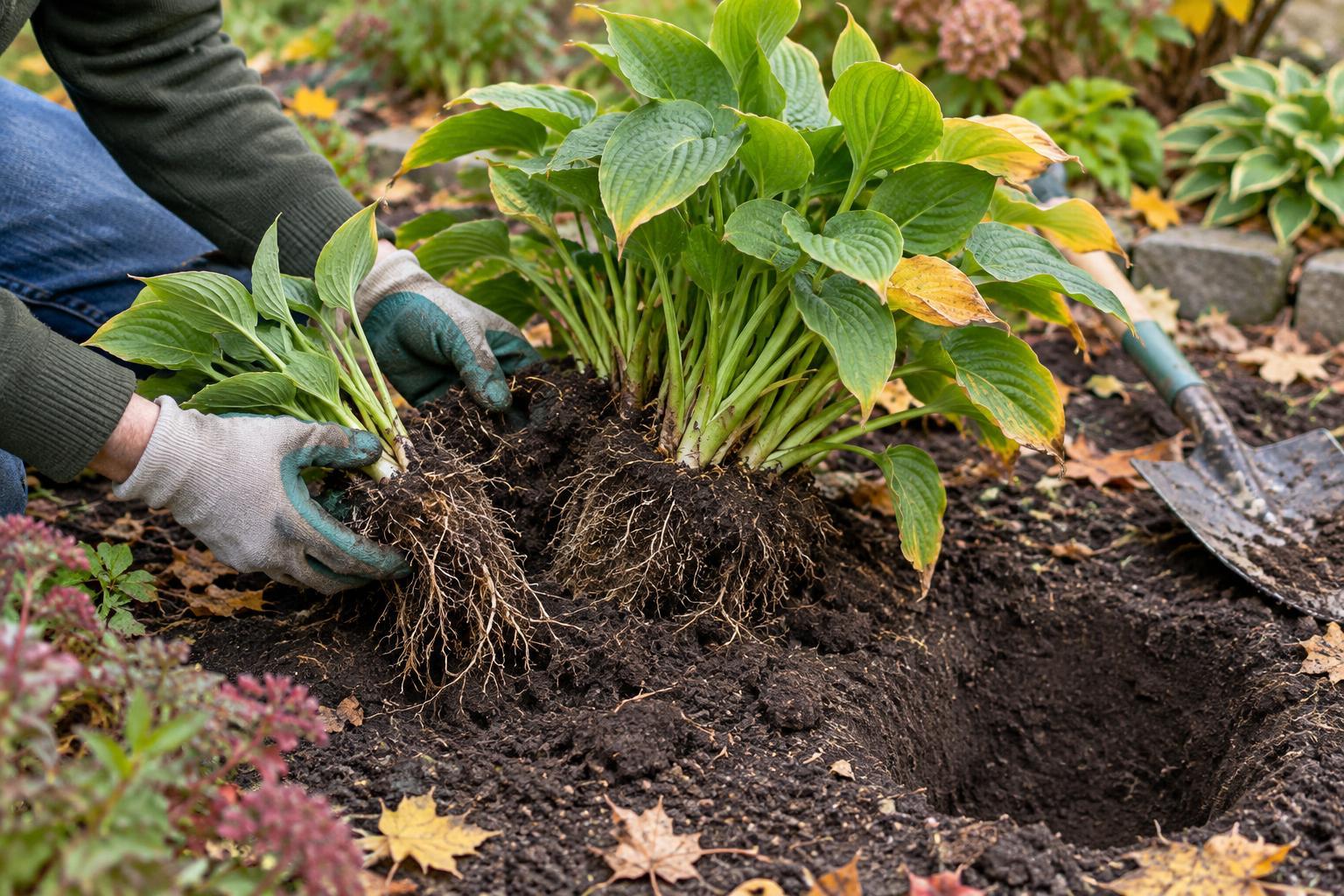
Use a garden fork or spade to loosen the soil around the plant, working beyond the main stems where practical. Lift the root mass gently and shake or brush away enough loose soil to see how it grows. You do not need to remove every bit of soil. Set the clump on the ground or a tarp where you can inspect it without leaving the roots exposed to sun and wind for long.
Some clumps pull apart by hand; others need to be cut with a clean, sharp spade or knife. Make divisions large enough to include healthy roots and several growing points or shoots. Discard sections that are rotten, severely damaged or mostly dead. A smaller number of sturdy divisions is usually more useful than many tiny pieces that may struggle to establish.
Replant at the right depth
Place each division where its mature size will fit, leaving room for neighboring plants and access for maintenance. Loosen the soil in a planting area wider than the roots, and remove competing weeds. Set the crown—the point where stems meet roots—at about the same depth it grew before. Burying it too deeply can cause problems, while exposed roots can dry out.
Spread the roots where possible, backfill with soil and firm it gently to remove large air pockets. Water thoroughly after planting, even if rain is expected later. A modest layer of mulch can help conserve moisture and buffer soil temperatures, but keep it away from the crown. Label the new plants if their foliage is likely to disappear over winter; labels make them easier to find when spring growth begins.
Help divisions settle in
Check the soil during dry autumn spells and water when it begins to dry beneath the surface. New divisions have fewer roots than established clumps, so they may need attention even when nearby mature plants do not. Avoid pushing soft new growth with heavy feeding late in the season. The immediate goal is steady root establishment, not rapid top growth.
Expect some foliage to wilt or die back as temperatures fall. That alone does not mean the division has failed. Leave healthy foliage in place while it is still growing, then follow the plant’s usual cleanup needs. In spring, look for new shoots before judging the result. If a division has not returned, use what you learned about its site, timing and size when choosing a replacement.