Why crowded seedlings need attention
Sowing a few extra seeds can help ensure that something grows, especially when germination is uneven. If most of them sprout, though, the seedlings soon compete for light, water and space. Stems may stretch toward the light, leaves may overlap, and roots can become tangled. Thinning means removing some seedlings so the plants you keep have a better chance to develop.
It can feel wasteful to remove healthy sprouts, but leaving every seedling in place is not always kinder to the crop. A dense patch is harder to water evenly and harder to inspect as it grows. The aim is not to make every row look perfectly uniform. It is to give each remaining plant approximately the room it will need, while accounting for the way that particular crop grows.
Choose the right time to thin
Wait until you can see what has germinated and can tell the seedlings apart from nearby weeds. For many crops, the first true leaves—the leaves that appear after the initial seed leaves—make this easier. Do not wait so long that the plants form a tight mat: roots become more intertwined as they grow, making removal more disruptive.
Check the seed packet or plant label for recommended final spacing rather than using one distance for everything. A small leafy green may need less room than a plant grown for a large head or root. If the seedlings are extremely crowded, you can thin in stages: make a first pass to relieve pressure, then choose the final spacing once the remaining plants are easier to assess.
Decide which seedlings to keep
Look along the row or across the container before removing anything. Keep seedlings that are upright, reasonably vigorous and positioned where they will have space on all sides. A slightly smaller plant in a useful position may be a better choice than the largest seedling in a crowded cluster. Avoid keeping two strong seedlings almost touching while leaving a large gap elsewhere.
Think about the plant’s mature size, not just how much room its leaves occupy today. If you are unsure about the final spacing, leave a little flexibility for a later pass rather than removing too much at once. In containers, consider the space available to roots as well as foliage; a pot can look roomy above the soil while still holding too many plants.
Remove extras with minimal disturbance
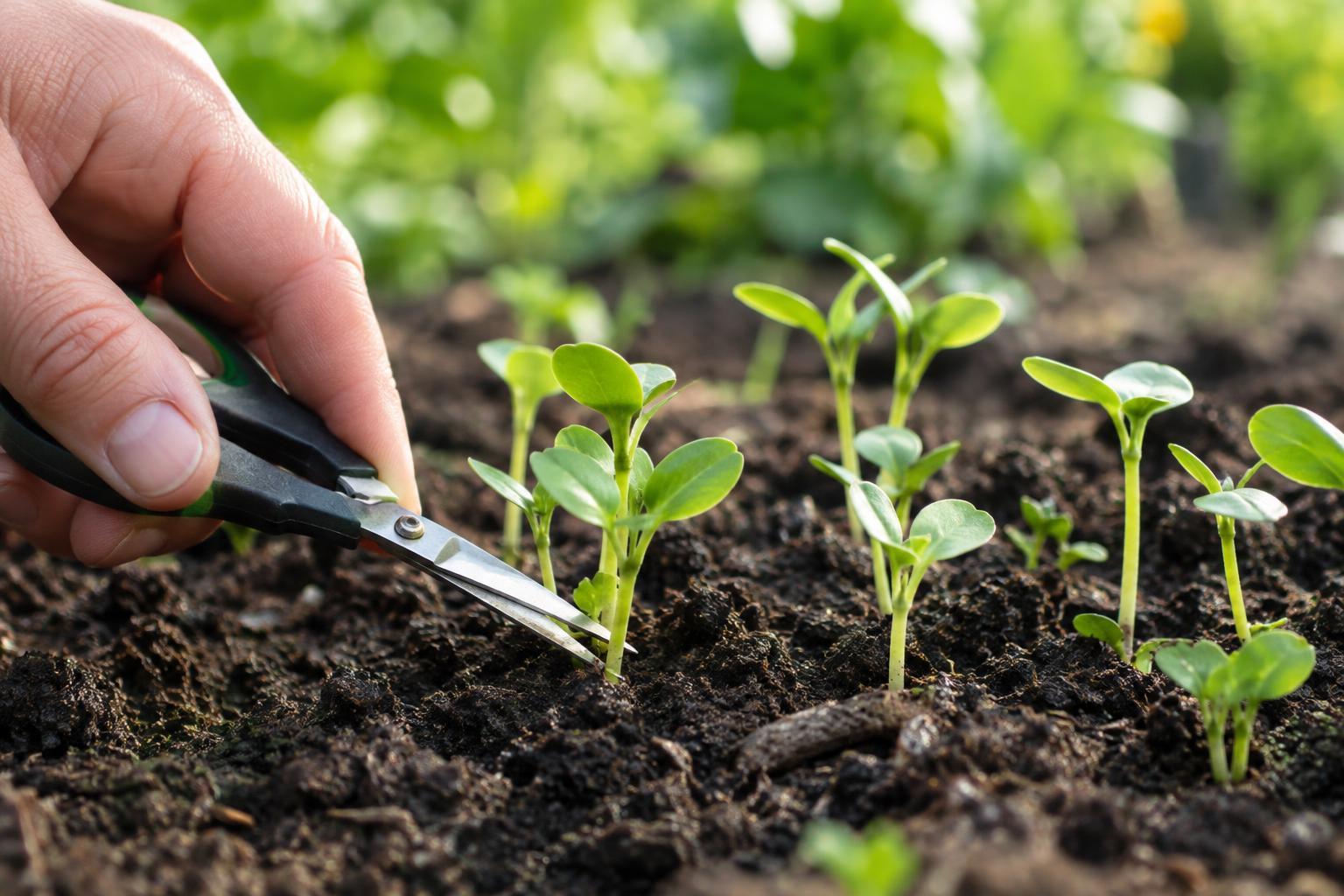
Where seedlings stand close together, use small, clean scissors to snip unwanted stems at or just above the soil surface. This leaves their roots in place rather than pulling them through the roots of the plants you want to keep. Hold leaves gently out of the way so you can see the stem you intend to cut. There is no need to dig out the clipped roots.
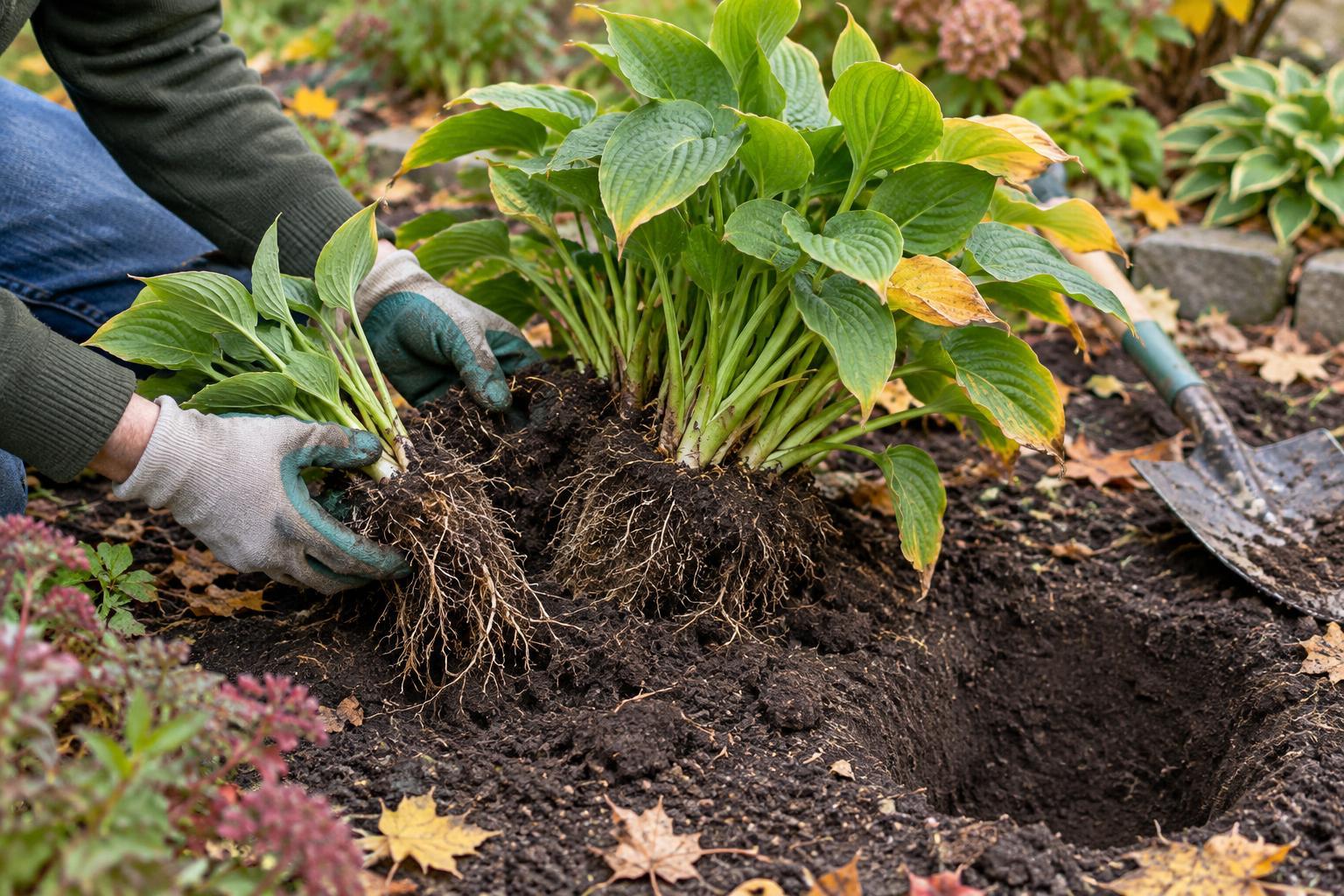
Pulling can work when seedlings are well separated and you want to move an extra plant, but not every crop tolerates transplanting equally well. If you do lift one, loosen the surrounding soil first and handle it by a leaf rather than squeezing its delicate stem. Replant promptly and expect that some moved seedlings may not establish. When preserving the original plants matters most, snipping is the simpler choice.
Care for the plants that remain
After thinning, check that the remaining seedlings are still upright and that soil has not shifted away from their roots. Water gently if the surface is dry, using a soft flow that will not flatten the young plants. Keep observing the patch over the next several days; another round of thinning may be needed if you deliberately left extras.
Spacing is only part of healthy growth. Seedlings also need suitable light and reasonably consistent moisture, without soil that stays waterlogged. If the plants continue to stretch or crowd one another after thinning, reassess their growing conditions and the final spacing for that crop. A few careful decisions while plants are small can make the rest of the growing season easier to manage.