Start with the windows you actually use
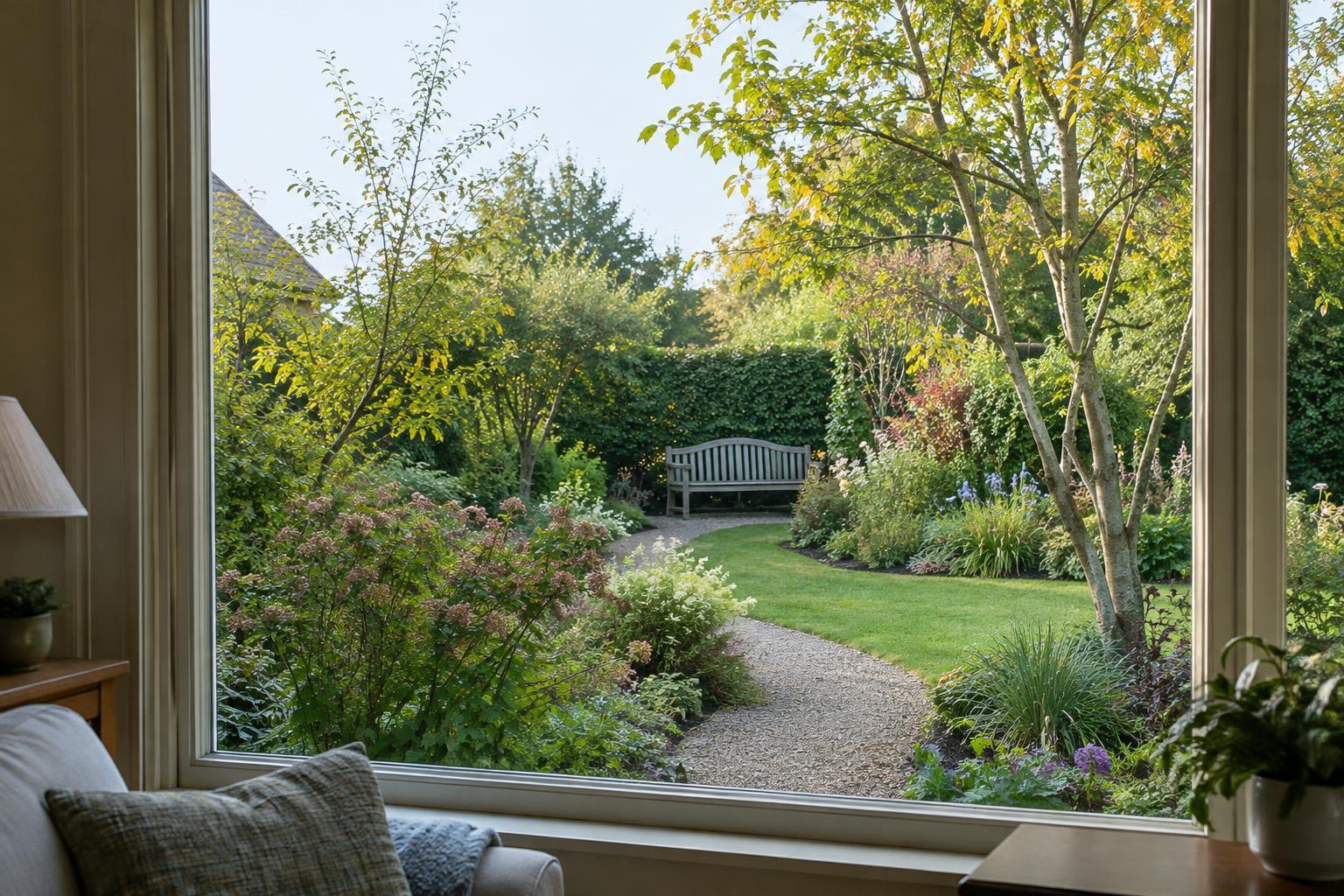
A garden plan often begins at the back door, but much of your time with the garden may be spent looking at it from inside. Before moving beds or choosing plants, stand or sit at the windows you use most. A kitchen window might frame a small area you see several times a day, while a living room window may offer a wider view. These views do not need the same treatment.
Make a simple note of what you see from each position: the near edge of the garden, any attractive trees or structures, and anything you would rather draw less attention to. Check the view from your usual seated height as well as while standing. A low planting bed that looks prominent from the path may barely register from a desk; a fence visible from the sofa may become the main backdrop for everything in front of it.
Choose one or two important views to improve first. Trying to make every window a perfect picture can lead to too many focal points and more planting than you want to maintain. The aim is a garden that feels considered from indoors while remaining useful outdoors.
Give the eye a place to travel
An indoor view usually feels more engaging when it has a foreground, a middle distance and a point of interest beyond. A pot near the window, planting beside a path and a small tree farther away can provide those layers. The point of interest might instead be a bench, a gate or the shape of an existing plant. It does not have to be a new feature.
Look for opportunities to connect the view to the garden’s everyday layout. A path that curves toward a seating area can invite the eye outward, but it should still take people where they need to go. Likewise, a focal plant should suit its growing conditions and have enough room at maturity. Plan the view around useful choices rather than forcing the whole garden to serve a single photograph-like composition.
If you want more inspiration for shaping pleasant everyday spaces, browse Creative Living · Awryt Journal for creative-living ideas. Then return to your own windows and decide which ideas fit the space, light and upkeep you can offer.
Frame the view without closing it off
Planting near a window can soften the boundary between house and garden, but it can also block useful light or obscure the part you most want to see. Before adding a tall shrub, mark its likely mature width and height on your plan. Consider how close it will be to the building and whether you will be able to reach it for routine care.
Lower plants near the house can leave a clear view over them, while taller forms farther out can provide structure. This is a flexible pattern, not a rule: a small tree viewed through a window can be appealing if its trunk leaves space to see beneath the canopy. Where screening is needed, test whether a partial screen would do the job. Hiding one distracting object may be more useful than enclosing the whole view.
Pay attention to what happens at night, too. A window may become reflective when the room is bright and the garden is dark, so do not rely on the view being equally visible at all hours. Features you enjoy chiefly during daylight should still work as practical parts of the garden.
Plan for changing seasons and manageable upkeep
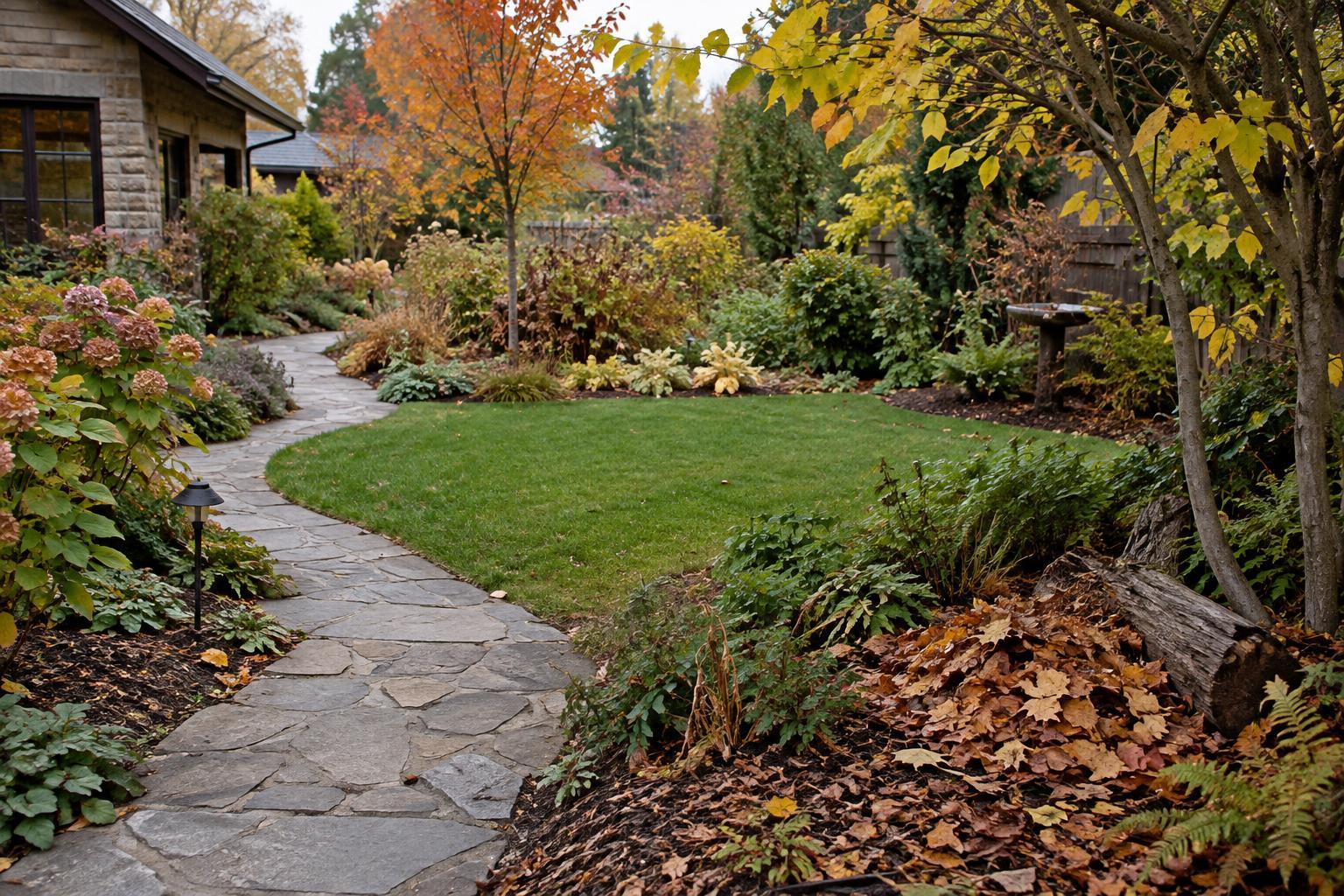
A view need not be full of flowers to hold your interest. Branch shape, evergreen foliage, seed heads, paving and the outline of a raised bed can all contribute at different times of year. Think about the view during your garden’s quieter seasons, then choose a few elements that will give it structure. Climate and local growing conditions will affect which plants keep their shape or foliage through the year.
Keep maintenance in the picture as you plan. Place plants you expect to prune or divide where you can reach them without stepping into other beds. Leave enough clearance beside paths and windows, and avoid putting a demanding display at the far end of the garden just because it looks good from indoors. A simpler arrangement that you can care for consistently may give you a better view over time.
Before committing, set a chair at your usual indoor viewing position and look again at your sketch. Ask what will draw your eye first, what might grow into the sightline, and whether the garden will still work when you walk into it. That final check helps turn a pleasing window view into a practical garden plan.