What soil pH tells you
Soil pH describes how acidic or alkaline the soil is. A reading of 7 is neutral; lower numbers are acidic, and higher numbers are alkaline. The reading matters because pH affects how readily plants can take up some nutrients. It does not, however, tell you how much of each nutrient is present or diagnose every cause of poor growth.
Different plants tolerate different ranges. Many common vegetables grow well in slightly acidic to neutral soil, while plants such as blueberries generally need more acidic conditions. Rather than aiming to make every bed neutral, test the area where a particular plant will grow and compare the result with that plant’s needs. If established plants are healthy, a reading outside an idealized range may not call for action.
Collect a sample that represents the bed
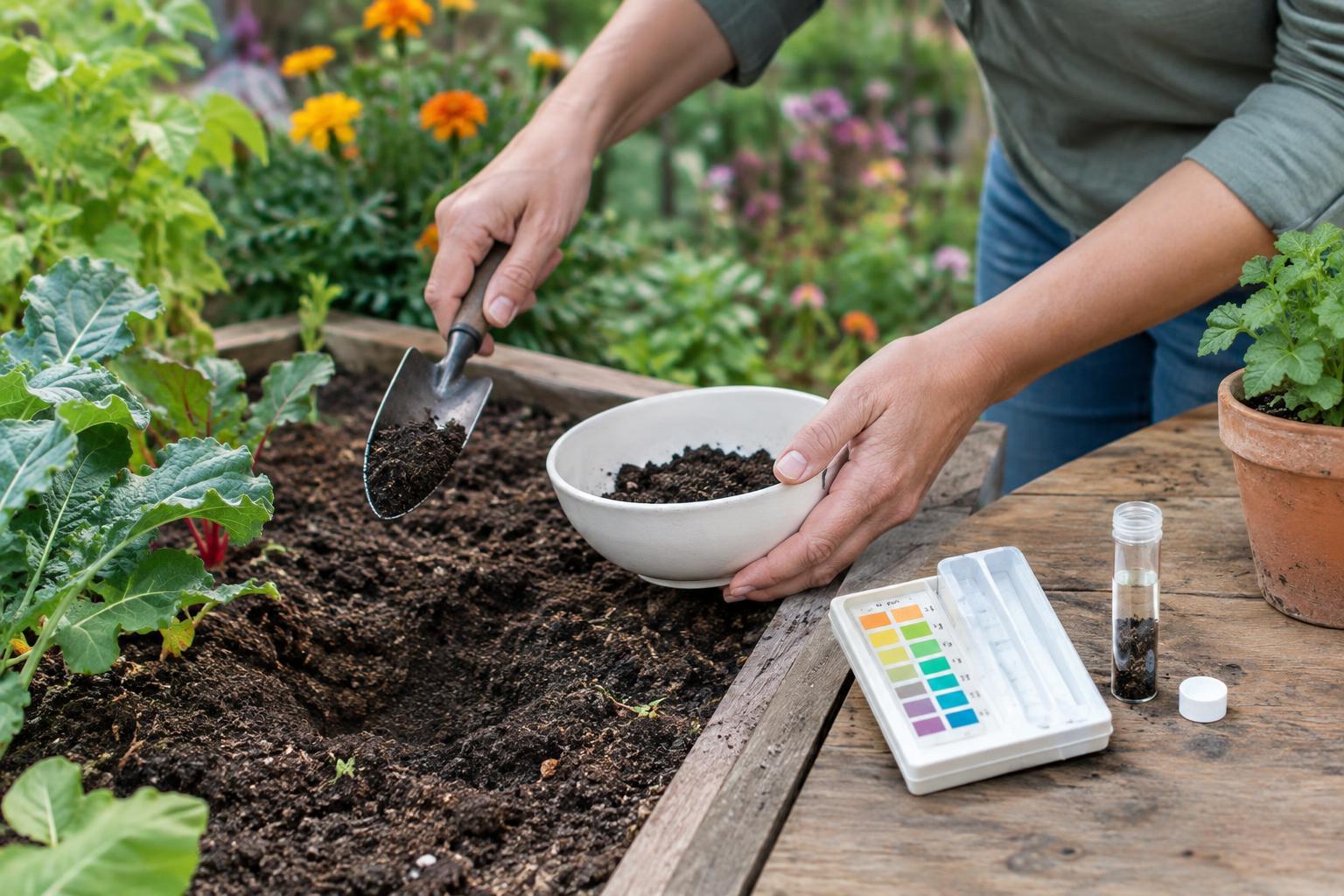
A test is only as useful as the soil you collect. For a garden bed, take several small samples from across the area at roughly the depth where you cultivate and plant. Remove surface mulch first, then combine the samples in a clean container and mix them well. Take a portion of that mixture for testing. Follow a soil laboratory’s sampling directions if you plan to send it a sample.
Keep noticeably different areas separate. A raised bed filled with purchased mix, a lawn and a border beside a path may all have different pH readings. Avoid sampling only from a spot where you recently added compost, fertilizer or lime, since it may not represent the wider bed. If one plant is struggling while its neighbors look healthy, you can also test soil near that plant separately for comparison.
Choose and use a testing method
Home color-change kits and test strips offer a convenient approximate reading. Follow the kit’s directions for the amount of soil and water to use, mixing time and when to read the color. If the color falls between two marks, record it as an estimate rather than forcing a precise number. Testing the same mixed sample twice can help reveal an inconsistent result.
An electronic pH meter may be useful if it is maintained and calibrated according to its instructions, but a display with decimal places is not automatically more accurate. For a result you intend to use when making a substantial soil amendment, consider a soil-testing laboratory. Its report may provide more context than a basic home pH test. Kitchen shortcuts, such as adding vinegar or baking soda to soil, are too imprecise to guide planting decisions.
Interpret the number in context
A low reading means the sampled soil is acidic; a high reading means it is alkaline. Look up the preferred range for the plants you want to grow, then consider how far your result is from it. A small difference may be less important than other growing conditions, including drainage, sunlight and watering. A very different reading gives you a reason to investigate further, particularly if plants show persistent problems.
Write down the reading, the location, the test method and anything recently added to the soil. That record makes later tests more meaningful. If you receive an unexpected result, test another well-mixed sample or use a different method before changing the bed. Home tests are especially useful for spotting broad differences between areas, not for treating a single decimal point as a firm target.
Decide whether to adjust the soil
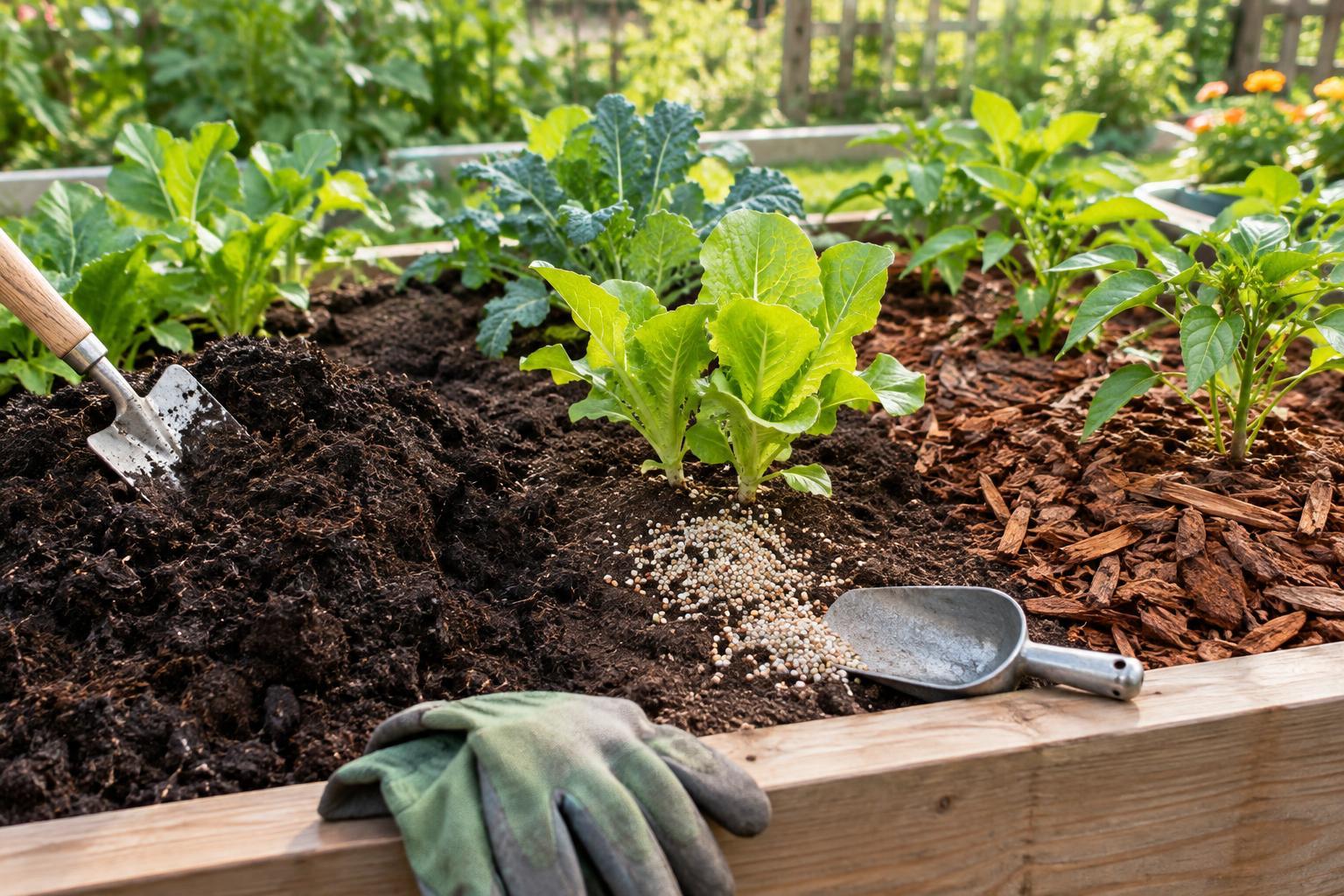
Choosing plants suited to your existing soil is often simpler than trying to change a large area. Where an adjustment is worthwhile, garden lime is commonly used to raise pH, while elemental sulfur is used to lower it. Neither works instantly, and the amount needed depends on more than the starting pH. Soil texture and its resistance to pH change also matter, so do not guess at a large application from a home-kit reading alone.
Use product directions or a soil report for amendment guidance, and make changes gradually. Retest after the amendment has had time to work, following the product or laboratory guidance on timing. For a small number of plants with specialized needs, a separate bed or container with a suitable growing medium may be more manageable than changing an entire garden. The goal is a workable growing environment, not a perfect number.