Start with the place the plant will grow
Before comparing plants at a nursery, think about where each one will go. Note how much direct sun the spot receives, whether the soil tends to stay wet or dry, and how much room the plant can have at maturity. A compact plant in a small pot may eventually need far more space than its display suggests. If you are shopping for a container, consider its depth and drainage as well as its width.
Read the plant label for light, water and size information, but treat it as a starting point rather than a guarantee. Your climate and the conditions in your garden matter, and care needs can vary among varieties. If a label is missing or unclear, ask nursery staff what they know about the plant. A vigorous specimen is still a poor buy if it is unlikely to thrive where you plan to put it.
Look at the whole plant, not just the flowers
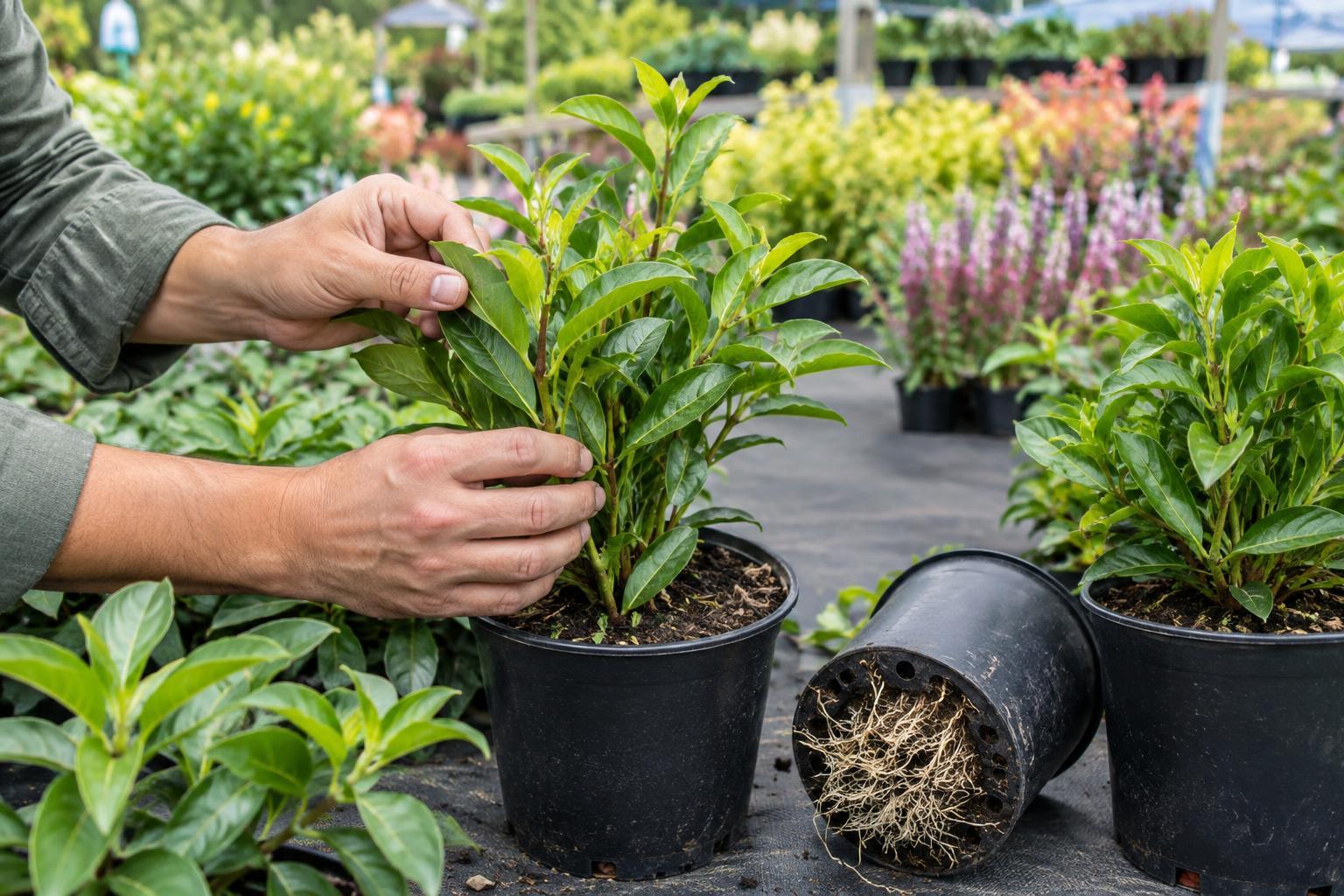
Choose a plant with a shape and amount of growth that make sense for its type. Look for sturdy stems, growth distributed around the plant, and leaves that generally appear firm and well colored. A few older leaves fading at the base may be normal. Widespread yellowing, browning, wilting or distorted new growth deserves a closer look, especially when neighboring plants of the same variety look healthier.
Flowers are appealing, but they are only one part of the inspection. A plant covered in blooms may have less new growth than a quieter-looking option beside it. Check stems and leaf joints for broken areas, soft patches or clusters of insects. Look under several leaves for pests, webbing or sticky residue. Not every spot is a serious problem, but if you cannot tell what caused it, choosing a cleaner specimen is a sensible option.
Check the pot, soil and roots
The pot can reveal problems that are easy to miss from above. Soil that has pulled far away from the pot sides may have dried substantially; soil that feels persistently soggy can also be a concern. Judge it alongside the plant rather than by moisture alone, since watering needs differ. Make sure the pot has drainage openings, and look for weeds or signs of pests on the soil surface.
If the nursery permits it, gently slide a plant from its pot to see the root ball, or ask a staff member to do so. Roots should be present and hold some of the mix together without forming a dense mass that circles the pot repeatedly. Thick roots emerging from drainage holes can be another clue that the plant has been in its container for a long time. Root color varies by species and growing medium, so focus on the overall condition; mushy roots or a sour smell are reasons to pass.
Compare similar plants before deciding
Set two or three plants of the same variety side by side. Comparison makes it easier to notice an unusually thin canopy, damaged stems or uneven growth. A smaller, well-branched plant may be a better choice than a taller one whose stems are weak or stretched. If you want to plant soon, consider whether the roots and top growth appear balanced enough for the plant to settle in without extensive pruning.
Also take a moment to look at the surrounding display. Plants kept close together may have crowded foliage that hides damage, so turn the pot and inspect all sides. A few blemishes do not mean a plant cannot recover, but buying a struggling specimen can turn an enjoyable planting project into a rescue attempt. If only questionable examples remain, it is fine to wait or choose another suitable variety.
Give your purchase a steady start at home
Protect plants during the trip home. Keep pots upright, avoid crushing stems, and do not leave plants in a hot or freezing vehicle. Once home, check the soil moisture and water according to the plant’s needs. If the nursery display was sheltered and your planting site is exposed to strong sun or wind, introduce the plant to those conditions gradually when practical.
Plant at an appropriate depth for the species, using a container or garden spot with suitable drainage. Water the root area after planting and monitor it as the plant adjusts; a regular check is more useful than following a fixed watering interval regardless of weather. Choosing carefully at the nursery cannot remove every challenge, but it gives a plant suited to your space a better beginning.