Three jobs, not three names for the same thing
Compost improves the soil plants grow in. Fertilizer supplies nutrients. Mulch covers the soil surface. A material can sometimes do more than one of these jobs, but knowing its main purpose makes it easier to choose what your garden needs.
Think of a vegetable bed that dries out quickly and produces pale, slow-growing plants. Compost may help the soil hold moisture and support healthy roots; a suitable fertilizer may address a nutrient shortage; mulch may slow evaporation. None is an automatic cure for every problem. Light, drainage, watering, temperature, pests, and plant choice matter too.
Compost builds a better growing environment
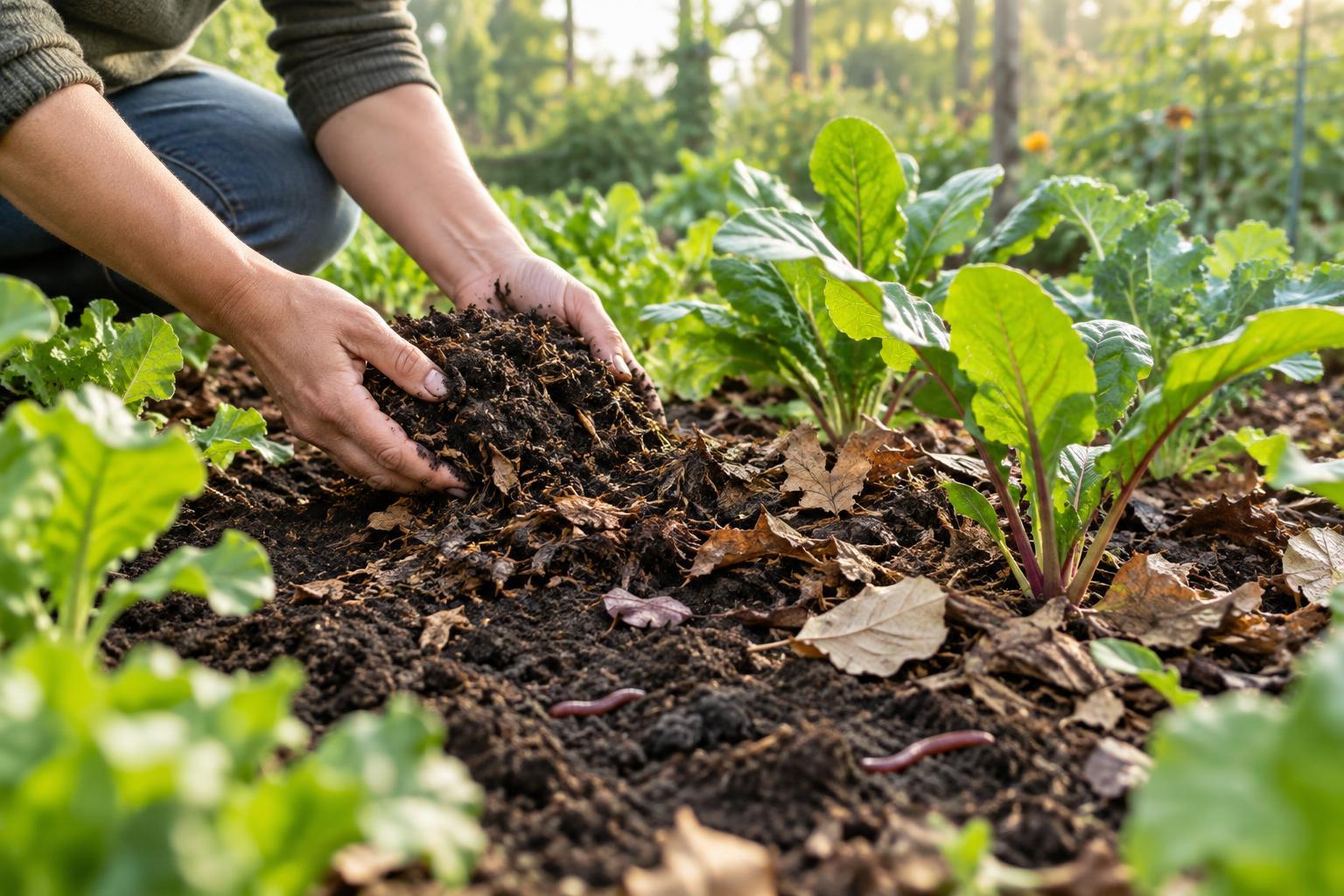
Compost is decomposed organic material, often made from plant scraps, leaves, and other suitable garden waste. Mixed into a garden bed, finished compost can improve soil structure. In sandy ground, it can help retain water; in dense ground, it can help create a more workable texture over time. It also contributes some nutrients, though the amounts vary and may not match the needs of a demanding crop.
Use finished compost that looks crumbly and smells earthy rather than sour or strongly of its original ingredients. Spread a modest layer over an established bed and gently work it into the upper soil before planting, or leave it on the surface where digging would disturb roots. For containers, use a potting mix suited to the plants rather than filling pots with compost alone: roots in a container need a mix that drains and holds air as well as moisture.
Fertilizer feeds plants more directly
Fertilizers provide nutrients in more concentrated, measurable amounts than compost usually does. Packages commonly identify nitrogen, phosphorus, and potassium, alongside directions for particular plants or uses. Whether a fertilizer is derived from organic materials or manufactured ingredients, the practical question is whether it supplies what your plants need at a rate you can use safely.
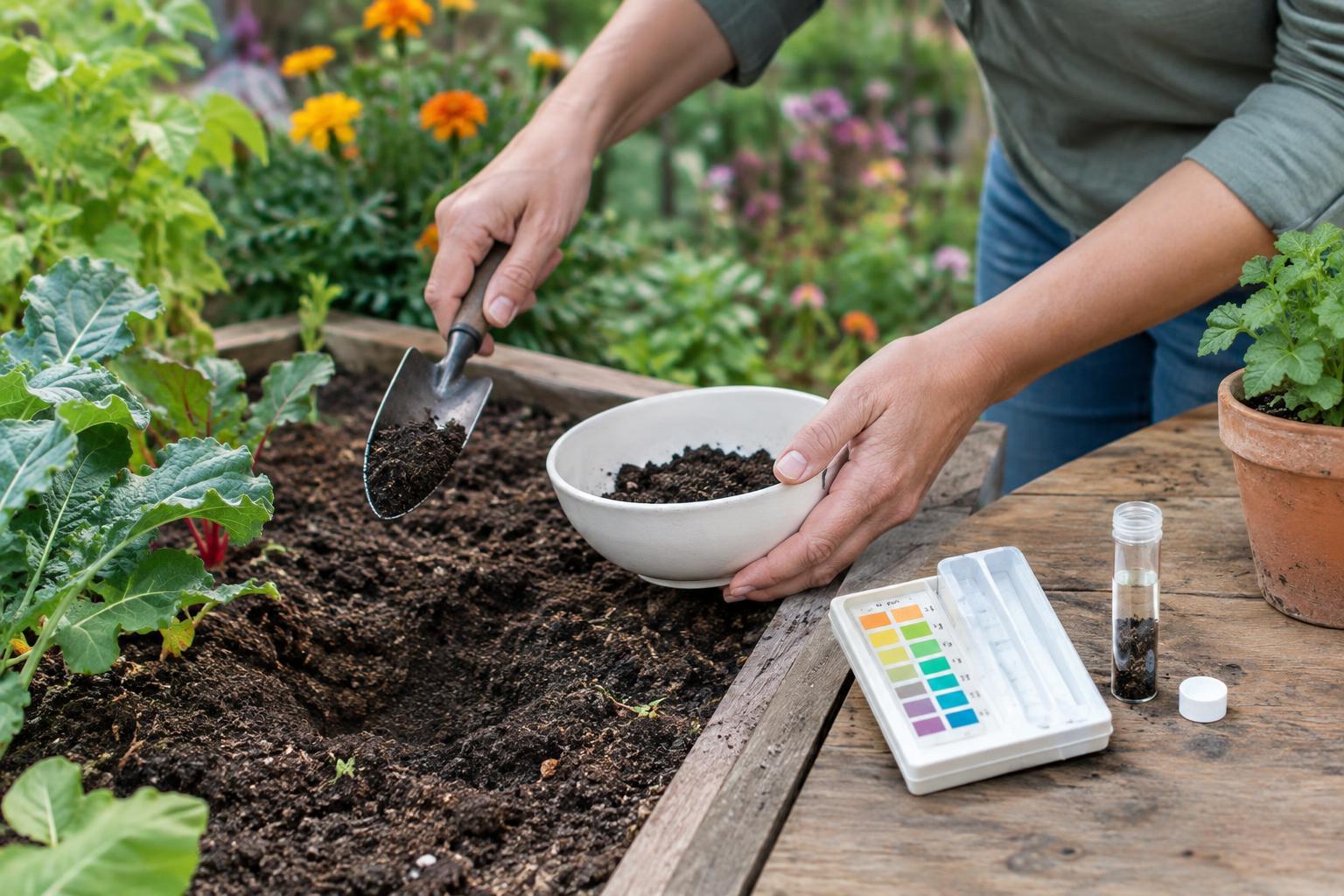
Avoid treating every yellow leaf or disappointing harvest as a call for more fertilizer. Too much can damage roots, encourage leafy growth at the expense of flowers or fruit, or allow unused nutrients to wash away. Start with the plant’s needs and the product label; if a bed repeatedly performs poorly despite suitable light and care, a soil test can help you make a more informed choice. Apply only as directed, and keep fertilizer off leaves when the label calls for soil application.
Mulch protects the soil surface
Mulch is a layer placed on top of soil, not mixed through it. Shredded leaves, straw, wood chips, and other suitable materials can reduce evaporation, moderate soil temperature, and make it harder for some weeds to establish. Organic mulches gradually break down and add material to the soil surface, but they are not a dependable substitute for fertilizer when plants need a specific nutrient supply.
Choose mulch for the setting. Wood chips work well on many paths and around established shrubs, while finer materials are often easier to manage around small vegetables and seedlings. Leave a little clear space around stems and tree trunks so mulch does not sit against them. In cool, wet conditions, wait until soil has warmed or dried enough before adding a thick layer; in hot, dry conditions, mulching after watering can help retain that moisture.
How to use them together without overdoing it
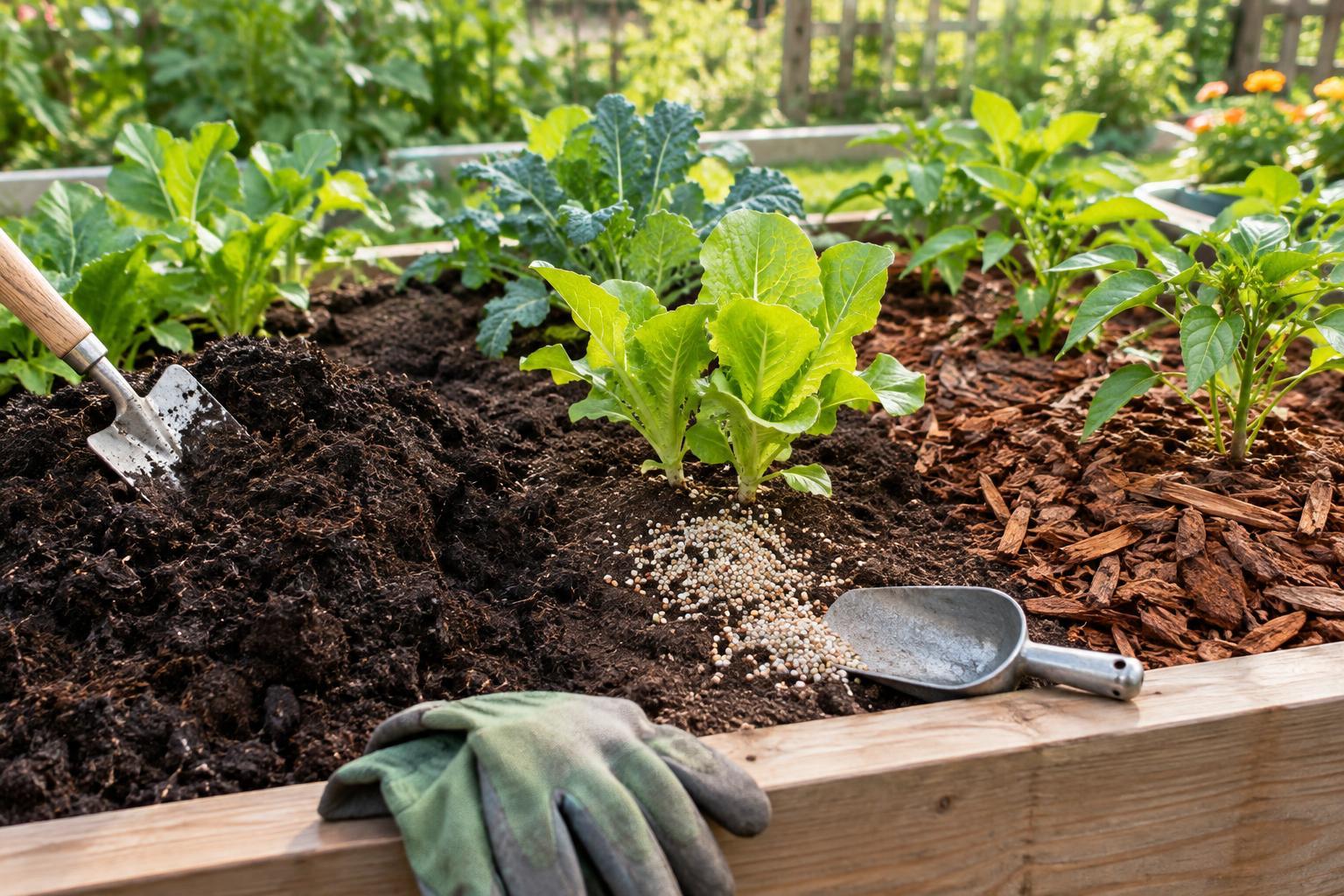
Before planting, check whether the soil needs improvement in texture or workability. If it does, add finished compost. Once plants are growing, watch their performance and follow plant-specific guidance before reaching for fertilizer. Then use mulch where exposed soil loses moisture quickly or weeds compete with your plants. Water the soil before mulching if it is dry; mulch helps conserve moisture but cannot put it there.
There is no requirement to use all three in every garden. A fertile bed may need little or no added fertilizer, while a container may benefit more from a suitable potting mix and carefully timed feeding than from a thick mulch layer. Begin with the problem you can observe, make one sensible change at a time, and give plants a chance to respond.