Start with a simple, shallow basin
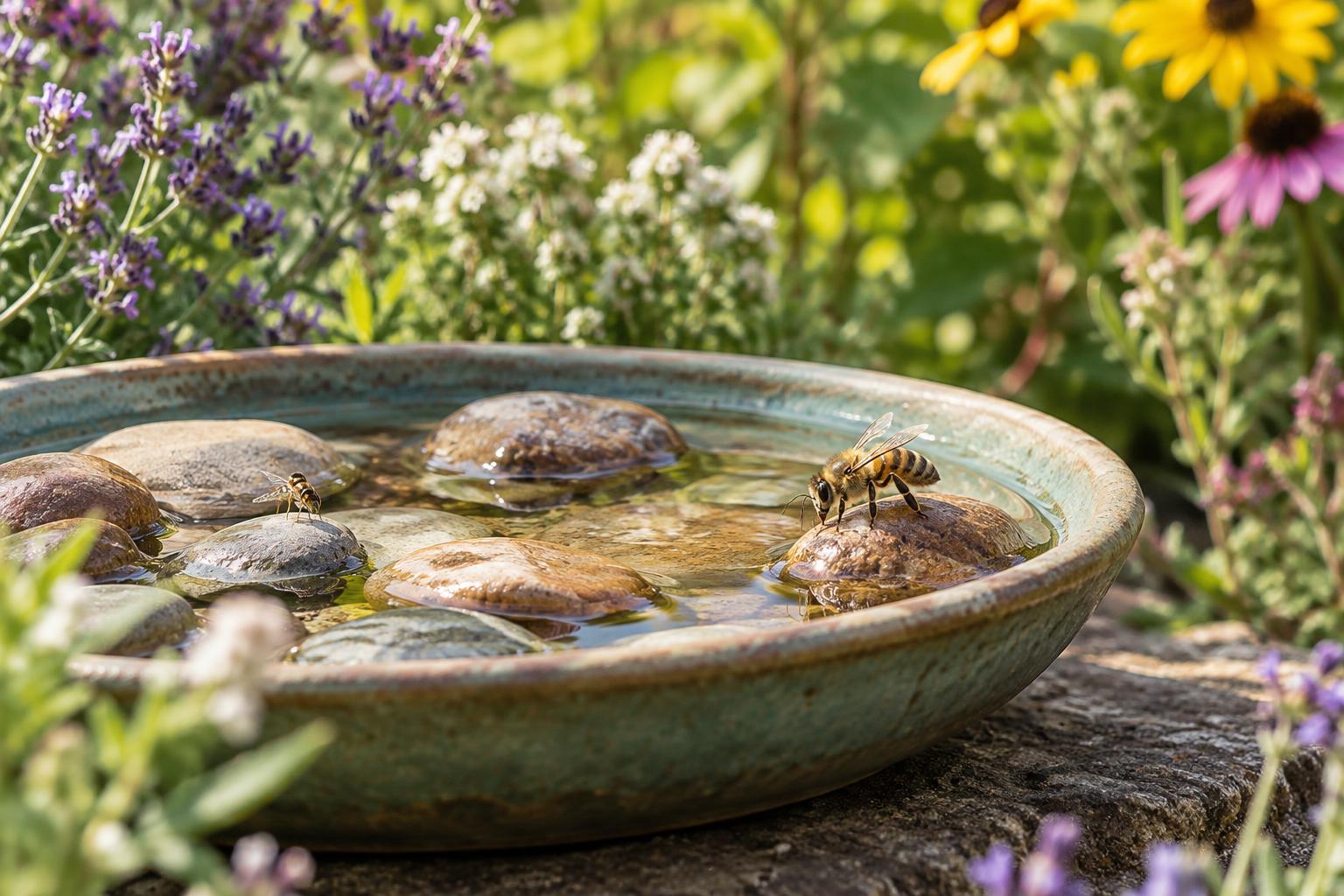
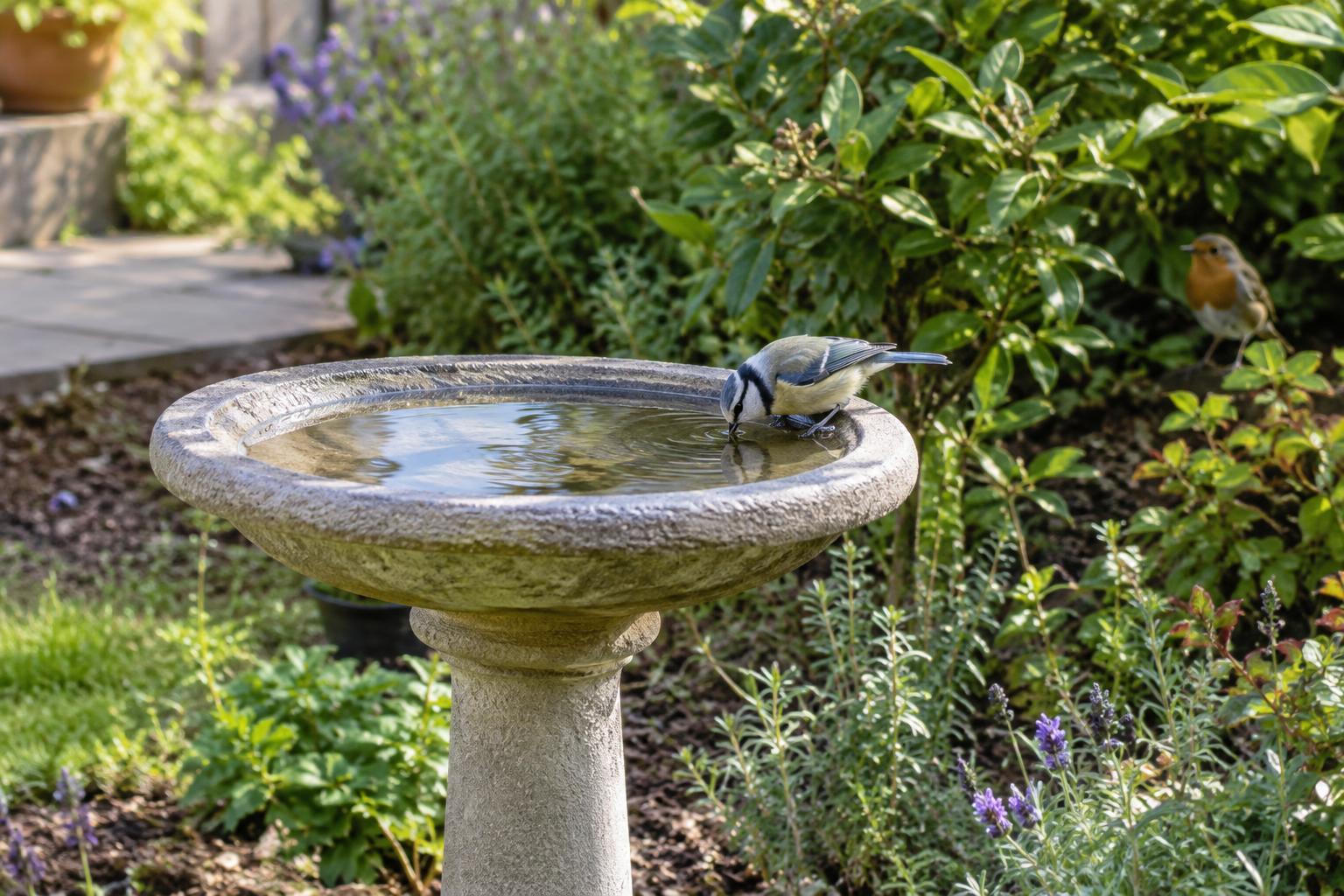
A useful birdbath does not need to be elaborate. A broad, shallow basin gives birds room to approach the water and makes the surface easy for you to inspect and clean. Look for a stable design that will not tip easily in wind or when an animal lands on its edge. A rough-textured surface can offer better footing than a very smooth one. If the basin is deep or has steep sides, add a few clean stones to create shallower places to stand.
Choose a bath you can lift, empty, and scrub comfortably. A decorative bowl that is difficult to reach may look appealing, but regular care is part of making it useful. Avoid peeling finishes or materials with unknown coatings that could flake into the water. A removable basin is especially convenient if you expect to move it indoors during freezing weather.
Place it where birds can see and leave safely
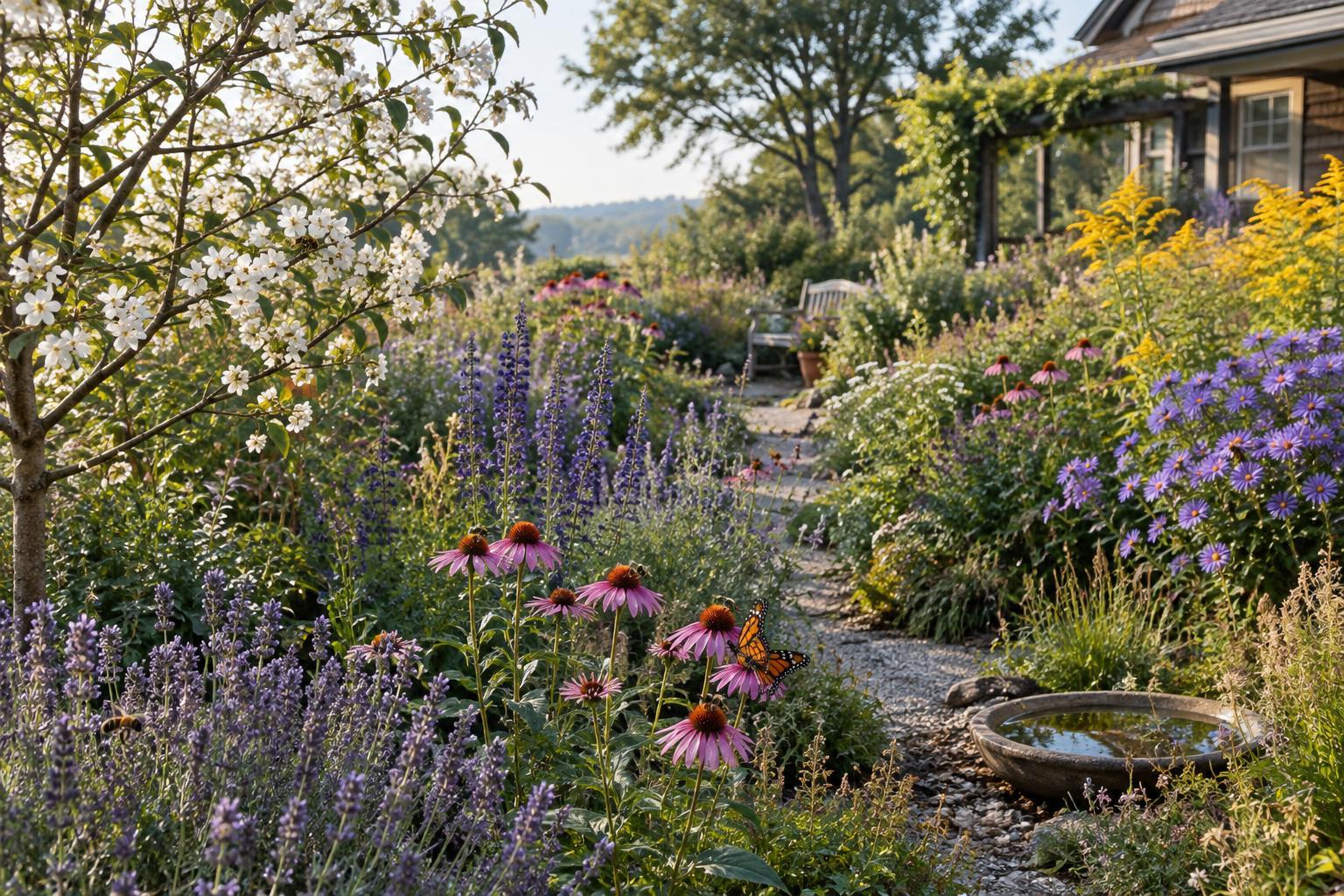
Birds need a clear approach to a birdbath and a quick route away if they feel threatened. A spot near shrubs or other cover can give them somewhere to retreat, but avoid tucking the bath into dense growth where a cat could hide close to the water. If cats visit your garden, favor an open location with good visibility and consider a raised, stable bath rather than a basin on the ground.
Partial shade is helpful in many gardens because it can keep the water cooler and slow evaporation. Also think about your own access: put the bath where a hose or watering can can reach it without trampling planting beds. If birds seem reluctant to use a new bath, give them time before moving it. Location, nearby activity, and the shape of the basin can all affect whether it feels comfortable to them.
Refresh the water before it turns murky
Treat fresh water as the main feature of the bath. Empty and refill it regularly, and check it more often during hot, dry weather or after heavy use. If you see leaves, droppings, algae, or cloudy water, change it rather than waiting for a scheduled cleaning day. Regular emptying also helps prevent standing water from becoming a place for mosquitoes to develop.
Keep the water shallow enough for small birds to stand comfortably. You can adjust the level or reposition stones after refilling, but make sure they sit securely and do not leave sharp edges. There is no need to add scent, color, or other products to attract visitors. Clean water in a suitable spot is the best starting point.
Make cleaning a routine
To clean the bath, empty it away from vegetables and other plants you intend to harvest. Scrub the basin with a brush reserved for outdoor cleaning, paying attention to the rim, corners, and any textured areas where residue collects. Plain water and firm scrubbing may be enough for light buildup. If you use a cleaning product appropriate for the basin material, follow its label and rinse repeatedly until no residue remains. Refill with fresh water only after cleaning is complete.
Clean more often if the bath becomes slippery or visibly dirty. Do not mix cleaning products, and keep brushes and buckets used for the birdbath separate from food-preparation items. If you notice a bird that appears ill or multiple sick birds nearby, pause use of the bath, clean it thoroughly, and seek guidance from a local wildlife organization about when to put it back out. Avoid handling a sick bird unless a qualified responder directs you to do so.
Adjust for weather and garden activity
In warm weather, a quick daily look can catch low water levels and debris before they become a larger job. After storms, check that the basin is upright and has not collected soil or fallen branches. In freezing conditions, do not pour boiling water onto a cold ceramic or stone bath; a sudden temperature change could damage it. Empty and store a vulnerable basin if freezing may crack it.
If you choose a heated birdbath for winter, use equipment designed for outdoor use and follow its placement and electrical instructions. Whether your setup is a simple saucer or a purpose-built bath, the same habits matter most: provide a shallow place to stand, keep the surroundings visible, and replace dirty water promptly. A birdbath that is easy for you to maintain is more likely to remain a welcome feature of the garden.