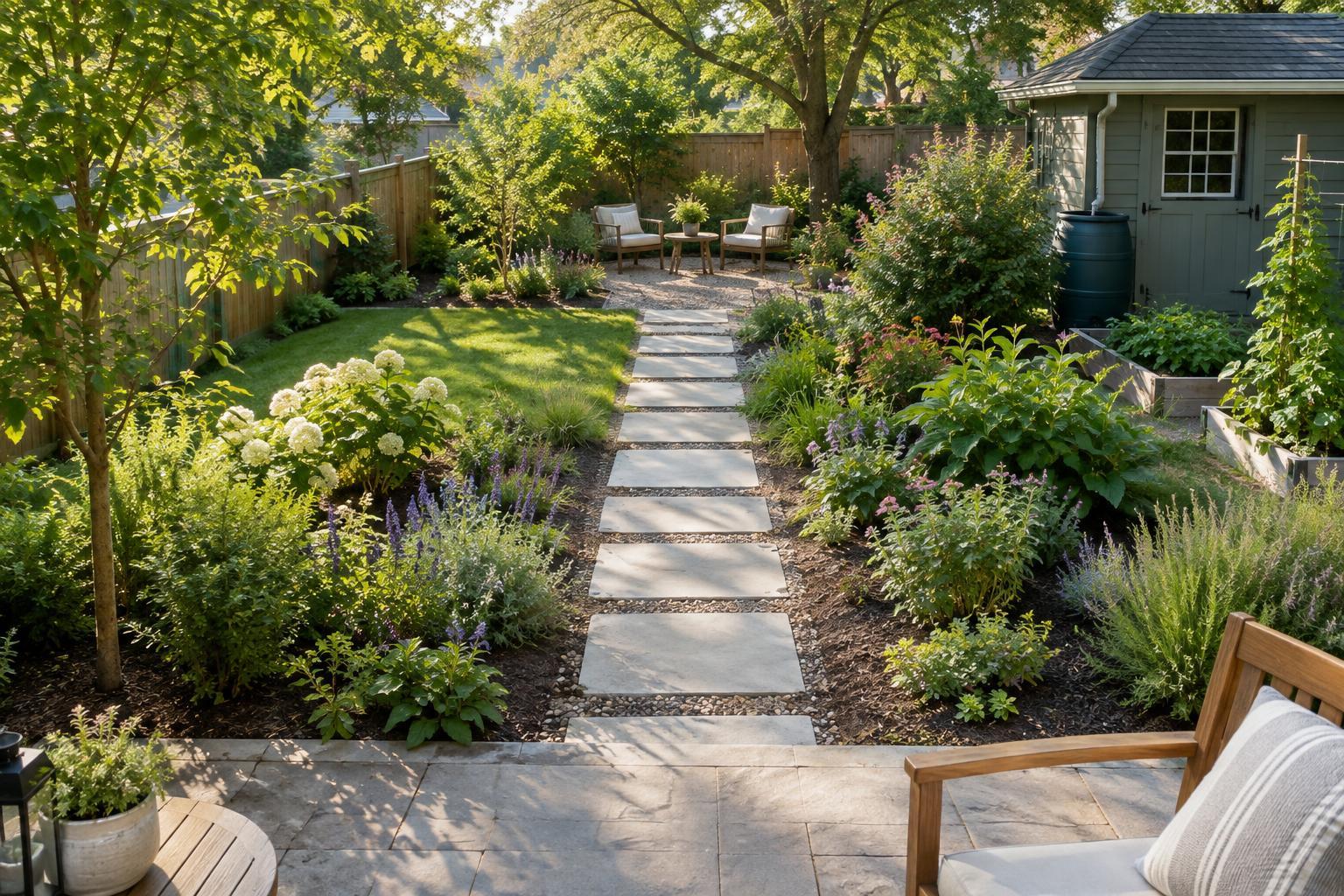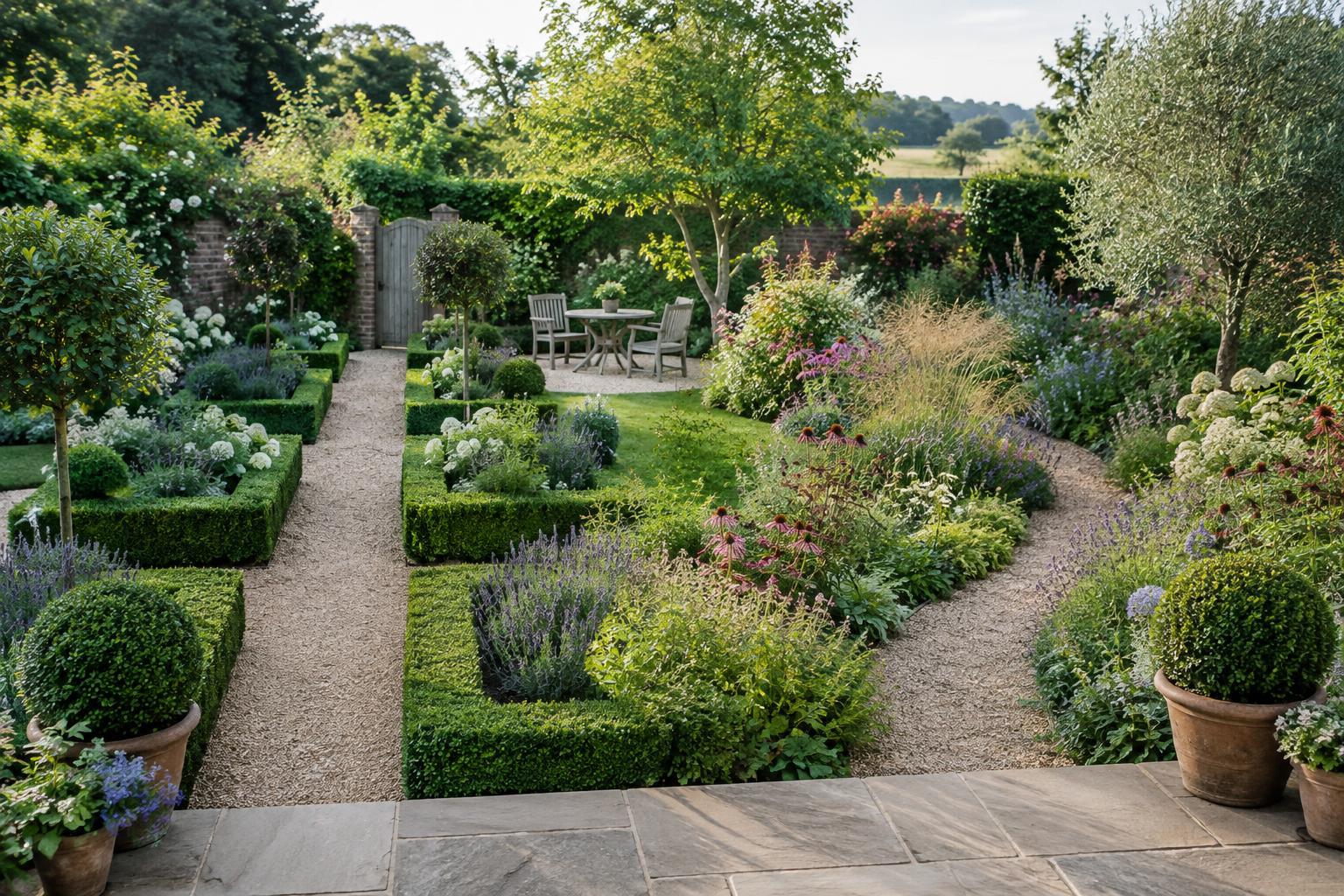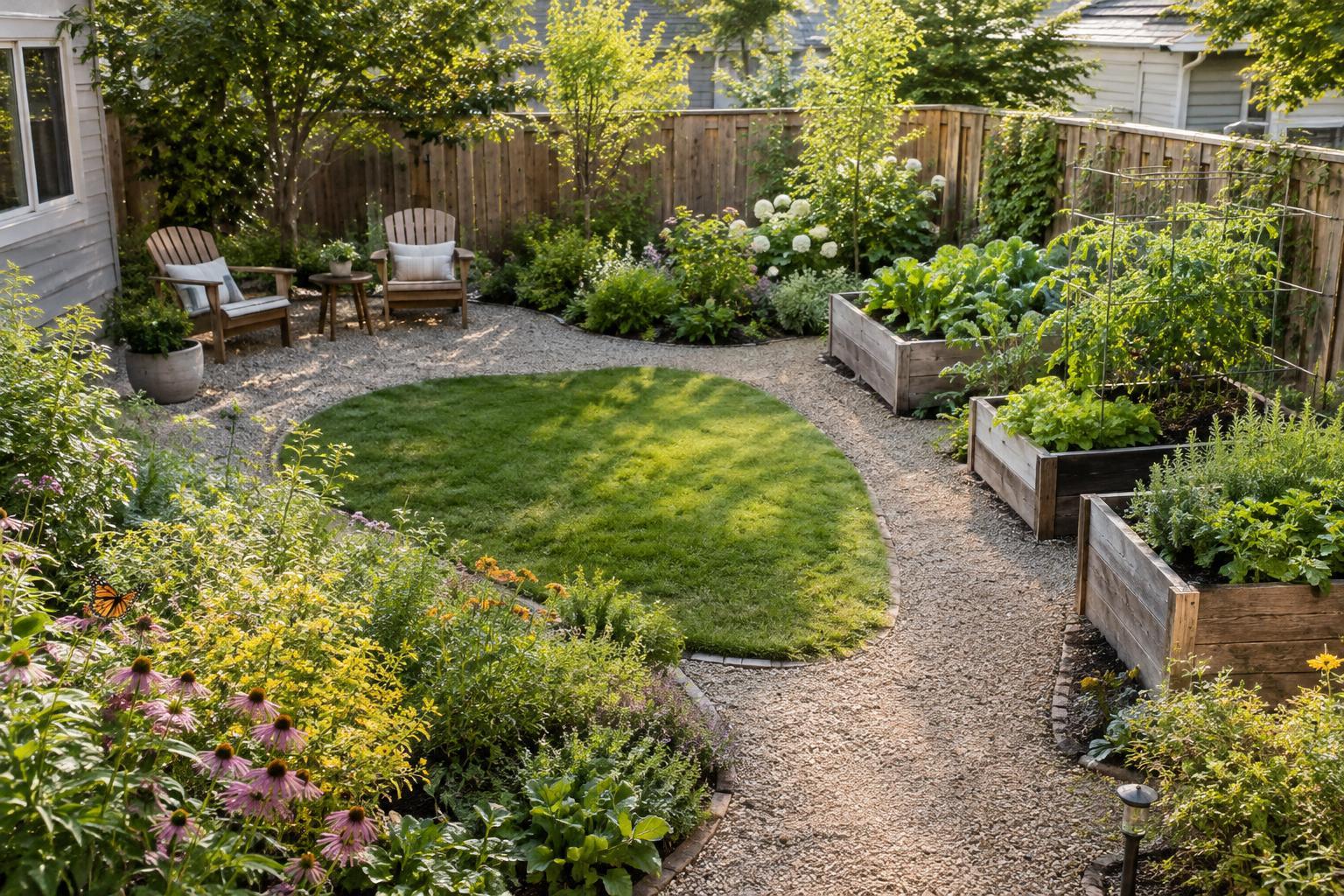
Start with what the garden must do
A garden can have several jobs: providing a quiet seat, room for meals, space to grow plants, a route to the shed and habitat for wildlife. The challenge is not to fit every idea into every corner. It is to decide which uses matter most to the people who spend time there, then give those uses the right amount of space and attention.
Write down the activities you want the garden to support. Include routine needs, such as taking out bins or drying laundry, alongside enjoyable ones. For each activity, ask who will use it, how often and what it requires. A dining area needs enough room to move around chairs; a growing area needs suitable light and convenient access to water. Mark each use as essential, desirable or optional. If space is tight, protect the essentials before adding features that are pleasant but rarely used.
Let the site guide your choices
Before placing anything, observe the garden at different times of day. Note where sun and shade fall, where rainwater collects, which areas feel exposed and which routes people already take. Check the space available around doors, gates and existing trees. These observations can prevent a familiar planning mistake: assigning a use to the place where it looks best on paper rather than where it will work well.
Match uses to conditions where possible. Sun-loving vegetables may be easier to grow in a bright, accessible spot, while a shaded corner could suit seating on hot days or plants adapted to lower light. Climate and season will affect how useful each area feels, so avoid treating one afternoon’s observations as the whole picture. If you are unsure, try movable pots or a temporary chair before committing to permanent beds or paving.
Resolve competing needs before dividing the space
Some uses support each other; others need separation. A seat near the house may make short breaks more likely, but a busy path through it can spoil the sense of rest. A wildlife-friendly planting area can sit beside a productive bed, yet plants that spread freely may need managing near narrow paths. Identify these conflicts early and decide which need takes priority in each location.
Think in terms of zones rather than rigid compartments. Keep frequently used features easy to reach, leave clear routes between them and reserve quieter edges for planting or shelter. A small garden may need one area to do several jobs: a patio can hold a table for meals and containers for herbs, while a boundary bed can provide both seasonal interest and cover for wildlife. Multi-use space works best when each use has enough room to function without constantly being moved out of the way.
Choose improvements by effort as well as benefit
A plan should fit your capacity to build and maintain it. Estimate the time, cost and recurring care each idea will demand. A large new border may bring more planting space, but it also needs preparation, watering while plants establish and ongoing upkeep. If regular maintenance time is limited, a smaller bed in a well-chosen position may serve you better than a larger one that becomes difficult to manage.
Put safety, access and persistent problems near the top of the list. An awkward step or a path that turns muddy may deserve attention before decorative changes. After that, choose improvements that support more than one priority. A well-placed path can make growing beds easier to tend and invite people to explore the garden; a tree suited to the available space may offer shade, structure and habitat over time. Leave room in the budget and schedule for the less visible parts of a project, such as soil preparation or drainage where needed.
Build in stages and review what works
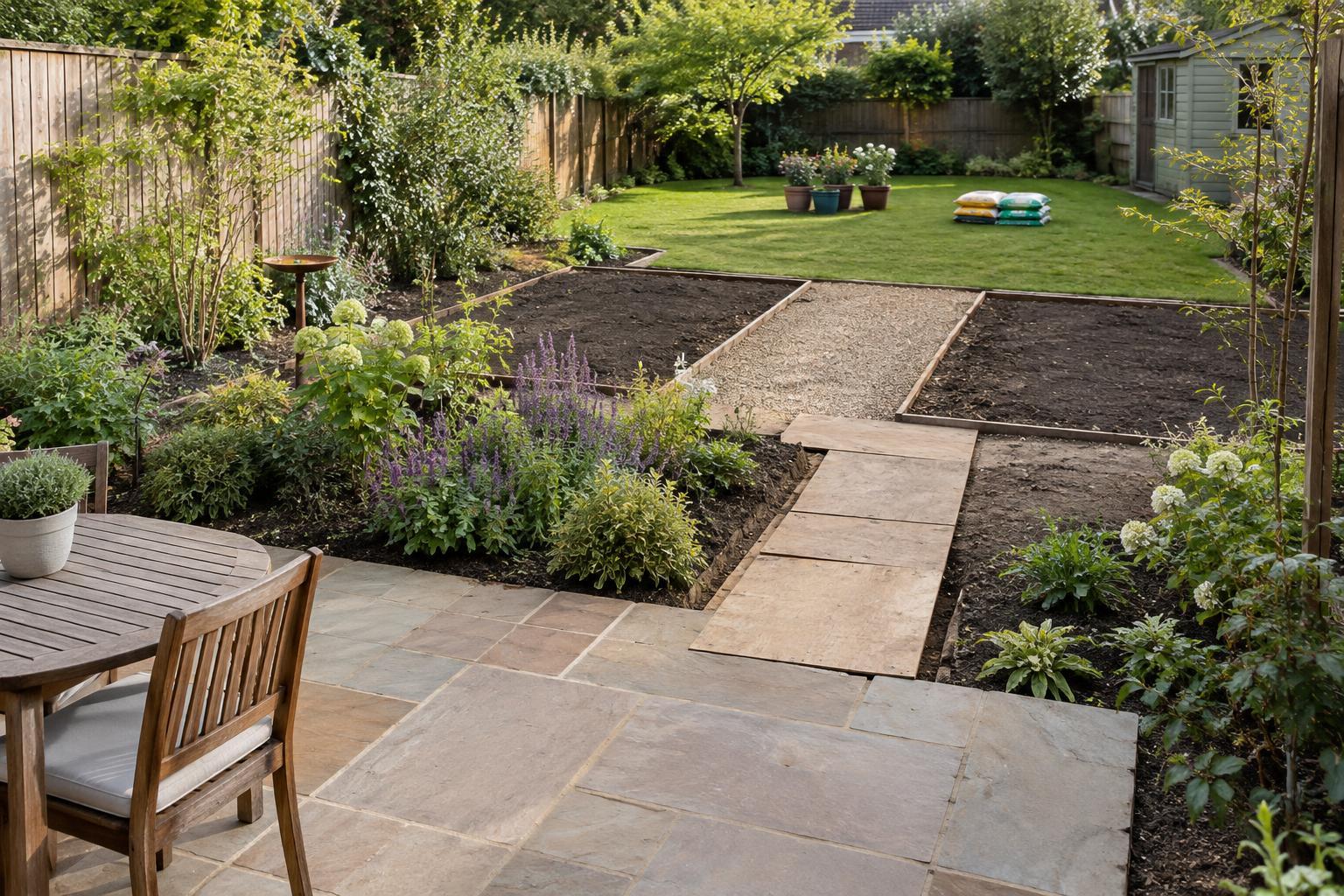
You do not need to finish the whole garden at once. Sketch a simple long-term layout, then begin with changes that are useful on their own and will not block later plans. Mark out proposed beds with a hose or string, test furniture positions and live with temporary arrangements where you can. These low-commitment trials reveal whether routes are wide enough and whether a seating spot is comfortable when you actually want to use it.
Review the garden after you have spent time in it across different conditions. Are the most-used spaces convenient? Do plants suit their positions? Is one area taking more work than expected? Adjust the plan rather than treating the first version as final. A successful multi-use garden is not one that contains the most features; it is one whose space, upkeep and character reflect how you really want to spend time outdoors.