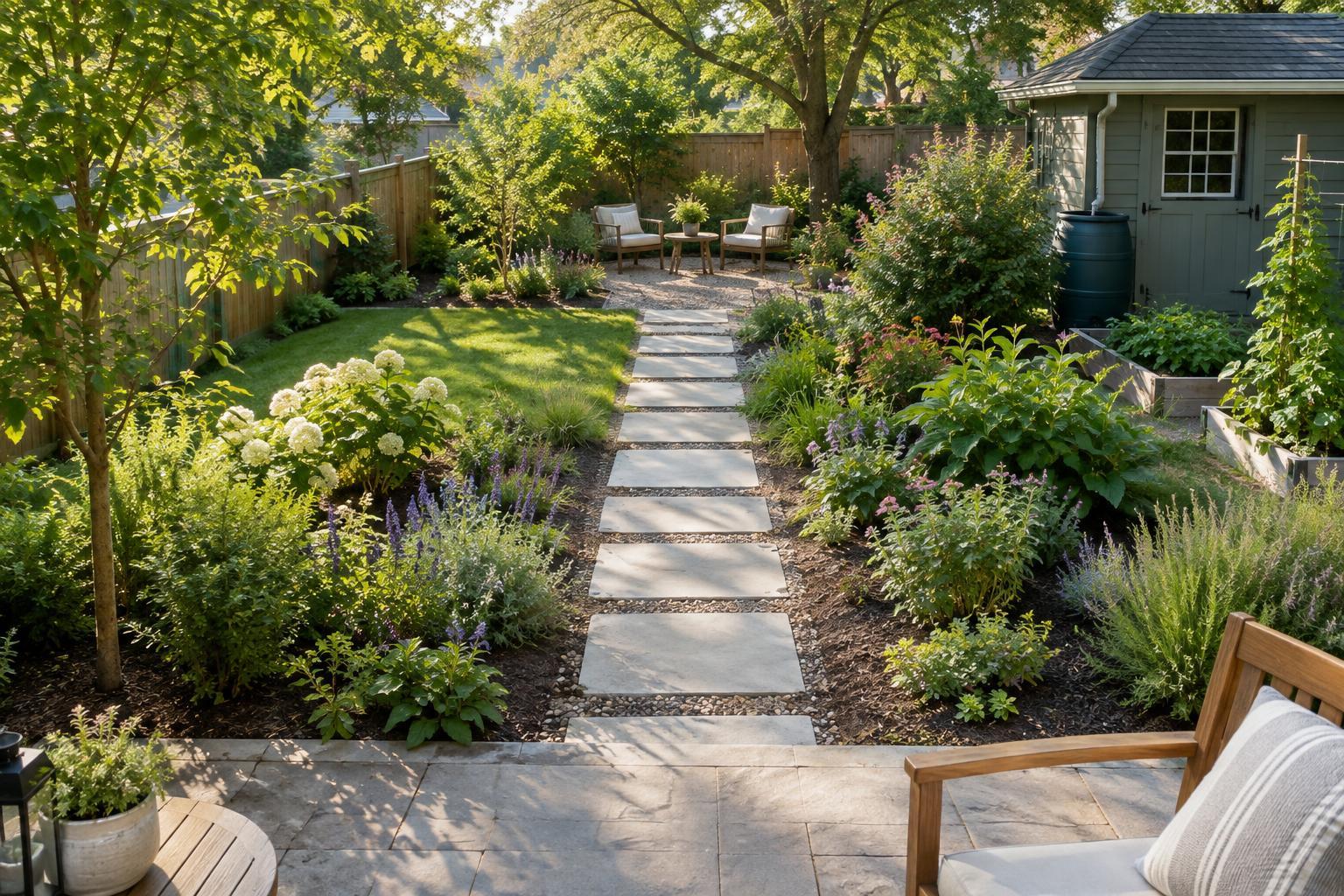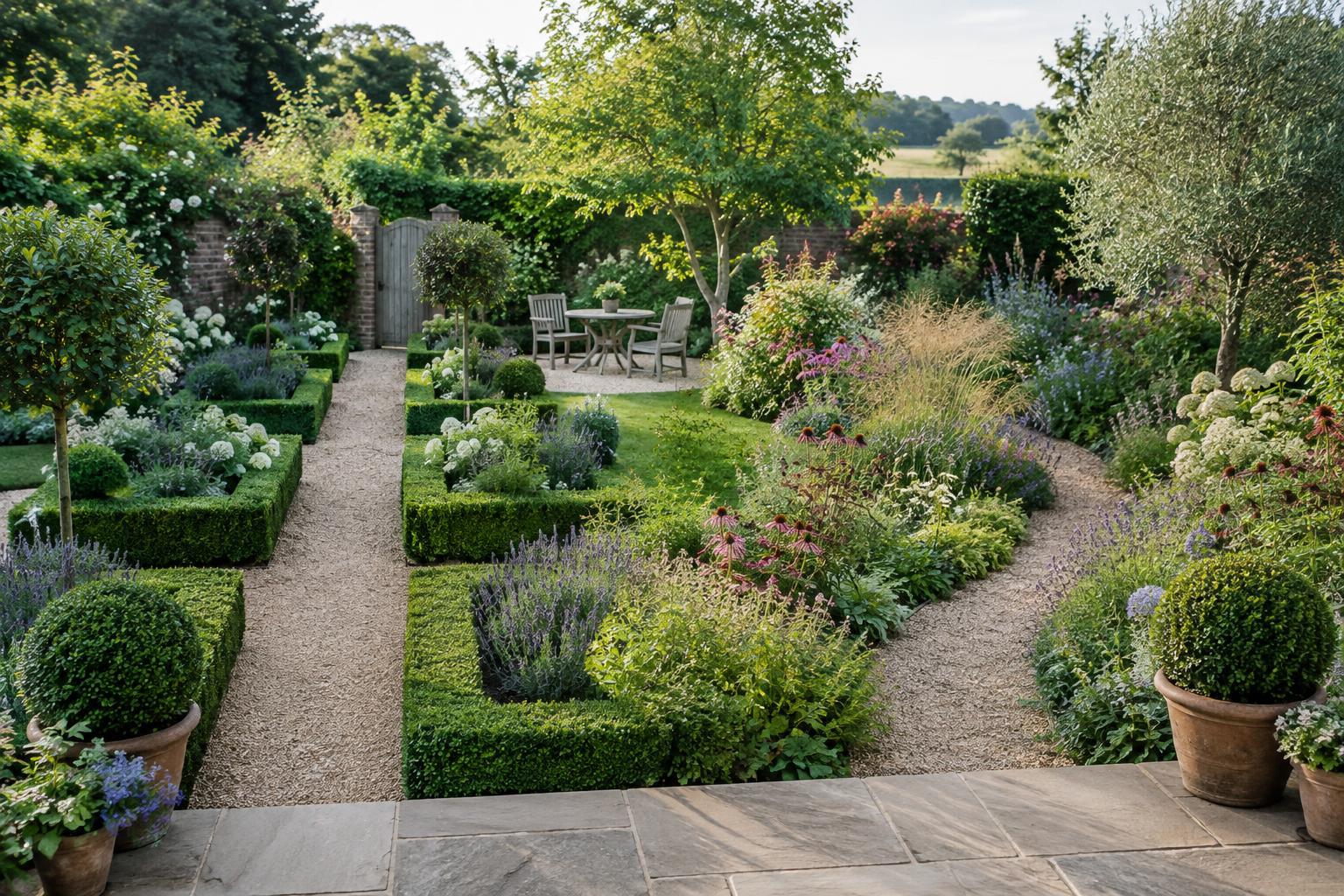
Start with the whole garden, even if you will build it slowly
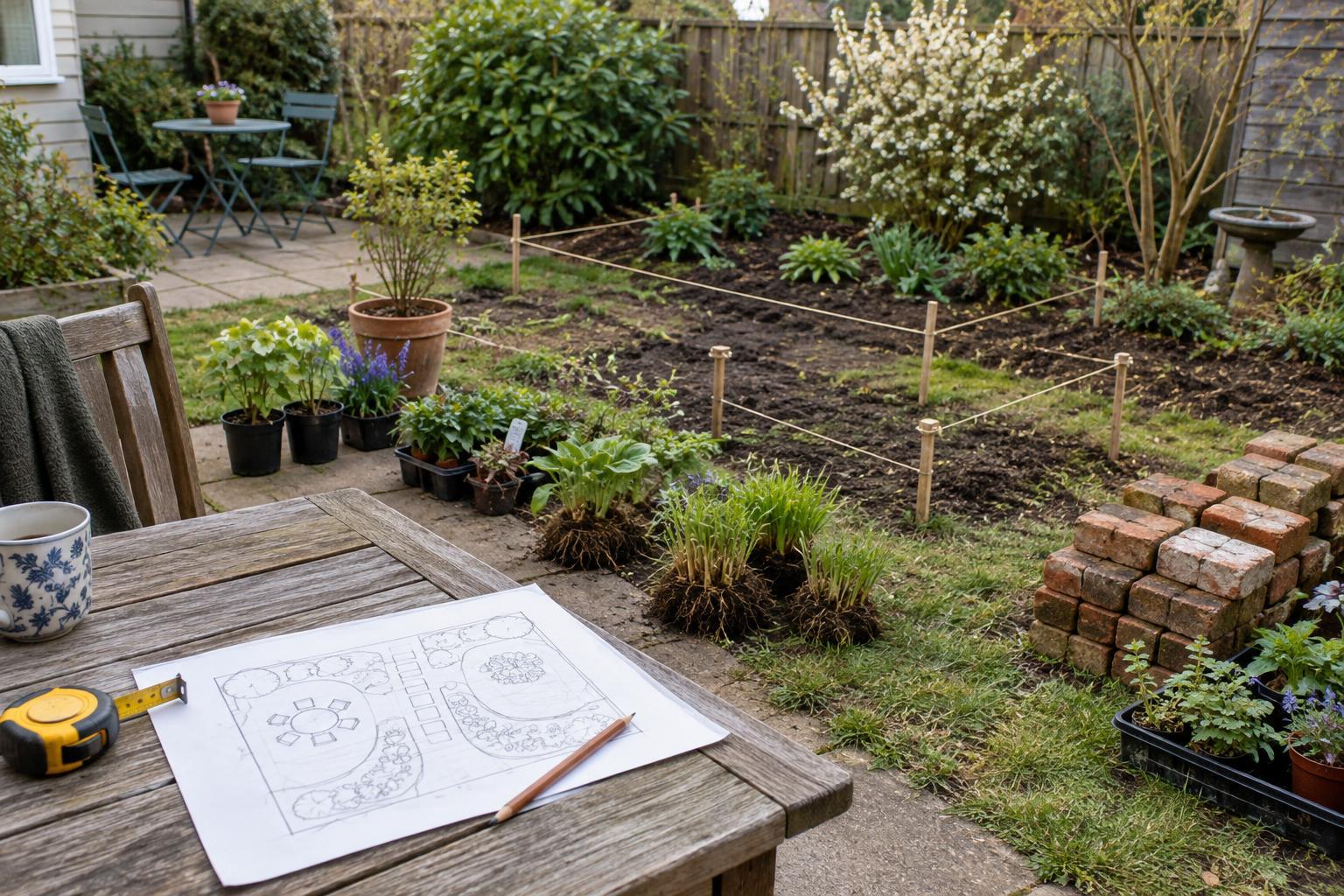
Phasing lets you spread a garden project across seasons without treating each phase as a separate design. Before buying plants or laying a path, sketch the entire space. Mark doors, gates, existing trees, sunny and shady areas, slopes, places where water collects, and the routes people already take. Add the features you may want later, such as a seating area, vegetable beds, a shed or a wider path.
The sketch does not need to settle every plant choice. Its job is to reveal relationships. If a future patio will sit beyond a lawn, how will materials reach it? If raised beds will need water, where could a hose run without crossing a finished seating area? Keep measurements and notes in one place, and mark which decisions are fixed and which can wait. That gives each phase a direction while leaving room to learn from using the garden.
Resolve the work that is hardest to change
A useful sequence begins with conditions below the surface and ends with details you can adjust by hand. Investigate drainage concerns, changes in level, buried services, and the likely positions of structures before installing surfaces or planting permanent beds. If a project may need permits or specialist help, check the relevant local requirements before treating its position as final. Do not dig where you may disturb an unknown service.
Next, decide on access and the main layout: gates, working routes, paths, bed edges and spaces needed to move equipment. These elements affect almost everything around them. Heavy digging, deliveries and construction should generally happen before you establish delicate borders or finish a lawn. Where possible, keep a clear route for later phases so that a wheelbarrow, tools or replacement materials do not have to cross newly planted ground.
Give each phase a useful stopping point
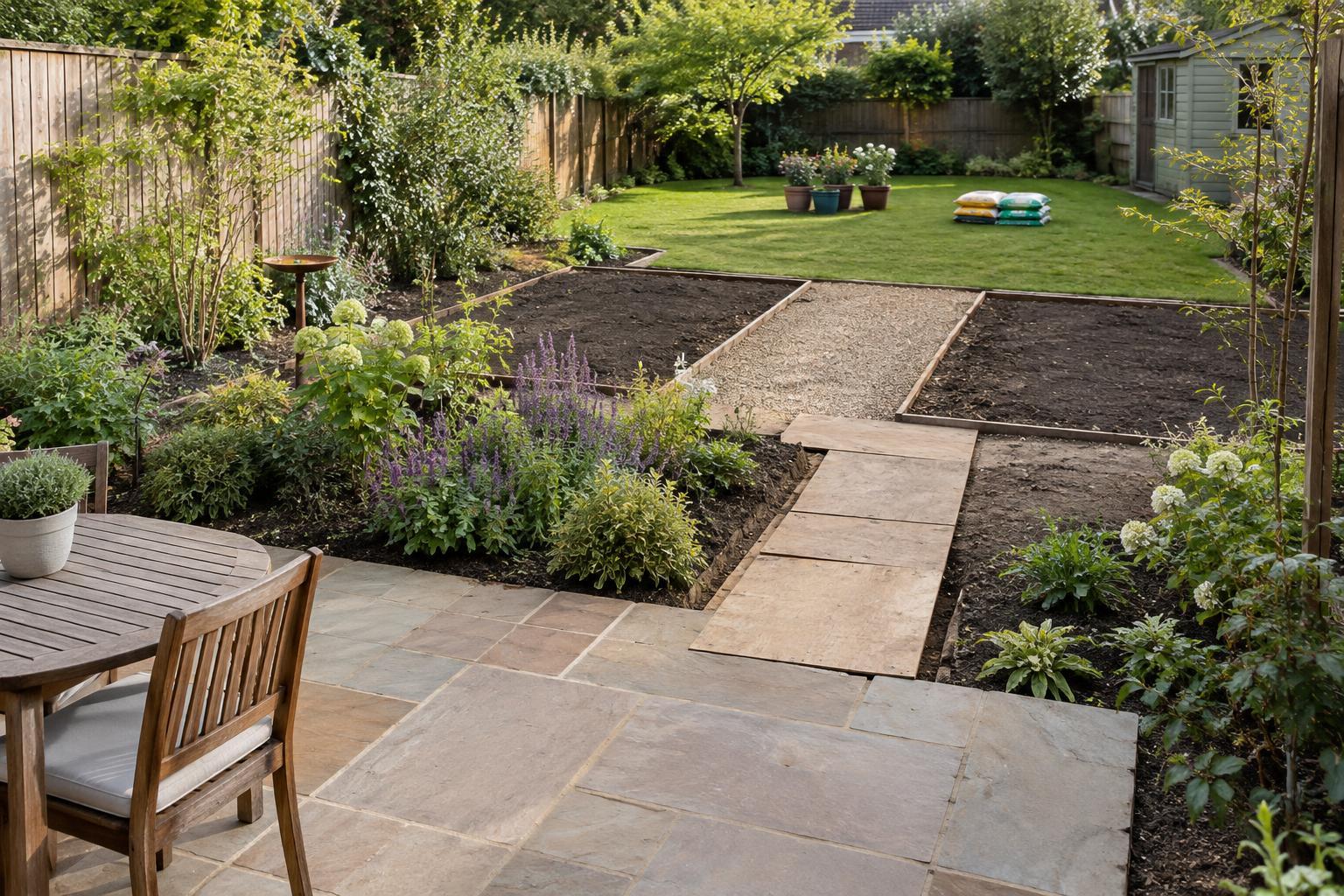
A phase should leave the garden safe, manageable and usable, even if the next one is months away. For example, a first phase might address a drainage problem and establish the main path, while leaving future planting areas mulched rather than bare. A second might build the seating space and its edges. A later phase could fill beds with plants after you have observed the light and decided how you use the space.
Choose boundaries that make sense on the ground. Finishing one complete bed is often easier to maintain than planting a few scattered specimens across the whole plot. If a final surface must wait, use a temporary treatment that you can remove without harming adjacent work. Make temporary choices deliberately: a movable pot can hold a corner, but a quickly built permanent edge in the wrong place may become the next thing you have to undo.
Leave room for the next phase
Before finishing any area, ask what a later task will need. Will builders need access behind the proposed bed? Will a path need to connect to a future gate? Could a young tree grow into the space reserved for a seating area? Mark future footprints on the ground with string or stakes and walk through them. Check door swings, turning space and the likely width of mature plants, not just the size of new ones.
Protect completed work during each new phase. Set aside a route for deliveries, keep soil and rubble off finished surfaces where practical, and avoid compacting planting beds with repeated foot traffic. Store any leftover materials and record useful measurements, such as path widths and the positions of underground work. These small records make it easier to match or extend a feature later without guessing.
Plant for the garden you can maintain now
Planting is often the most satisfying phase, but it is usually better after major ground work is complete. Prepare the beds you are ready to care for and choose plants suited to their light, soil and available space. In unfinished areas, manage weeds and protect exposed soil so the next phase does not begin with avoidable cleanup. Existing healthy plants can remain part of the plan; not everything needs replacing to make the garden feel coherent.
Review the plan after living with each finished area. Notice where you actually sit, which route you take and where water or shade behaves differently than expected. You can then refine flexible parts of the design without moving a path or tearing out a new patio. Good phasing is not simply doing less at a time. It is doing the difficult-to-reverse work first, then letting each completed stage make the next one easier.