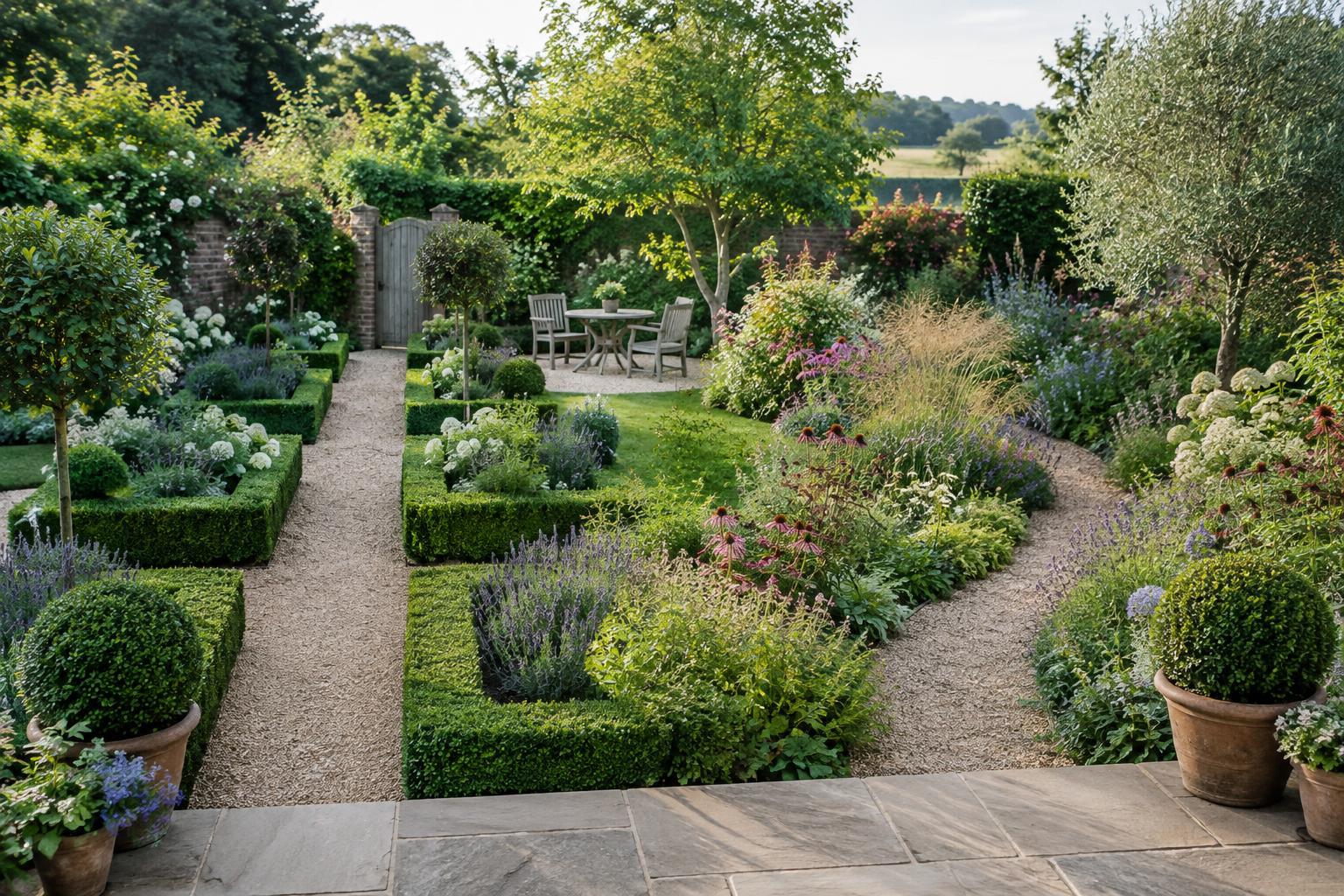
Planning the view before planning how you will use the space
A common layout mistake is arranging beds and features for a single view, then discovering that everyday activities do not fit. Before drawing a planting plan, list what you want to do outside: grow food, sit in the shade, entertain, store tools or simply enjoy the view from indoors. Mark the doors, gates and places you naturally walk between. These movements form the starting point for a layout that feels convenient rather than forced.
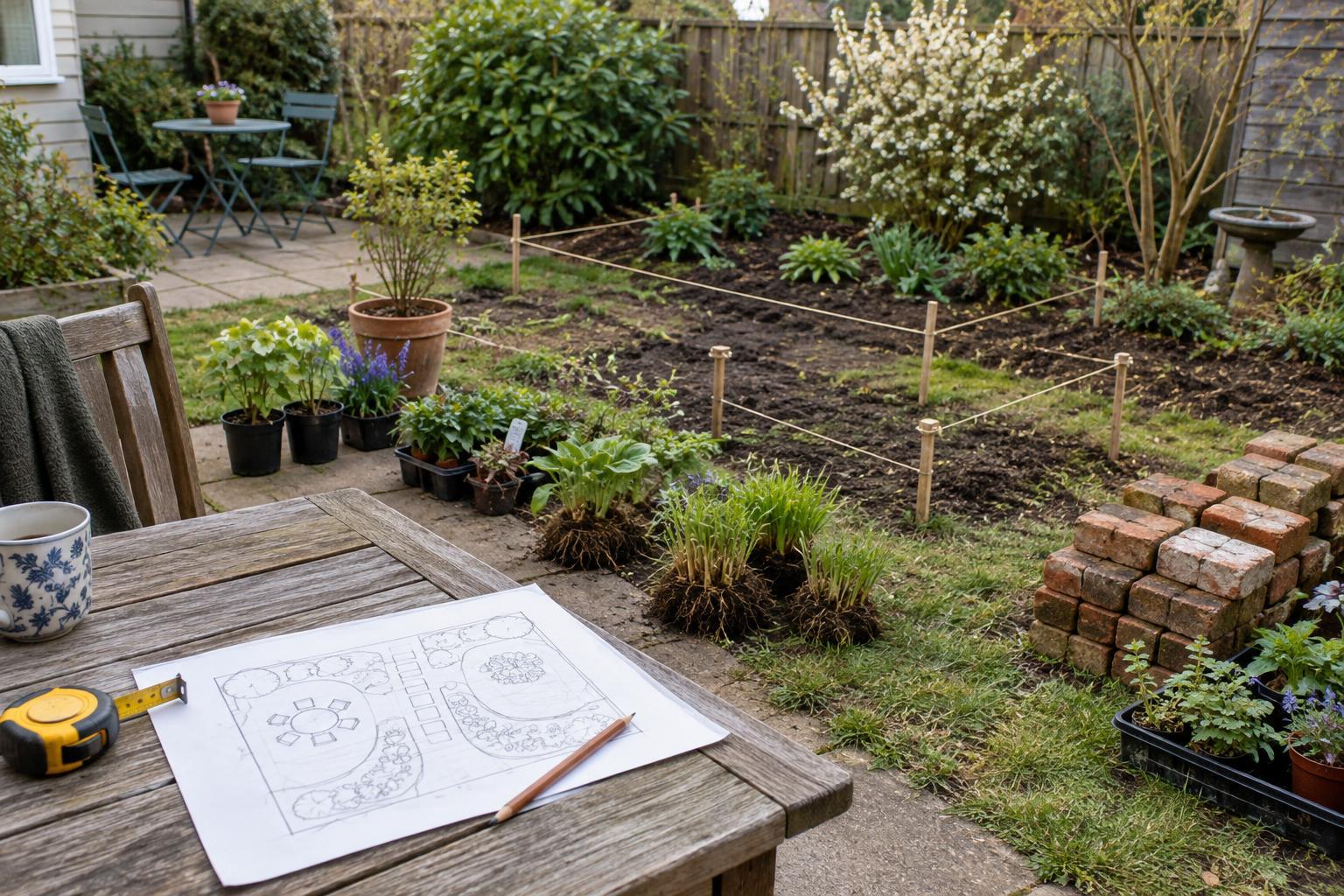
Give each priority a place on a rough sketch, even if that means leaving some ideas out. In a small garden, one flexible open area may be more useful than several tiny destinations. In a larger garden, separate areas can work well if the routes between them are clear. You do not need a perfect scale drawing at first; walking the space and marking proposed features with pots, string or a hose can reveal conflicts before you build.
Making paths too narrow or indirect
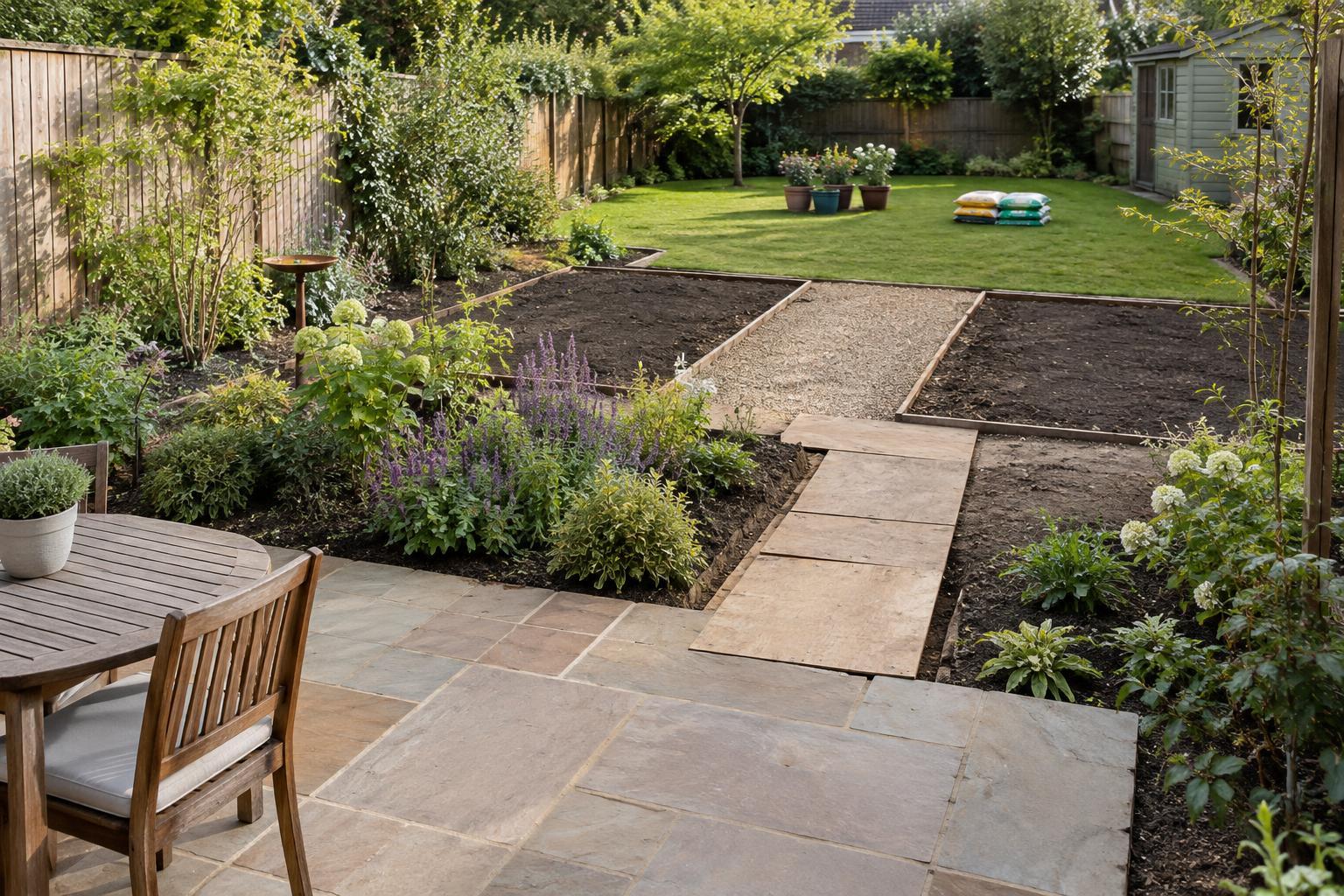
Paths often become an afterthought, squeezed between beds once everything else has a place. The result may be a route that is uncomfortable to walk, difficult to use with a wheelbarrow or tempting to shortcut across the lawn. Plan the main routes early. Think about who uses them, what they carry and whether they need to pass one another. A path to a shed or compost area may need more practical clearance than a path used only for strolling.
Draw paths along the journeys people are likely to take, then check how they meet gates, steps and seating areas. Gentle curves can soften a design, but curves added only for appearance may make routine trips longer. Remember that plants can spill over path edges as they mature. Leave room for that growth, or choose compact plants where space is tight.
Putting plants where they fit today, not where they will fit later
A newly planted garden can look sparse, which makes it tempting to crowd beds with shrubs and perennials. As plants grow, they may block windows, narrow paths or shade smaller neighbors. Check the expected mature height and spread of each plant, and use those dimensions when placing it. You can fill temporary gaps with annuals or movable containers while permanent plants establish.
Also consider what each plant needs from its location. A sunny border may become shaded when a young tree grows, while a sheltered corner may hold more moisture than an exposed bed. Grouping plants with broadly similar light and watering needs can make care simpler. If a plant's eventual size or suitability is uncertain, leave more room rather than relying on frequent pruning to keep it in place.
Ignoring sun, water and the way the site changes
A layout copied from another garden may not suit yours. Observe where sunlight falls at different times of day, where rainwater collects and which areas dry out quickly. Buildings, fences and trees can create pockets of shade or shelter within the same yard. These observations help you decide where to put seating, beds and features that need regular access.
Place water-loving plants where you can reasonably care for them, rather than at the far end of a difficult route. Avoid positioning a favorite seat solely for a pleasant view if it becomes uncomfortably hot or exposed when you intend to use it. If water tends to stand in one area, find out why before adding plants or paving there. Drainage conditions and suitable plant choices vary by site and climate, so treat your observations as more useful than a one-size-fits-all plan.
Forgetting maintenance and access
The easiest garden to enjoy is one you can look after without awkward reaching or repeated obstacles. Deep beds backed by a fence may look generous on a drawing, but their rear edges can be hard to weed or prune. Check that you can reach planting areas from a path or a safe stepping point without compacting the soil throughout the bed. Leave space to get around shrubs and to carry supplies to areas that need them.
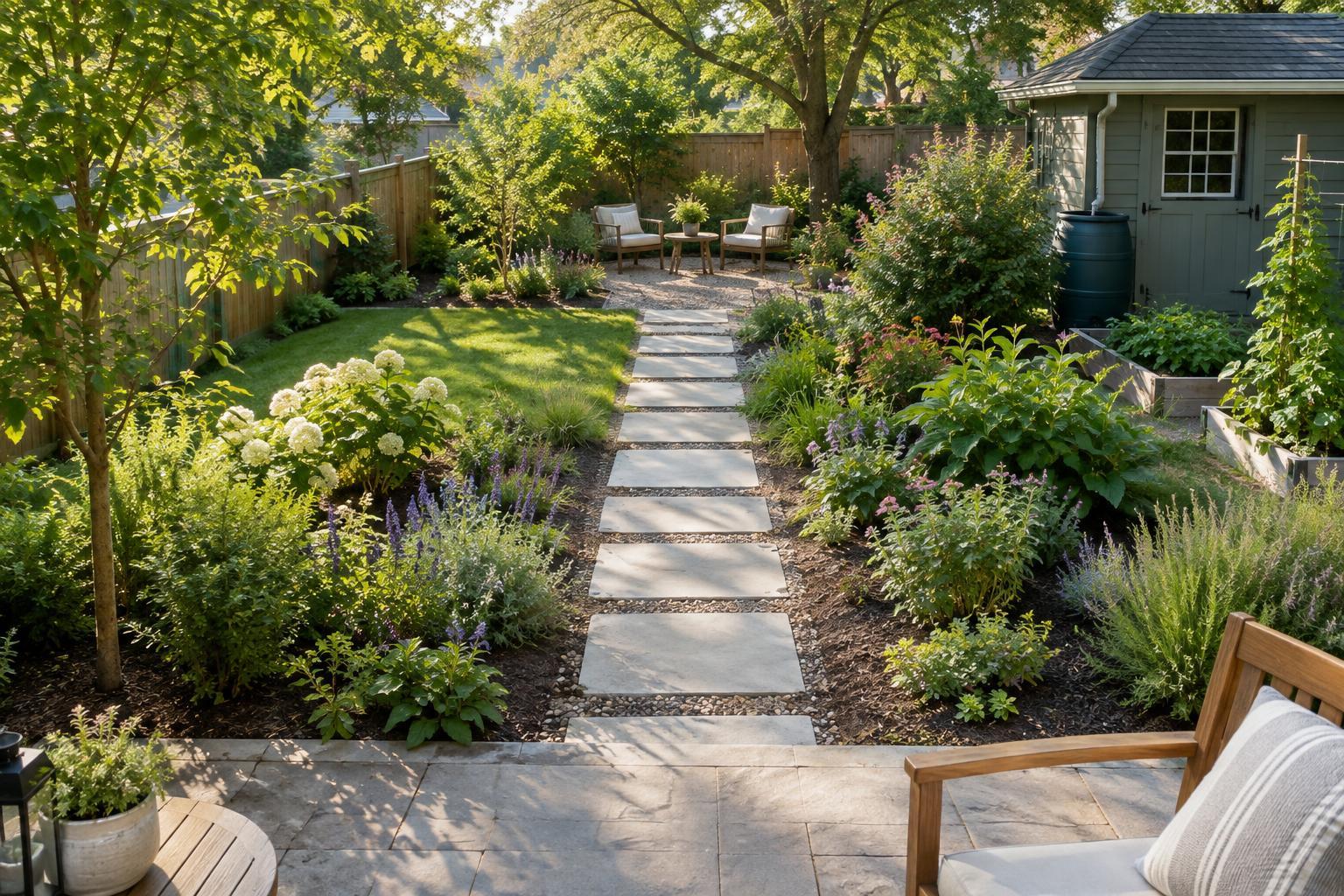
Think through routine jobs before settling the layout: Where will you put a hose or watering can? Can you reach the compost area easily? Is there somewhere to set down tools? Keep access to gates, taps and storage clear as plants mature. Finally, try the plan in stages. Establish the main routes and one or two beds, then use the garden for a while. Small adjustments made early are often easier than correcting a fully planted layout.