Find out why the grass disappeared
A bare patch is easier to repair when you know what caused it. Look at where the damage sits and what the soil feels like. A muddy strip beside a path may have suffered from foot traffic and compaction. A low spot that stays wet may need better drainage. A patch beneath a dense tree canopy may not receive enough light for the grass growing elsewhere in the lawn. Winter weather can expose these problems, but simply adding seed will not solve them.
Rake away loose leaves and dead blades so you can see the ground. If grass crowns and roots remain, the area may fill in once active growth resumes. If you see mostly exposed soil, plan to repair it. For repeated damage from pets, walking or runoff, consider redirecting traffic, improving the surface or choosing a different ground cover before reseeding.
Choose a suitable time and repair method
Wait until the ground is workable rather than soggy or frozen. Raking and walking on saturated soil can compact it further. Grass seed also needs conditions warm enough for the type of grass you grow. Cool-season lawns can often be repaired during mild spring weather, though autumn may offer another good opportunity. Warm-season grasses generally establish best once consistently warmer growing conditions arrive. In either case, avoid starting just before an expected stretch of harsh weather.
Seed is usually a practical choice for small or scattered patches. Choose a lawn seed suited to your climate, the amount of sun the spot receives and the grass already growing nearby. Sod or plugs can give a quicker cover where compatible grass is available, but they still need good soil contact and regular watering while roots establish. Check the label on any lawn treatment used recently: some products intended to prevent weeds can also prevent new grass seed from germinating.
Prepare the patch for new growth
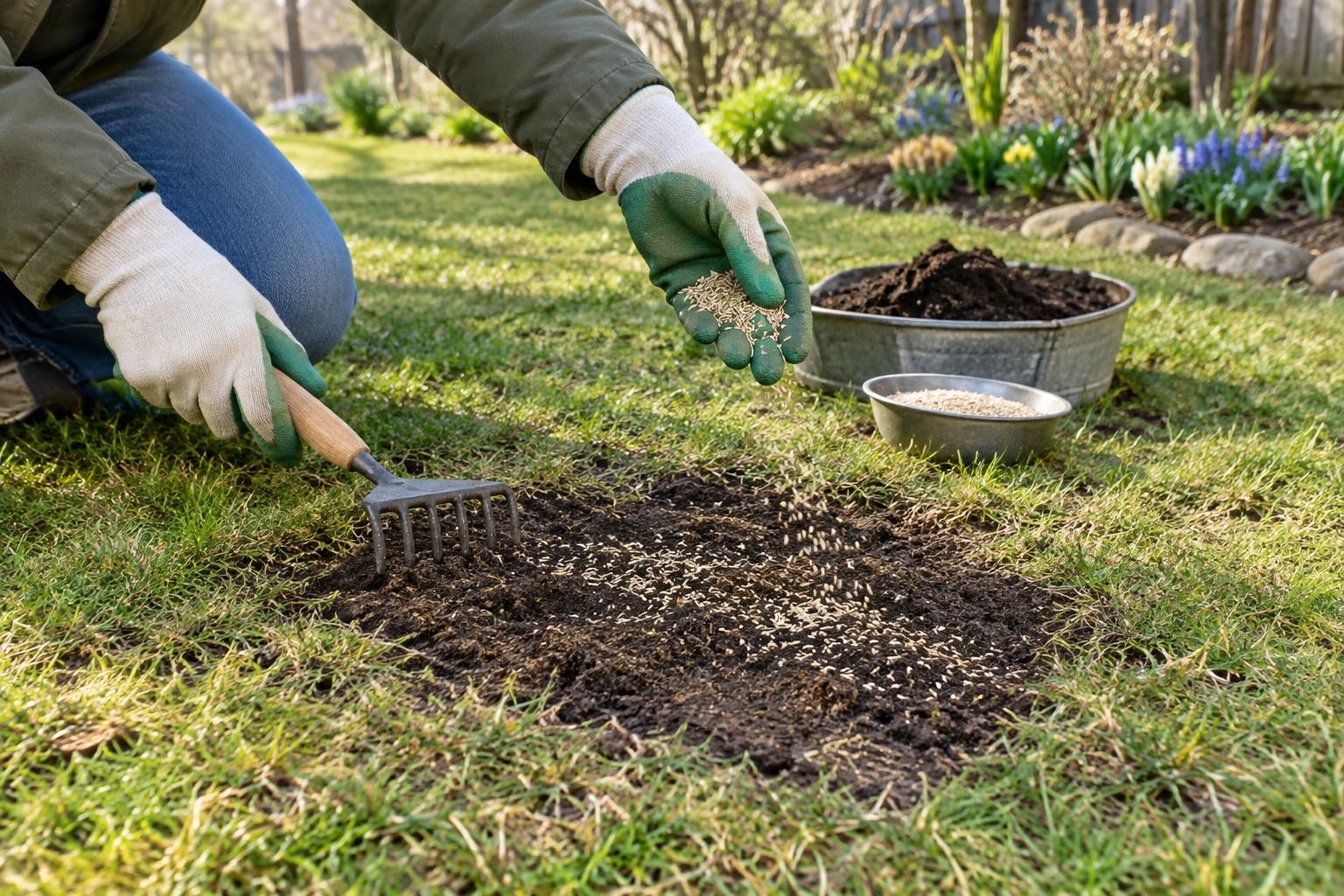
Remove dead grass, weeds, stones and other debris. Loosen the top layer of soil with a hand fork or rake, working gently around the edges where healthy grass remains. If the soil feels hard, loosen it deeper with a garden fork without turning the surrounding lawn into a rough trench. The goal is a crumbly surface where roots can grow and seed can make contact with soil.
Level shallow dips with a small amount of suitable topsoil, blending it into the existing soil rather than leaving a thick layer over living grass. If water routinely pools there, deal with the cause before trying to establish turf. A slight change in grading or another drainage solution may be needed. Finish by smoothing the area and lightly firming it with your hand or the back of a rake; avoid packing it down.
Seed or lay sod carefully
For seeding, spread the seed evenly at the rate given on the package. More seed is not necessarily better: crowded seedlings compete for space and light. Lightly rake it into the loosened surface so the seed has soil contact without being buried deeply. A thin layer of clean, seed-free mulch suitable for lawns may help the surface retain moisture and reduce movement from rain or birds, but do not smother the seed.
For sod, cut the piece to fit the prepared patch and press it firmly against the soil, with its edges meeting the existing lawn. Avoid gaps that could dry out. For plugs, follow the spacing recommended for the grass type and keep bare soil between them free of competing weeds as they spread. Whatever method you use, keep people and pets off the repair while it takes hold.
Water consistently and prevent another bare spot
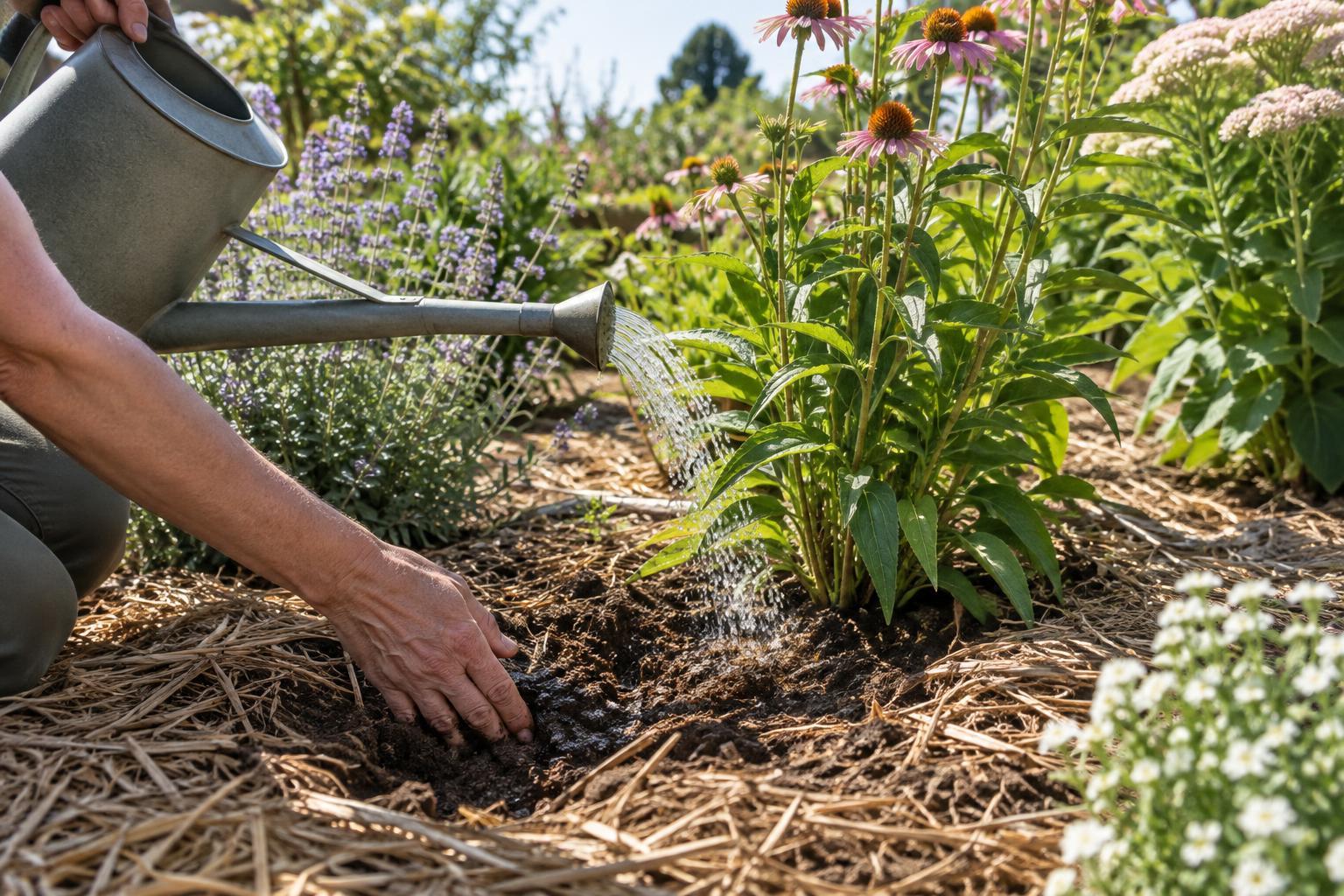
New seed needs steady surface moisture during germination; a gentle spray is less likely to wash it away than a strong stream. Check the soil often and adjust watering to rainfall, wind and temperature rather than following a rigid calendar. Once seedlings are growing well, shift gradually toward less frequent, deeper watering to encourage roots to reach into the soil. Newly laid sod needs close attention too, especially around its edges, until it has rooted into the ground beneath.
Let seeded grass grow tall enough to mow without pulling it loose, and use a sharp mower blade. Avoid heavy use until the repair is established. To reduce future winter damage, clear fallen leaves before they mat down, limit traffic over wet or dormant turf, and address persistent shade or standing water. A healthy patch starts with conditions that let grass keep growing, not just a fresh layer of seed.