Why pots heat up so quickly
A plant in the ground has a wide area of soil around its roots. A container plant depends on a much smaller volume of potting mix, which can warm and dry quickly in direct sun. Heat reflected from paving or walls can add to the problem. A pot that was comfortable in spring may become a difficult place for roots during a summer hot spell.
The goal is not to keep every container in deep shade. Many flowering and edible plants need plenty of light. Instead, protect the pot and root zone from the harshest heat while giving the leaves the light the plant needs. Conditions vary by climate, exposure and plant type, so use these ideas as adjustments rather than a fixed schedule.
Give containers a cooler position
Start by noticing when the sun reaches your pots. Morning sun with afternoon shade is often easier on containers than a full day against a hot, west-facing wall. Move portable pots into a spot that still offers suitable light but avoids the strongest afternoon exposure. For larger containers, temporary shade cloth or a nearby outdoor screen can reduce direct sun during a hot spell without making a permanent change to the garden.
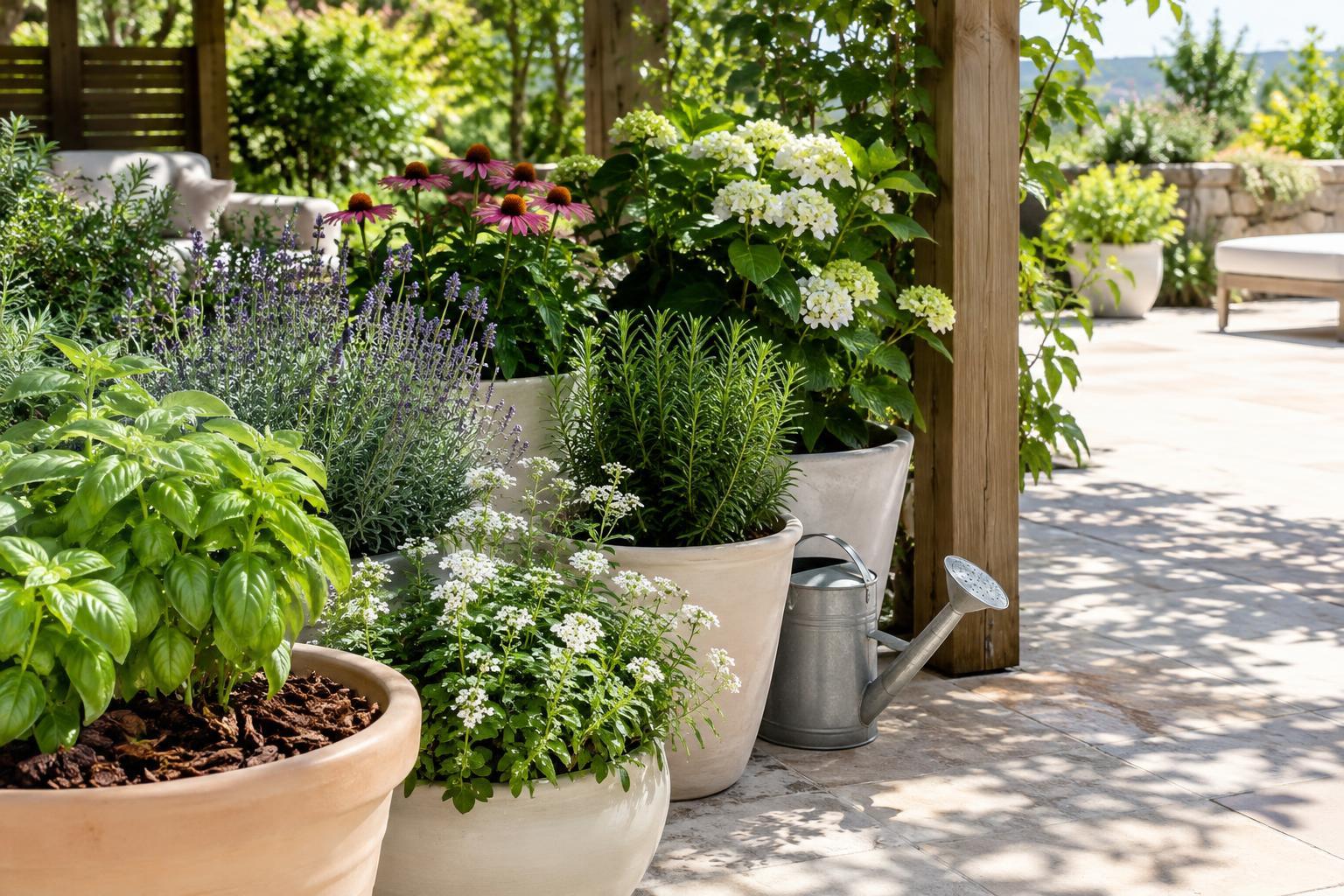
Pay attention to the surface beneath each pot, too. Paving can hold heat, and a container pressed against a wall may receive heat from more than one direction. Raising a pot slightly on feet can let water drain freely and allow some air beneath it. Grouping pots together may shade their sides, but leave enough space for air to move around the foliage.
Choose pots that protect the roots
Container size matters. A small pot has less potting mix to buffer changes in heat and moisture, so plants that repeatedly wilt or need very frequent watering may benefit from a larger container. When repotting, choose one with drainage holes and enough room for the plant to grow. Use fresh potting mix suited to the plant rather than filling the pot with dense garden soil.
Pot material and color also affect how a container behaves. Dark pots in direct sun can become hot to the touch, while unglazed clay may lose moisture more readily in dry, breezy conditions. Neither material is automatically wrong; consider its location and how often you can check the plant. A decorative outer pot can shade a smaller inner pot, provided excess water cannot collect around the roots. Avoid repotting a severely stressed plant in the middle of a hot afternoon if you can first improve its shade and moisture.
Water for the root zone, not the clock
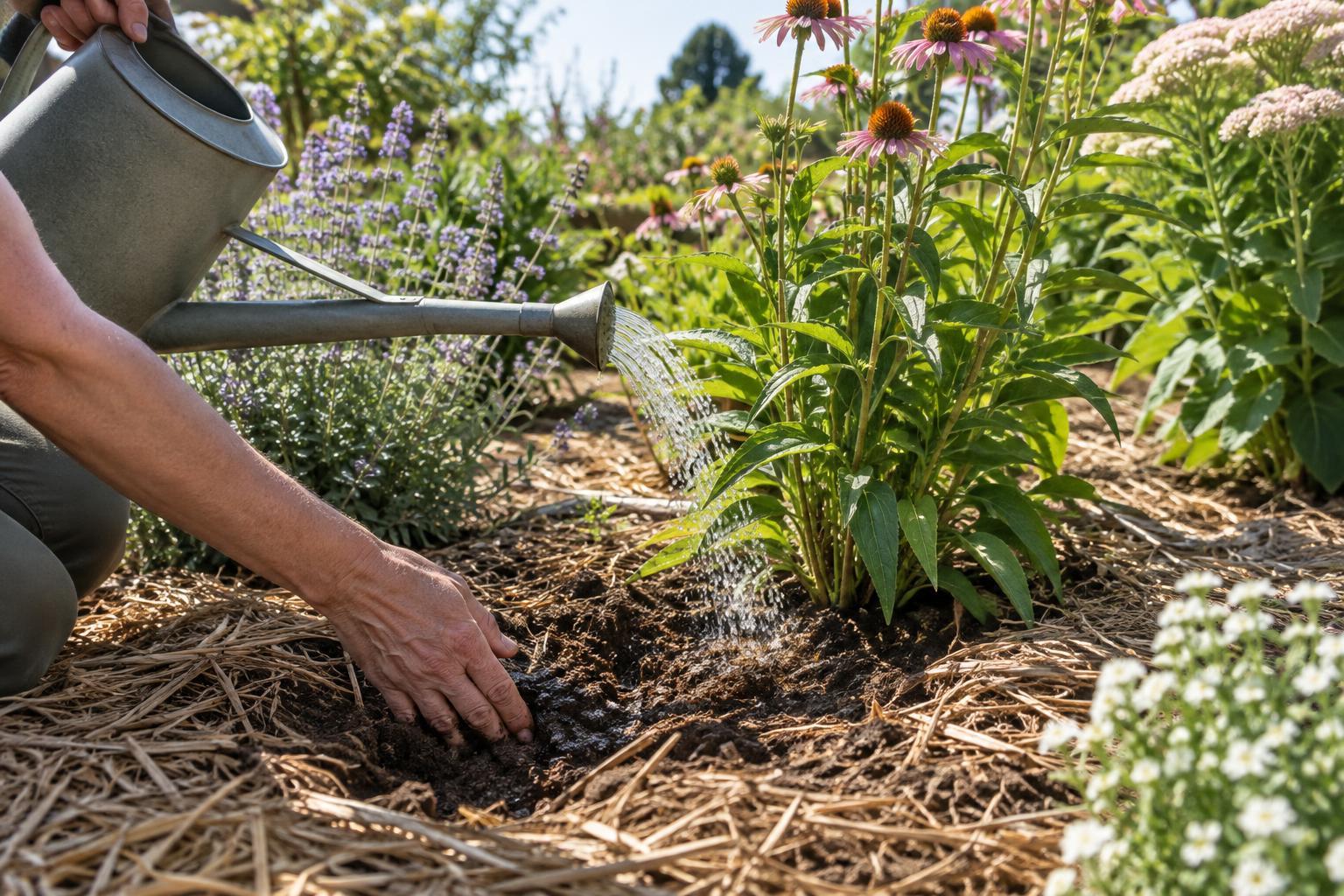
Check the potting mix before watering. Push a finger below the surface or lift a smaller pot to judge its weight. If the mix is dry where the roots are growing, water slowly until moisture reaches the whole root ball and excess can drain away. If water runs straight through a very dry pot, apply it in stages so the mix has time to absorb it. Empty standing water from saucers unless the plant is one that specifically tolerates wet conditions.
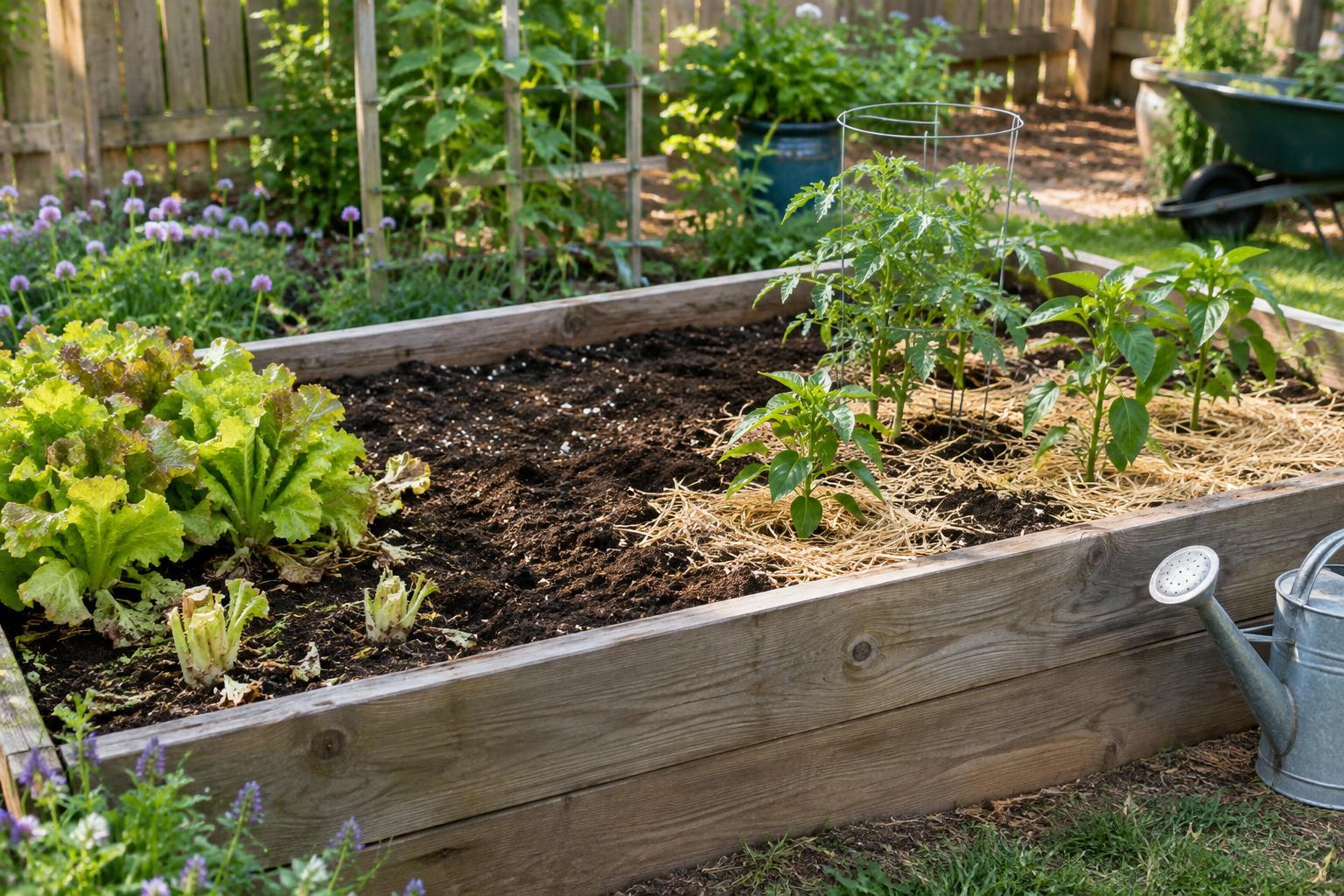
Early morning is a useful time to water because you can prepare plants for the day and see which pots are drying fastest. In sustained heat, some containers may need another check later; others will remain moist. A layer of suitable mulch, kept clear of stems, can slow evaporation from the surface. Do not treat mulch as a substitute for checking the mix beneath it.
Recognize stress and adjust gradually
Drooping leaves can signal a thirsty plant, but they can also appear during the hottest part of the day when the mix is still damp. Check the soil before adding water, then look again as temperatures ease. Crispy leaf edges, repeated wilting and unusually fast drying suggest the container’s position or size may need attention. Remove badly damaged leaves when the plant has recovered enough to resume growth.
During a heatwave, prioritize steady care over quick fixes. Shift a pot into partial shade, check its moisture regularly and pause any unnecessary pruning or repotting until conditions are gentler. Keep each plant’s light and drainage needs in mind: a sun-loving herb and a shade-tolerant foliage plant will not want the same solution. Small changes to placement, pot size and watering habits can make summer container care much more manageable.