Start with identification, not removal
A dense patch of greenery can look like excellent wildlife habitat. Birds may perch in it, and small animals may hide beneath it. But a plant that spreads aggressively outside its native range can gradually displace the variety of plants that provide food and shelter across a garden. The aim is not simply to clear a space. It is to replace a spreading problem with habitat that will last.
Identify the plant before you cut, dig or pull it. Look at its leaves, stems, flowers, fruits and growth habit, and compare several features rather than relying on one photograph. A vigorous plant is not necessarily invasive: its status and behavior depend on where you live. If you are unsure, ask a local garden group, extension service or conservation organization for help. Find out how the plant spreads, whether fragments can regrow, and whether local rules affect its removal or disposal. Those details shape the safest plan.
Look for wildlife already using the patch
Watch the area from a distance at different times of day before beginning work. Check for active nests, occupied cavities and other signs that animals are sheltering there. Thick vines and shrubs can conceal nests even when they appear quiet from the outside. If you find an active nest or cannot tell whether a shelter is occupied, leave that part undisturbed and return when it is no longer in use. Local wildlife protections may also apply.
Map the patch in your mind or with a simple sketch. Note which parts offer the most cover and which nearby features—hedges, trees, leaf litter or brush—could serve as temporary refuge. Timing matters, but there is no single safe removal season for every place or species. Plan around the wildlife you observe, the plant’s growth cycle and periods when exposed soil will be easier to stabilize.
Remove in stages and keep escape routes open
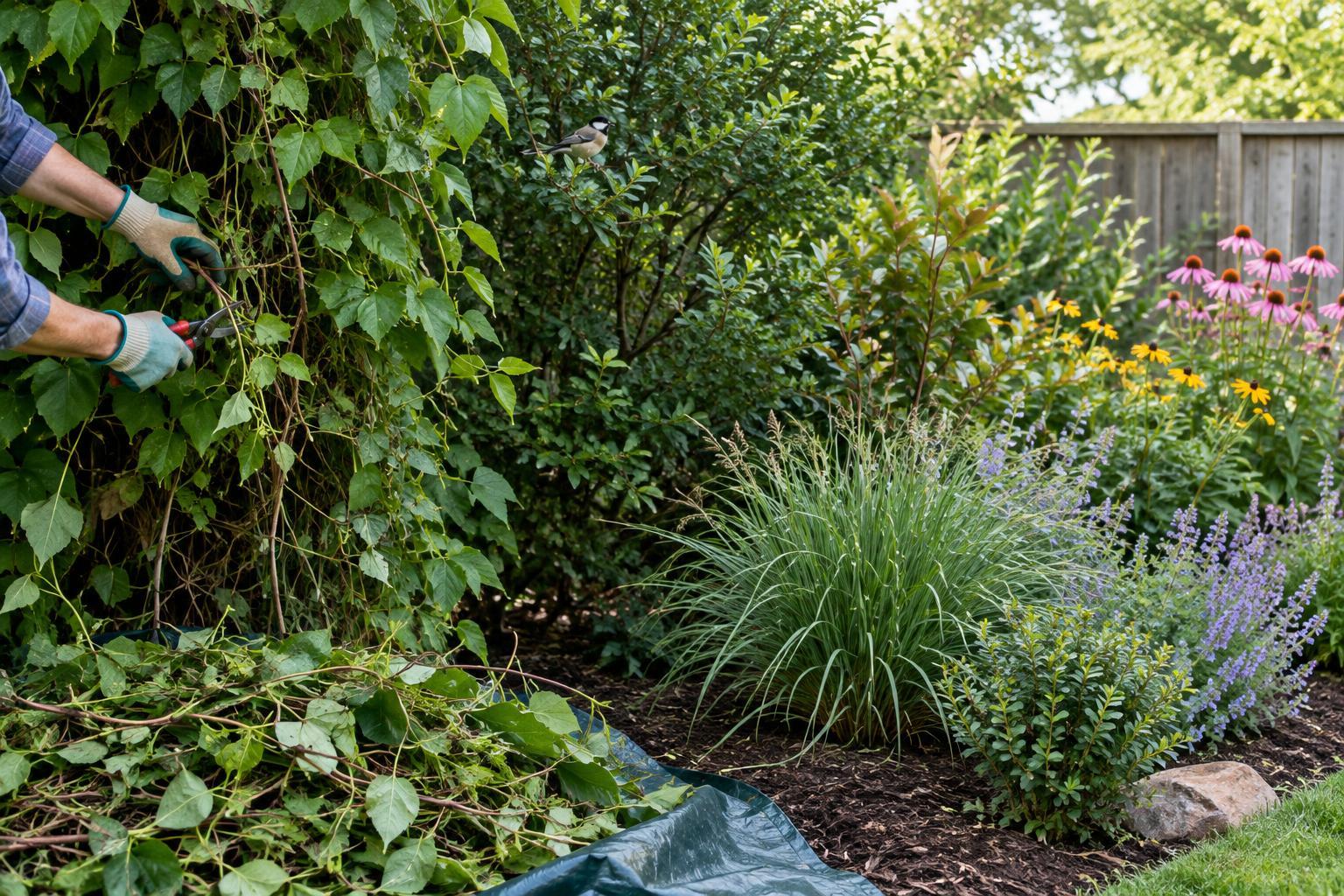
Begin at the outer edge or with smaller satellite plants, rather than clearing the entire patch in one day. This can slow further spread while leaving some cover in place. Work in sections small enough that you can replant and care for each one before moving on. Where an invasive vine climbs a tree, avoid yanking long stems out of the canopy; pulling can damage branches or disturb hidden wildlife. Cutting accessible stems and letting upper growth dry in place may be less disruptive, provided it does not create a hazard.
Match the removal method to the plant. Hand-pulling may work for young plants when the soil is moist, while established shrubs may need careful digging or repeated cutting to exhaust regrowth. Avoid disturbing more soil than necessary: exposed ground can invite new seedlings and make erosion worse. Wear gloves and suitable protective clothing, and use extra caution around thorny plants, unknown sap or unstable branches. If the work is large or hazardous, seek experienced local help rather than taking risks.
Handle cut material without spreading it
Treat seeds, berries, roots and stem fragments as potential sources of new plants until you know otherwise. Keep removed material contained as you work, clean soil and seeds from tools and footwear, and check disposal guidance for the species in your area. Do not assume that a home compost pile will destroy viable seeds or roots. Avoid leaving invasive cuttings in a wildlife brush pile if they could resprout.
You can still provide temporary shelter without keeping the invasive plant. A small, stable pile of clean branches from noninvasive plants, a patch of unmown grass or existing leaf litter may help bridge the gap while new planting establishes. Place brush where it will not block paths, drains or access, and check it for occupants before moving it later.
Rebuild habitat, then keep watching
Replant soon after clearing each section. Choose a mix of locally suitable plants with different heights and structures: groundcover for low shelter, flowering plants for visiting insects, and shrubs or small trees where space allows. Plants native to your region can be useful choices, but match them to the site’s light, moisture and soil conditions so they have a reasonable chance to thrive. Mulch bare soil appropriately and water new plants as needed while their roots establish.
Expect follow-up work. Seeds already in the soil may sprout, and missed roots or stems may produce new growth. Inspect cleared areas regularly, remove small returns before they spread and fill gaps as replacement plants grow. A successful project may look gradual rather than instantly tidy. By keeping some shelter available throughout the process, you can improve the planting without abruptly stripping the space wildlife uses today.