Let the garden keep some of its food
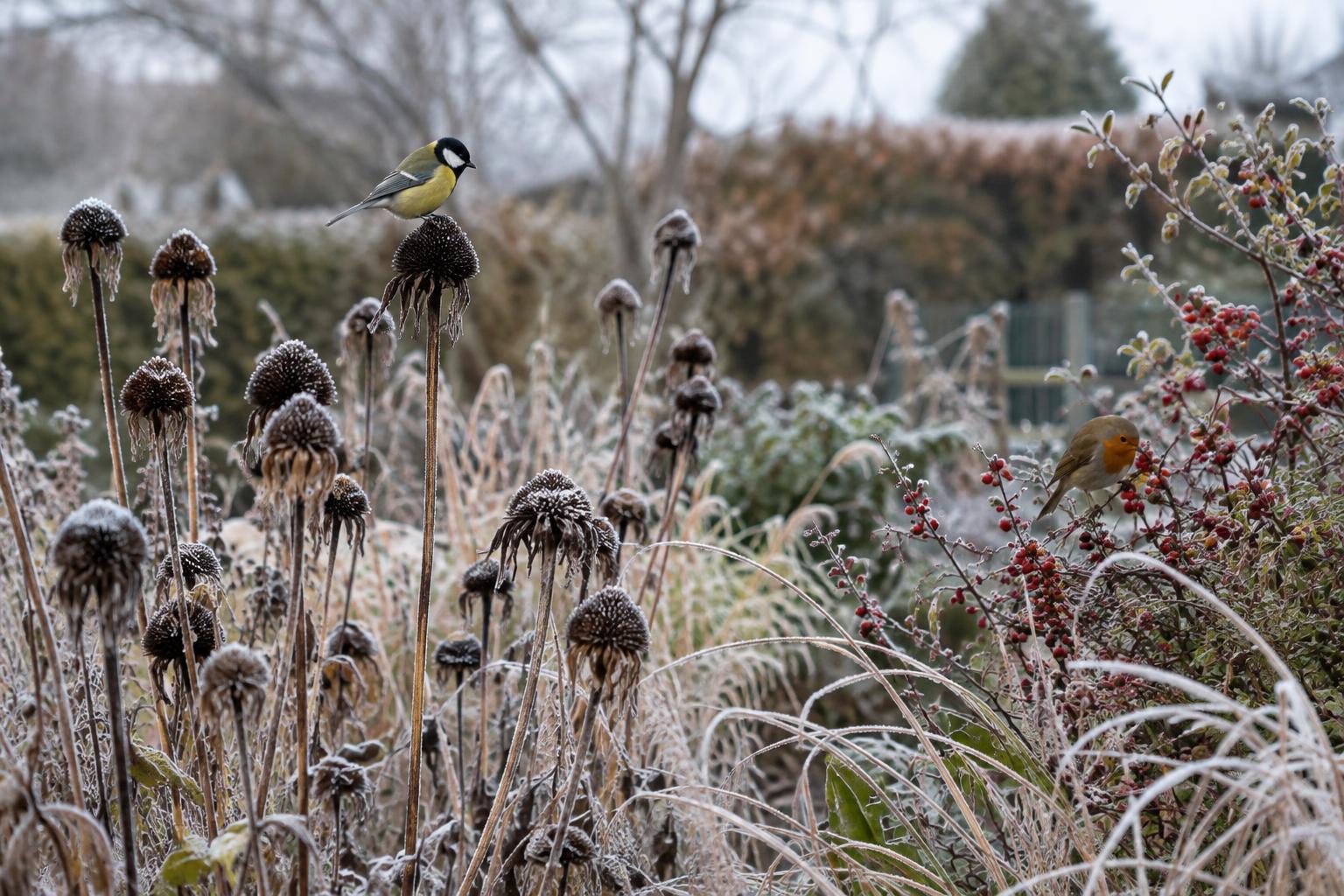
A garden does not need to be completely cleared when flowering ends. Dried seed heads and berries can provide food for birds at different points through fall and winter. They also give an otherwise quiet border shape and texture. The simplest approach is to leave some healthy plants standing and watch what local birds actually use, rather than assuming every seed head or berry will be eaten.
Start with plants already growing in your garden. Look for sturdy stems carrying visible seeds, and for shrubs or vines holding fruit into the cooler months. Leave a mix where you can: some birds feed from standing plants, while others may pick up fallen seeds beneath them. Seed availability varies with weather, plant variety and how quickly wildlife finds the food.
Choose plants that belong in your space
Sunflowers, coneflowers and other seed-bearing flowers are useful candidates for a less aggressive fall cleanup if their stems remain sound. Berry-bearing shrubs and small trees can add another food source, particularly where fruit persists after leaves drop. Plants suited to your climate and growing conditions are more likely to thrive with ordinary care. Locally native options can be a good starting point, but check their mature size and site needs before planting.
Do not keep or spread a plant simply because birds eat its berries. Birds can carry the seeds of invasive plants into nearby gardens and natural areas. Check local guidance before adding an unfamiliar species, and remove unwanted seedlings where appropriate. If children or pets use the space, identify fruiting plants and account for any risks to them as well; berries that feed birds are not necessarily safe for people or other animals.
Leave food standing without leaving problems
In fall, resist the urge to cut every flower stem to ground level. Leave clusters of intact seed heads where they are not blocking a path or bending into a walkway. You can remove collapsed stems that create a slipping hazard while keeping upright ones nearby. If a shrub needs pruning, consider whether cutting it now would remove its winter fruit; routine shaping may be easier to do after the fruit has gone, provided that timing suits the plant.
Selective cleanup matters. Remove plant material with significant disease problems according to appropriate local guidance, rather than leaving it in place for wildlife. Avoid leaving fruit from plants you are trying to prevent from spreading. In windy or snowy areas, strong stems may last longer than delicate ones, so choose what to retain based on how the garden actually behaves.
Think beyond a single border
Birds benefit from places to pause as well as places to feed. A mix of shrubs, taller plants and open edges can offer different heights and degrees of cover. Keep some leaf litter under suitable shrubs if it will not create a drainage or safety problem; it can shelter small creatures and help protect the soil. A shallow, clean source of water may also be useful where it can be maintained safely in your climate.
Place food-bearing plants where you can enjoy watching them without putting birds in an awkward spot. Consider nearby windows, outdoor cats and regular foot traffic when choosing a location. No single planting will attract every bird, and visits may be brief or hard to notice. A quiet view from indoors can help you learn which plants are worth making room for next year.
Tidy gradually when winter ends
There is no need to treat spring cleanup as one all-or-nothing job. Once seed heads have been emptied or stems have broken down, remove what no longer serves the garden. Work around new growth, and check shrubs before pruning so you do not disturb nesting birds. If you want a tidier look, clear the most visible edges first while leaving less prominent areas standing a little longer.
Take note of what happened over winter. Which fruits remained, which seeds disappeared, and which stems stayed upright? Those observations can guide future planting more reliably than a long list of supposedly bird-friendly plants. Leaving seed heads and berries is a small change in maintenance, but it can make a garden more useful during a season when natural food is less predictable.