Start with the food web, not a bat box
Bats use gardens differently depending on the species and the surrounding landscape. Many feed on flying insects, so the most useful first step is to make your garden a better place for those insects to live. A bat box may offer a roost in suitable conditions, but it cannot replace a reliable food supply. You do not need a large garden, either: a small yard can contribute to a wider network of feeding places.
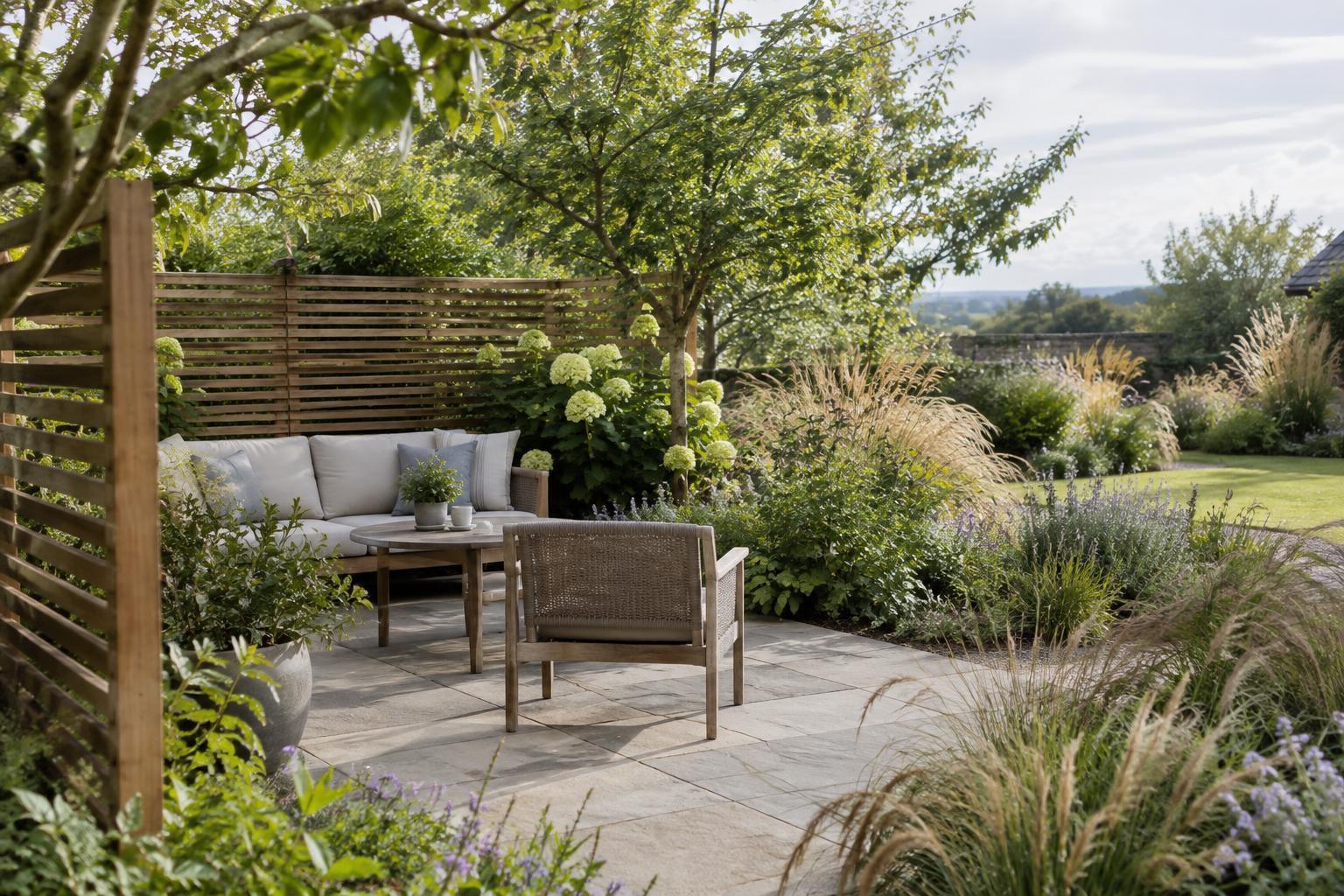
Look at what is already growing before you make changes. Mature trees, hedges, long grass and flowering borders may each support insects or provide sheltered routes through the garden. Keep healthy, established plants where practical, then identify gaps you can fill over time. A varied garden with several layers of vegetation is generally more useful than a tidy space dominated by lawn or paving.
Plant for insects across the growing season
Choose a mix of plants suited to your climate, soil and available light. Locally native trees, shrubs, grasses and flowering plants are a good starting point because they can support insects that use them for food or shelter. Include species that flower at different times rather than relying on one short display. Where appropriate, some evening-scented flowers may attract moths, though their value will vary by region and by the insects already present.
Think beyond flowers. Moth caterpillars and other insects also need leaves and places to develop. Leave a little room for grasses, a less-mown edge or a patch of leaf litter where it will not cause a problem. Avoid introducing plants known to spread aggressively in your area. If space is limited, a few well-chosen shrubs and a mixed border can provide more variety than trying to fit in every plant on a wildlife list.
Make darkness and shelter part of the design
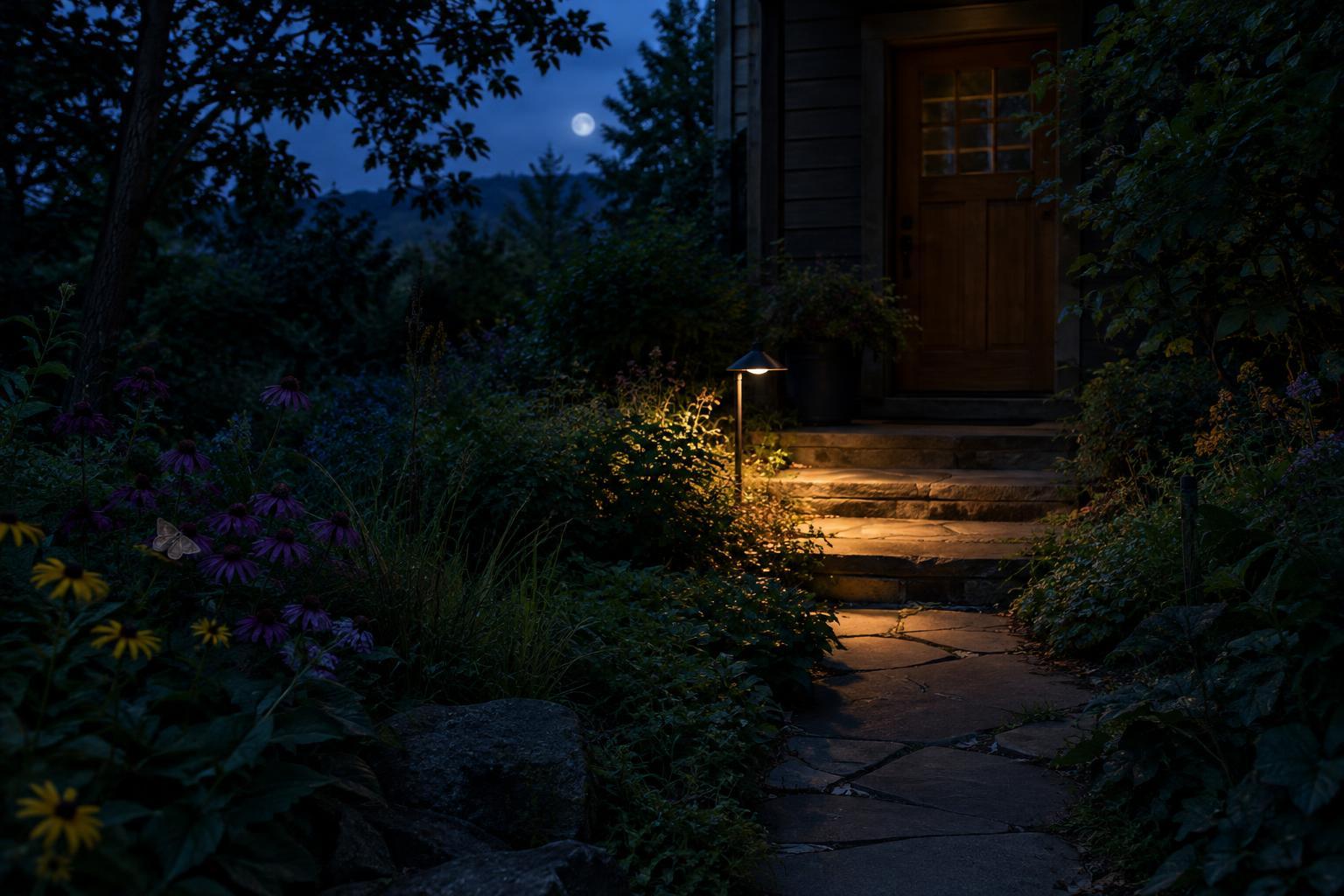
Bright light can change how insects and bats use a space. Keep naturally dark parts of the garden dark when you can, particularly along hedges, trees and other sheltered edges. Turn off decorative lighting when it is not needed. For paths and doorways where light helps people move safely, use lighting directed toward the ground, keep it as dim as practical and consider a timer or motion control.
A bat crossing a garden may benefit from a sequence of sheltered features rather than one isolated patch of planting. Hedges, shrubs and trees can help connect your space to nearby green areas. You do not need to enclose the whole garden: even a planted boundary or a break in a wide expanse of paving can add cover. Plan changes around your household’s access and sightlines so the garden remains comfortable to use.
Offer water without creating hazards
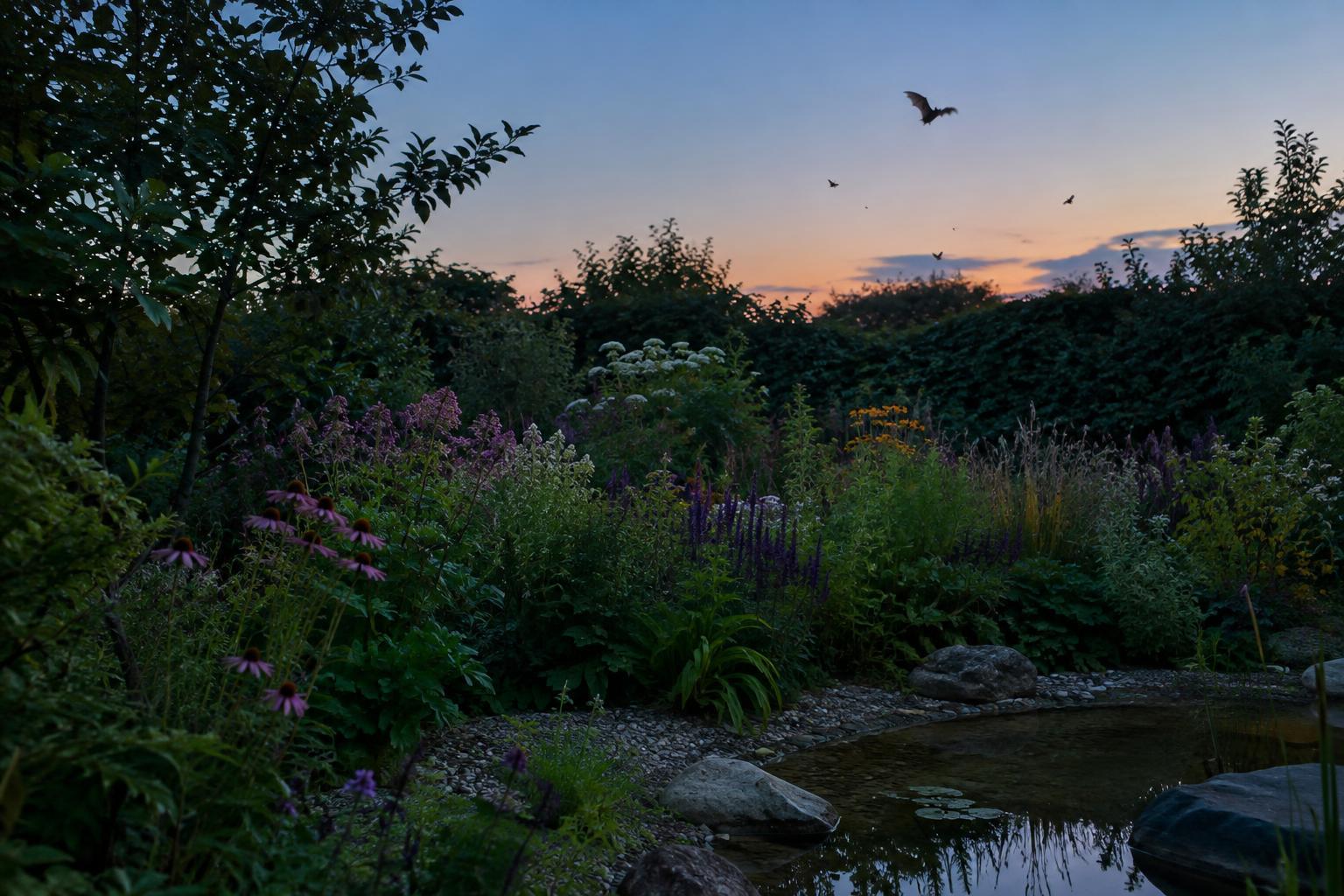
In suitable gardens, a pond can support aquatic insects and give wildlife access to water. A small pond is still a substantial project, so choose a safe location and consider how people and animals will use the space. Give wildlife an easy way out, such as a gently sloping edge or securely placed stones. Planting around part of the pond can add cover while leaving enough open water for maintenance.
If a pond is not practical, focus on planting and habitat first. A shallow water dish may help some garden wildlife, but it is not a substitute for a larger foraging habitat. Refresh small containers regularly rather than leaving stagnant water to collect. Whatever water feature you choose, make sure you can maintain it; an established, manageable feature is more useful than one that becomes difficult to care for.
Garden gently and watch what changes
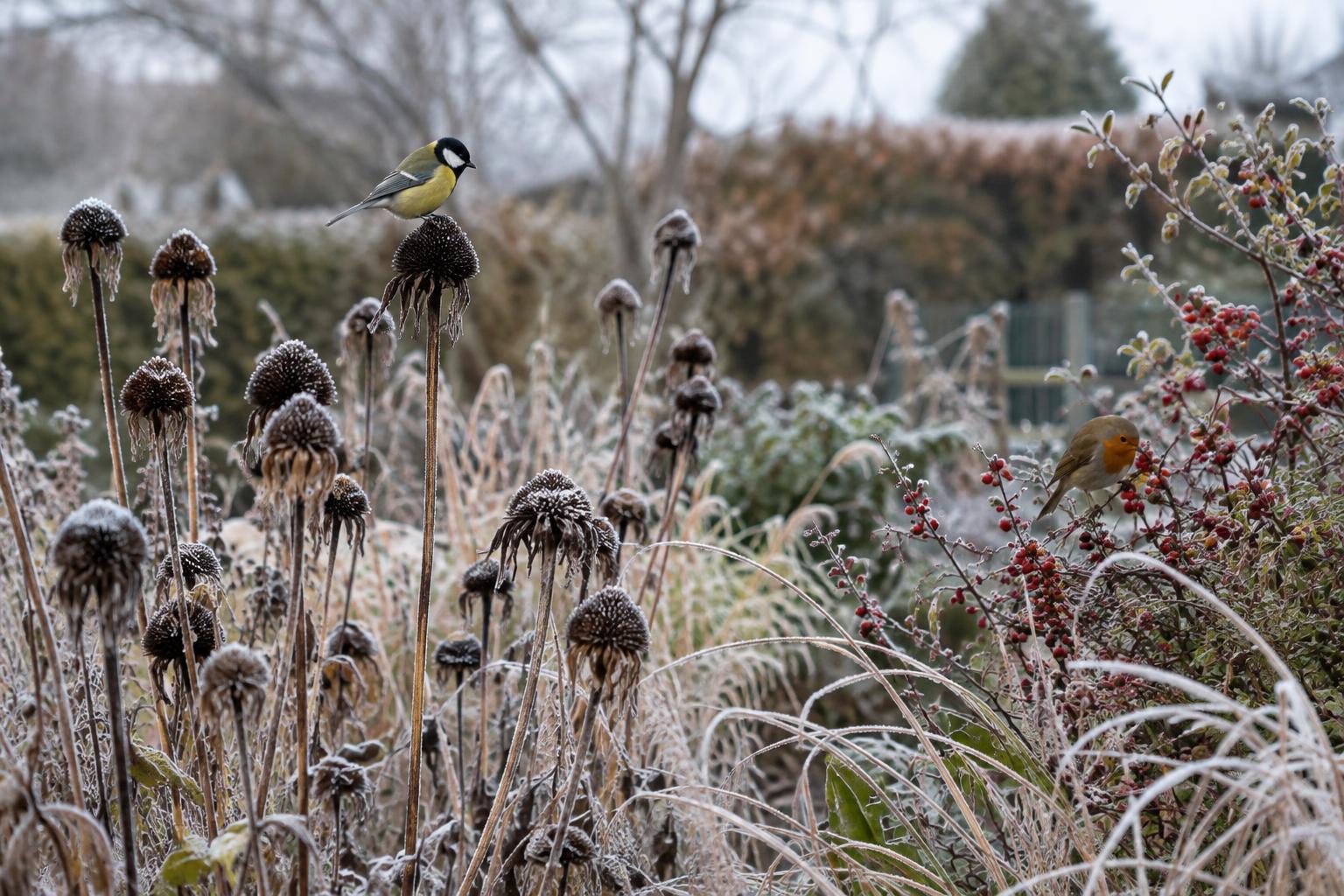
Reducing broad insecticide use helps preserve the insects you are trying to support. When a plant has a pest problem, first check how serious the damage is and whether pruning, hand removal or better growing conditions could address it. Leave some seed heads, hollow stems or fallen leaves in suitable corners until insects have had time to use them. You can keep paths and seating areas neat while allowing quieter parts of the garden to be less managed.
Give the changes time. On a mild evening, you may notice insects around planting or see bats passing overhead, but a sighting is not guaranteed and is not the only sign of a useful garden. Avoid handling bats or disturbing possible roosts; if a bat is grounded or appears injured, seek guidance from a local wildlife organization. The goal is a garden that steadily supports insects and offers bats a better chance to forage as they move through the neighborhood.