Find out where shelter will help
Before adding a fence or planting a hedge, notice how wind affects the places you actually use. A breeze that helps a damp corner dry may be welcome, while the same wind across a dining table can make the space uncomfortable. Mark seating, paths, doorways and tender planting areas on a simple garden sketch. These are your priorities; you do not need to shelter every part of the garden equally.
Watch the space on several windy days if you can. Note the direction the wind seems to come from, where it speeds up beside a wall or between buildings, and where existing trees or structures create calmer pockets. Wind can behave differently in different seasons, so treat a single observation as a starting point rather than a permanent rule. A few notes will help you place shelter more deliberately.
Put the most-used spaces in the calmer spots
It is often easier to move a planned seating area than to change the conditions across a whole yard. Look for a position with some existing protection, then consider where additional shelter would make that spot more useful. Keep access convenient: a beautifully sheltered corner is less appealing if reaching it means crossing a muddy lawn or carrying meals a long distance.
Think about sun and views at the same time. A solid screen might stop a breeze but shade a favorite chair or make a small patio feel enclosed. On your plan, sketch the approximate height and extent of any proposed barrier. Check what it would block from the house as well as from the seating area. The goal is a comfortable outdoor room, not simply the least windy point on the property.
Choose barriers that suit the space
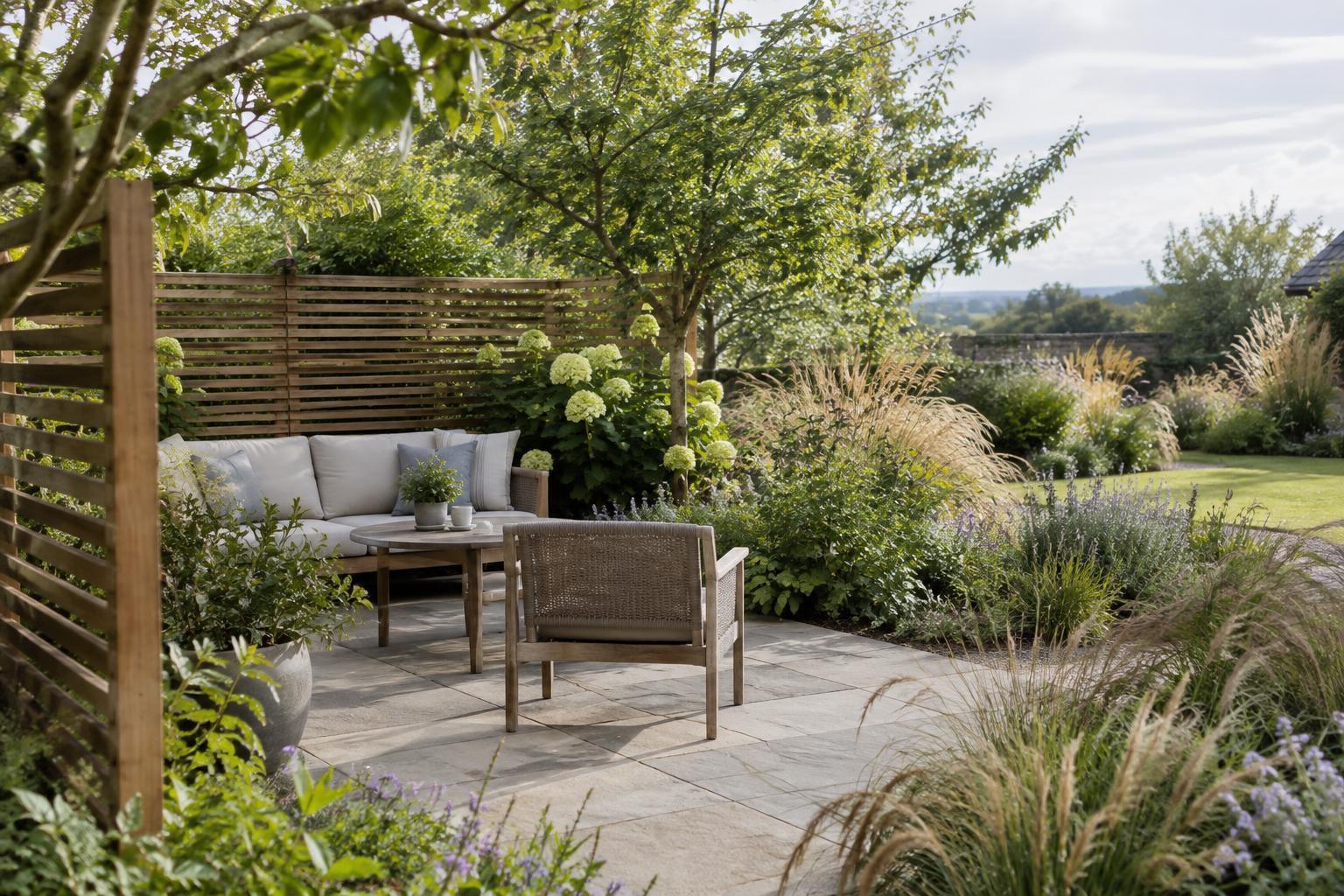
Walls, fences, screens and planting all change how air moves, but their effects are not identical. A solid barrier may create a calm area immediately behind it while also encouraging gusts around its ends or over its top. A barrier with some gaps can soften the wind without making the space feel completely closed. The best choice depends on available room, the amount of shelter needed and how the barrier fits the garden.
For a small patio, a modest screen near the seating may be more practical than a tall boundary fence. In a larger garden, a hedge or mixed planting can provide a softer edge, though it needs space to grow and time to establish. Check that a proposed structure can be installed securely and that its location does not interfere with gates, paths or access for maintenance. If local rules apply to boundary structures, check them before building.
Plan planting for its mature size
Plants can contribute to shelter while bringing texture and seasonal interest. Choose plants suited to your climate and growing conditions, and consider how large they are likely to become. A hedge that fits neatly on paper may eventually crowd a path or require frequent cutting. Leave enough room to reach both sides for care where possible, and avoid placing dense planting so close to a seating area that it takes over the usable space.
New plants in an exposed position may need extra attention while they establish. Prepare the planting area appropriately, water according to conditions, and use suitable supports where needed without tying stems so tightly that they cannot move naturally. If a single row would create an overly rigid edge, a staggered group of shrubs with different heights may offer a more relaxed look. Allow for gaps at first rather than packing plants too closely.
Test the plan before making it permanent
Wind shelter is worth building in stages. You could use movable furniture, containers or a temporary screen to test the location of a proposed sitting area. Notice whether the change improves comfort without creating an awkward route, unwanted shade or a view you dislike. Temporary items are not substitutes for properly secured permanent structures, especially in strong winds, but they can help you judge the layout before committing.
Start with the place where a small improvement would make the biggest difference. Once that area works, decide whether other parts of the garden need shelter at all. An open patch can remain useful for plants, play or simply a sense of space. A good wind plan creates a few comfortable places for everyday life while leaving room for the garden to breathe.