Start by noticing where the light goes
A garden does not have to be completely dark to be more welcoming to nocturnal wildlife. The useful goal is to light the places people need to see while leaving other areas unlit. Light reaching trees, shrubs, flower beds or neighboring spaces may affect animals that feed, travel or shelter there after dark. The effects vary by species and setting, so reducing avoidable light is a practical place to start.
Walk around your outdoor space after sunset with the lights set as you normally use them. Look from the path, patio, garden edges and nearby windows. Which fixtures help you see a step or find a door? Which ones shine upward, across a hedge or into an area no one is using? Also check for glare: a bright bulb in your line of sight can make darker parts of a path harder to see. This simple survey gives you a plan before you replace anything.
Keep light close to the task
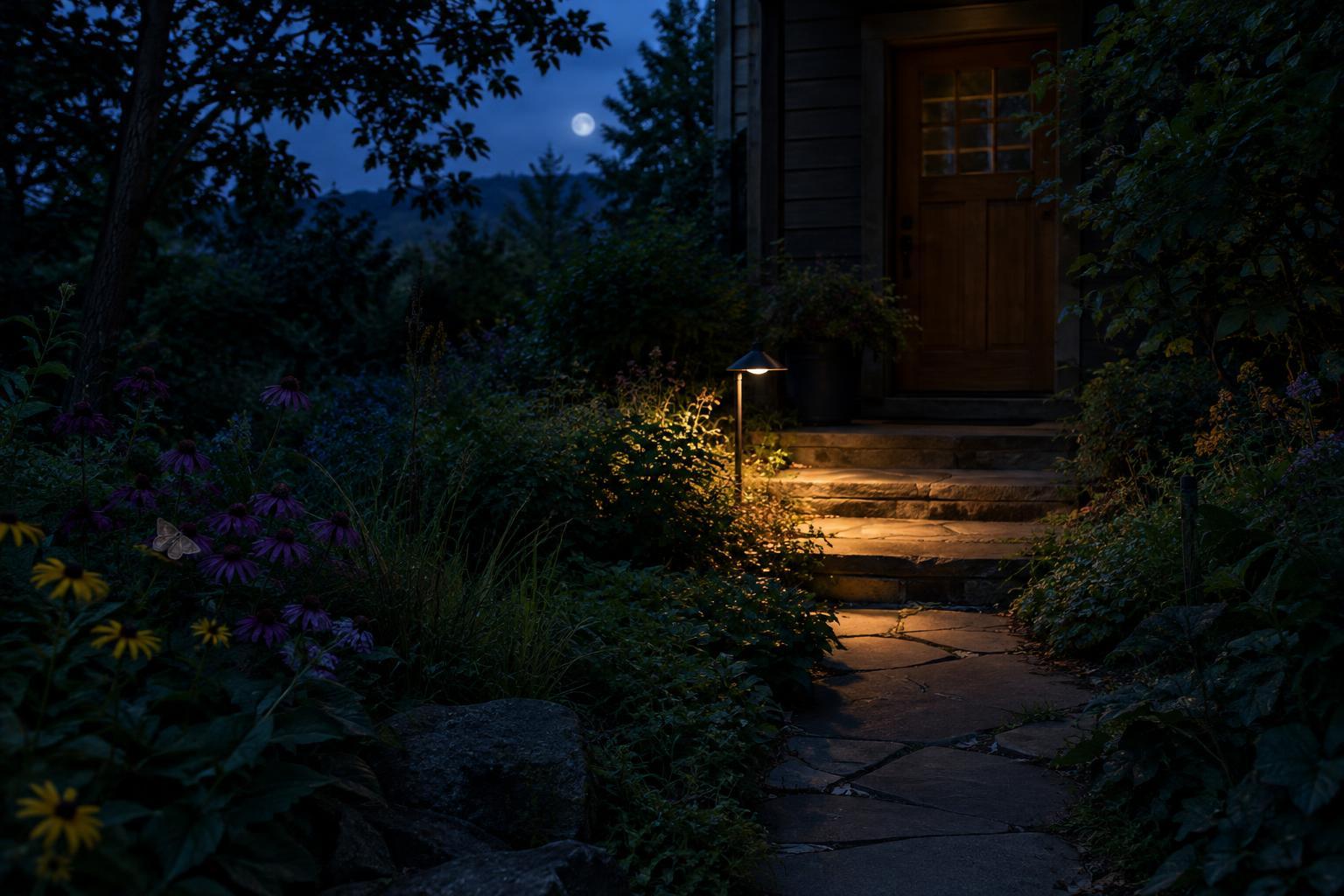
Place lighting where it has a clear job, such as illuminating an entrance, a change in level or a frequently used route. A small, well-aimed light near a step may be more useful than a powerful fixture intended to cover the whole yard. If a path needs lighting, consider a few carefully placed fixtures rather than a continuous bright strip.
Shielding helps keep light from spilling beyond its target. Choose fixtures that direct light downward, or adjust existing ones so the bulb is not visible from the garden’s wildlife areas. Avoid pointing spotlights into tree canopies, dense planting or open sky. For a patio, a low-output light under a roof or beside a door may serve an evening meal without lighting every boundary. Stand at different points around the garden after making changes to check where the beam actually lands.
Choose the least light that works
Brightness is worth reconsidering even when a fixture is well placed. Try a lower-output bulb or a dimmer where the fixture allows it, then test whether people can still move around comfortably. Giving your eyes a moment to adjust can help you judge what is sufficient. If a route must remain usable for visitors or anyone with reduced vision, prioritize clear footing and visibility there rather than pursuing darkness at the expense of safety.
When selecting new bulbs, look for a warm-toned option instead of a cool, blue-white one. Warm light is not a guarantee that wildlife will be unaffected, but it can be part of a less intrusive lighting plan, especially when paired with low brightness and good shielding. Avoid buying more powerful bulbs simply because they are marketed for outdoor use; the right amount depends on the distance and task.
Turn lights off when they are not needed
Hours of operation matter as much as fixture choice. A light that helps you bring in the bins or unlock a door may not need to stay on all night. A timer can switch off patio or decorative lighting at a chosen hour. A motion sensor can provide light for occasional trips along a route, provided it is aimed so that moving branches or passing animals do not trigger it constantly.
Review any dusk-to-dawn fixtures and ask whether they serve a necessary purpose throughout the night. If a light is needed for an entrance, consider keeping that area lit while switching off garden accents and boundary lights. Check that controls suit the people who use the space: a sensor that switches off too soon can be frustrating or unsafe. Seasonal changes may also call for adjustments as evening routines and plant growth change.
Make a darker garden work for everyone
Begin with the easiest changes: turn off a decorative light, tilt a fixture downward or set a timer. Then revisit the garden after dark. Keep important steps, doors and routes visible, and make sure lighting changes do not conflict with local requirements or shared-space agreements. If a neighbor’s light enters your garden, a courteous conversation about aiming or shielding may be more helpful than adding a barrier.
Finally, leave some connected areas dark where you can, especially along planting, hedges or other sheltered edges. A small outdoor space may offer only a modest dark patch; it is still reasonable to avoid lighting it without a purpose. Outdoor lighting works best when it is treated as a tool to use where and when needed, not as a blanket over the entire garden.