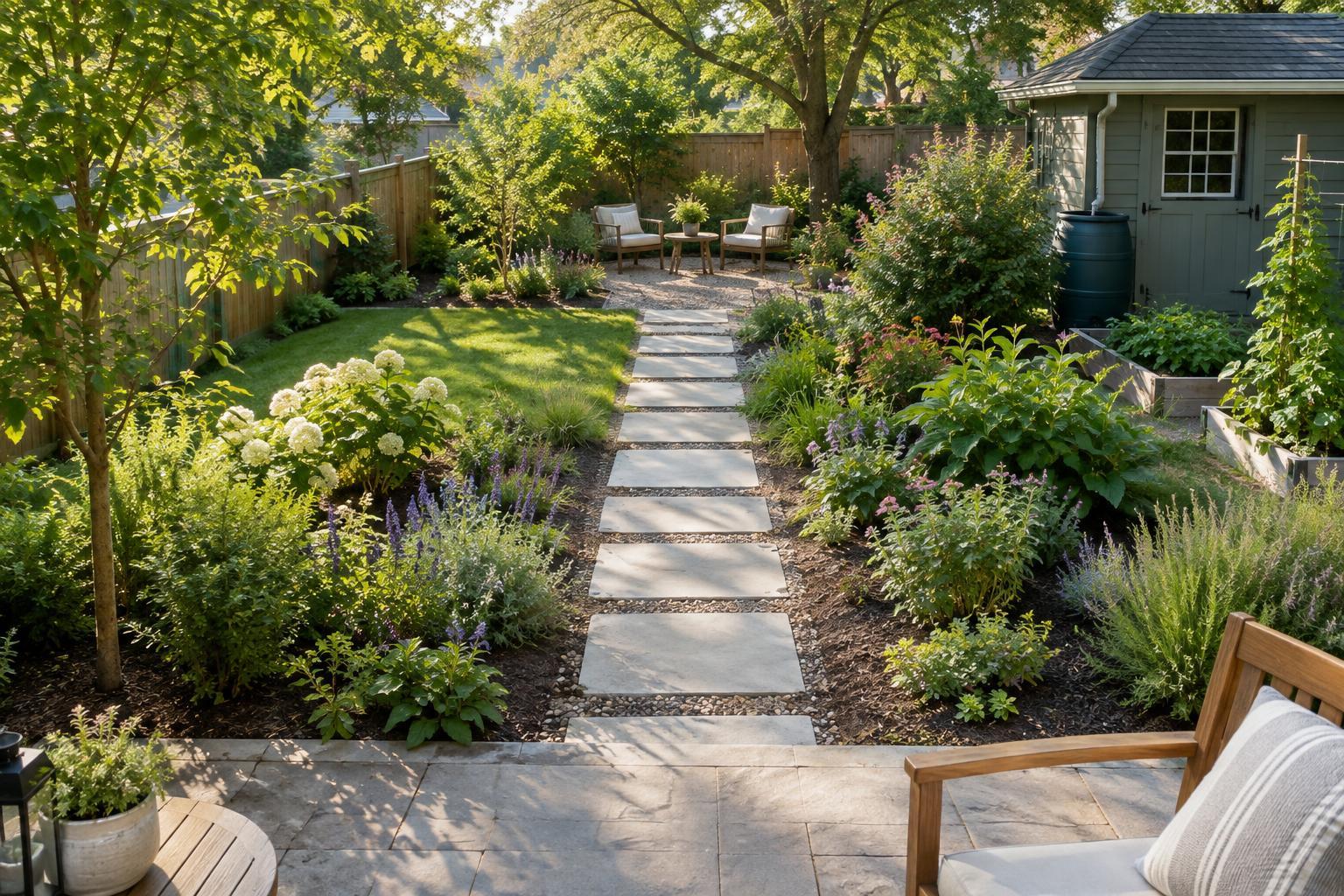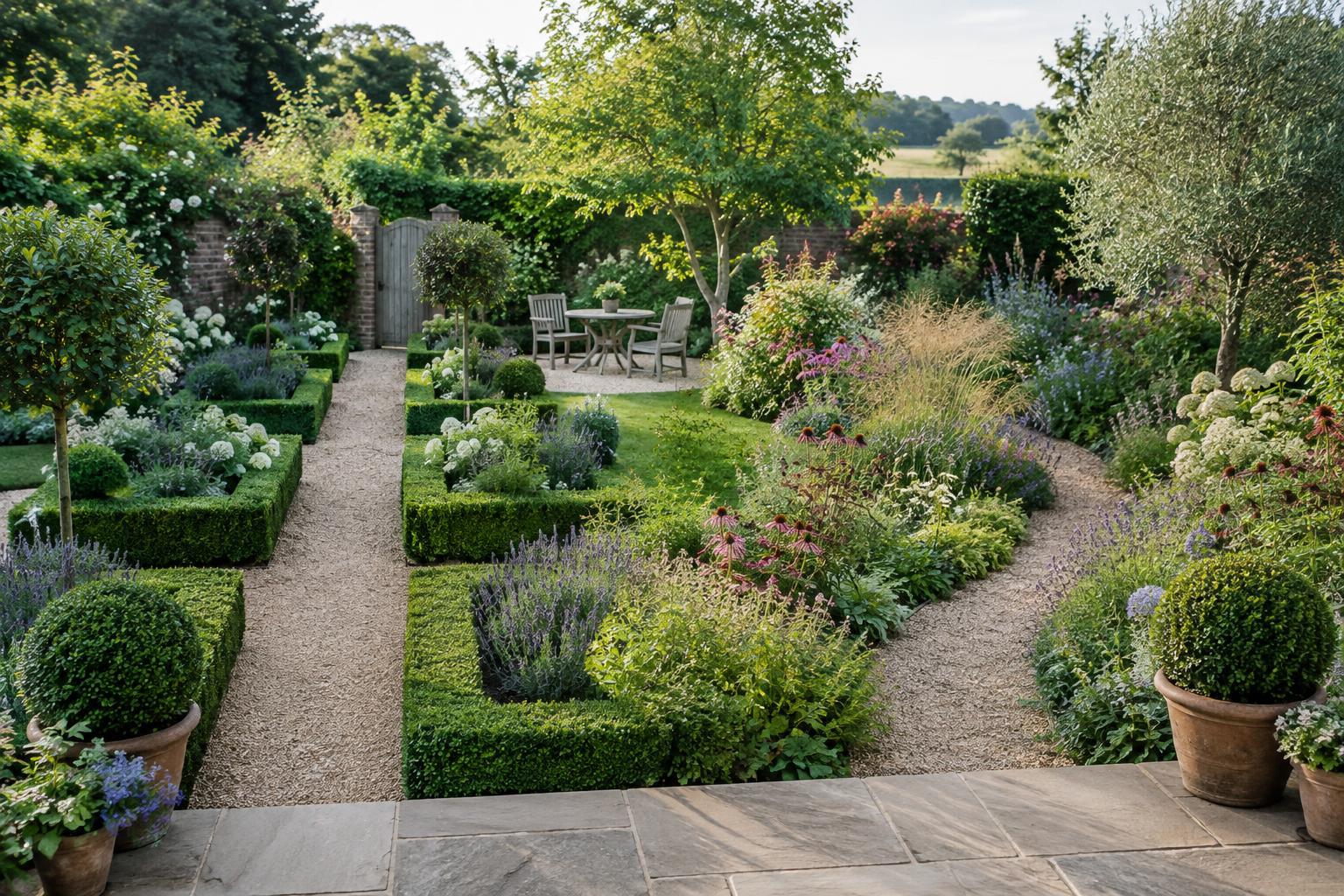
Start with the whole growing site
Water access matters most when it makes routine care manageable. Before placing a bed beside the nearest outdoor tap, look at the space as a whole. Most vegetables and many flowering plants need a sunny location, while other plants prefer some shade. Match the site to what you plan to grow, then consider how water will reach it. A convenient tap cannot make up for a bed that receives too little light.
Watch the area at different times of day and after rain. Note where water collects, where soil stays wet, and where roof runoff lands. A low patch next to a downspout may seem convenient for watering, but persistently soggy soil can make growing difficult. If the best-lit, well-drained area is farther away, a longer hose or a carefully planned irrigation line may be a better solution than moving the bed into a poor growing spot.
Measure the route water will take
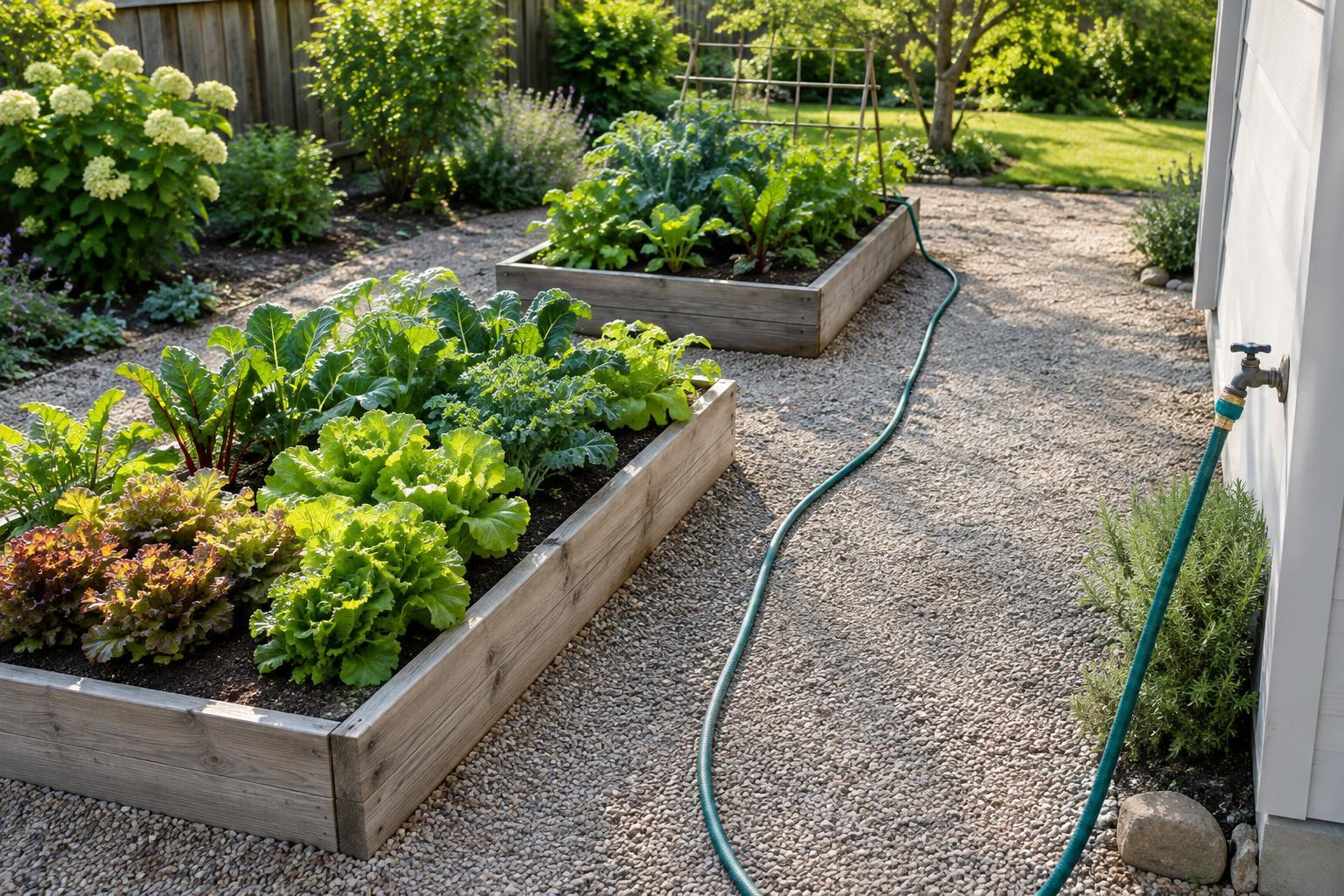
Measure from the tap to the farthest part of the proposed bed along the route a hose will actually follow. Include turns around buildings, gates and paths rather than measuring a straight line across the yard. Leave a little extra length so you can reach plants without pulling the hose tight or dragging it across stems. If you use a watering can, consider how many trips the distance will require when plants need regular watering.
Test the route with a hose before committing to the layout. Check whether it crosses a doorway, creates a trip hazard or catches on corners. A bed that is slightly farther from the tap but has a clear path may be easier to water than one directly opposite it. If several beds share one source, place the most water-demanding plants where they are easiest to reach, and group plants with similar watering needs when their light requirements also match.
Protect access around the beds
Leave enough room to walk, carry supplies and reach into the bed without stepping on the growing soil. Keep the tap and any hose connection accessible for repairs and seasonal shutoff. Avoid placing a bed where it blocks a gate or forces the hose across a frequently used path. A stable path is especially useful when carrying a full watering can or moving a hose over wet ground.
Think about where excess water will go. Watering can splash soil onto walls and paving, while runoff from a sloping bed may flow toward a foundation or neighboring area. Position beds so water can soak into the growing area rather than running away from it. On a slope, take extra care with bed shape, mulch and watering speed; a gentle application is usually easier for soil to absorb than a fast stream.
Choose a watering setup that fits the location
A nearby tap can serve a simple hand-watering routine, a soaker hose or a drip system. Hand watering lets you inspect plants as you go, but it takes more time in a large garden. Soaker hoses and drip lines can deliver water near the soil surface, where it is less likely to be lost to splashing or wind. Whichever method you choose, check how evenly water reaches the far end of the bed; pressure and flow can vary with hose length and equipment.
If you are considering a rain barrel, plan for a stable base, an accessible outlet and a safe route for overflow away from buildings. Gravity-fed water may have limited pressure, so test it with your intended hose or watering can before arranging beds around it. Keep stored water covered to limit debris and pests, and check local rules before collecting roof runoff. For edible crops, use a water source and watering method appropriate to the plants and your local guidance.
Test the plan before building
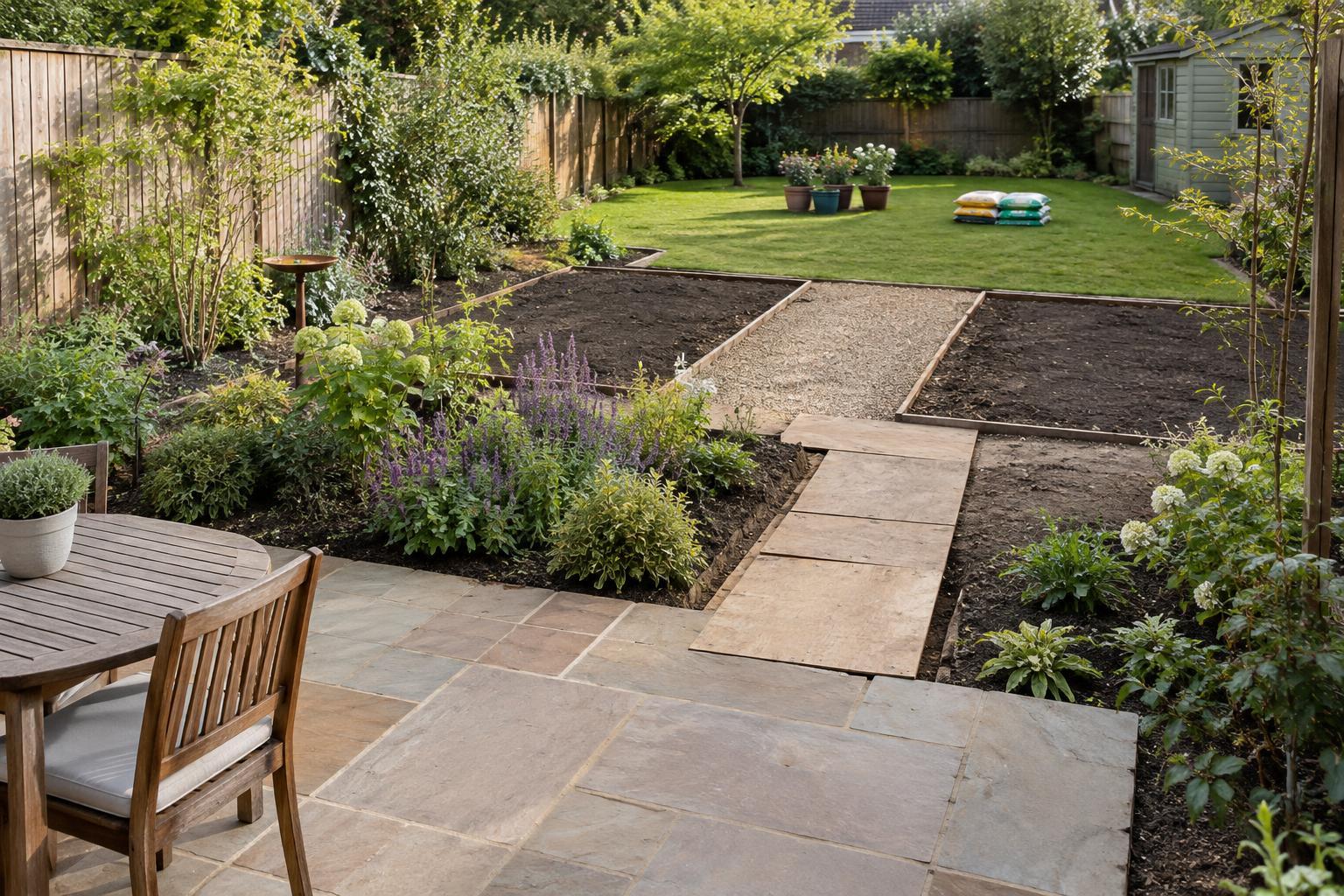
Mark proposed bed edges with string, stakes or a garden hose. Walk the paths while carrying your usual tools, then practice watering the full area. Notice whether you can reach every planting spot, whether the hose rubs against plants and whether the layout still allows access to the tap. This quick trial is easier to change than a finished bed.
Finally, plan for the season when watering will be most demanding, not just the day you plant. Young plants may need closer attention while they establish, and containers can dry out faster than in-ground beds. Mulch, suitable plant choices and soil that holds moisture without staying waterlogged can reduce unnecessary watering. The best position is one that gives plants the conditions they need and makes steady, careful watering practical for you.