Start with the trip you will make most often
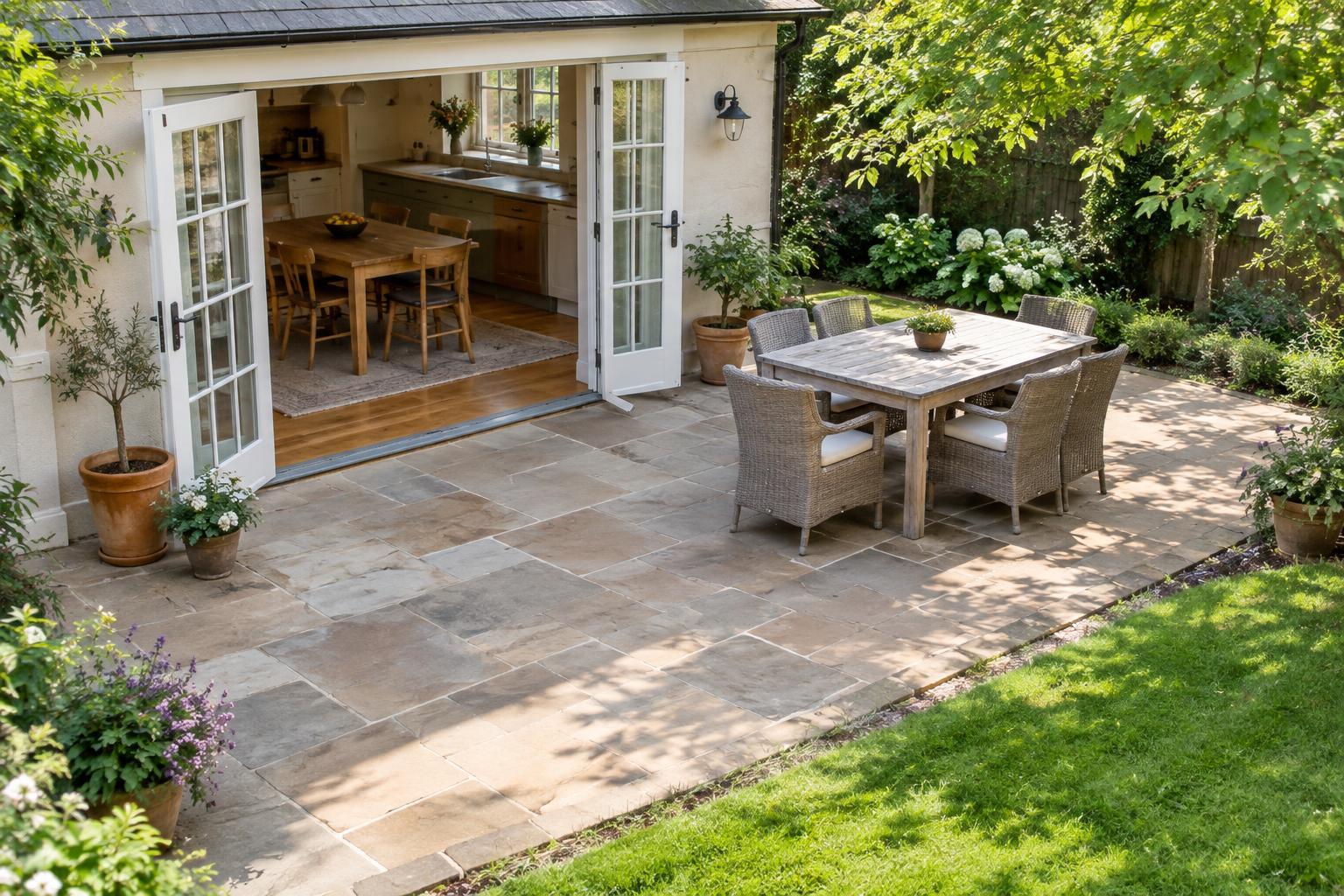
The closest patch of ground is not always the most convenient place for a patio. Begin by imagining an ordinary day: carrying a tray outside, stepping out with a cup of tea, or moving between the garden and the house with muddy shoes. The best position usually connects to the indoor room that supports those activities. A patio intended for meals may work well near the kitchen or dining area; a quieter seating space might connect more naturally to a living room.
Look at every potential exit, not just the door nearest the garden. Consider whether the door opens wide enough for comfortable passage, whether it will be blocked by a table, and where people will pause as they go in and out. If the ideal outdoor spot is some distance from the house, a clear, direct path may be more useful than forcing the patio immediately against an awkward doorway.
Keep the route simple and comfortable
Walk the route from indoors to each possible patio position while picturing what you might carry. A convenient connection has few turns, an obvious destination and enough room for people to pass without squeezing around chairs or planters. Leave a clear zone outside the door so someone can step out before joining the seating area. This also keeps furniture from interfering with the door’s swing.
Think about where the route continues. A patio can serve as a link to a lawn, shed or planting beds, but regular garden traffic should not cut straight through the middle of a dining set. Placing a path along one edge often makes both circulation and seating feel calmer. If several doors lead outside, choose the one that creates the simplest overall pattern rather than adding multiple short, competing routes.
Check levels and water before choosing the footprint
A patio that looks perfectly placed on a sketch may be less convenient if reaching it requires an uncomfortable step or a steep change in level. Compare the indoor floor, the door threshold and the surrounding ground. If steps are needed, make sure there is room for a comfortable landing and a clear approach. Where step-free access is important, account for it from the beginning rather than treating it as a later addition.
The patio also needs to shed rainwater without directing it toward the house. Avoid assuming that a surface can simply be laid flush with an interior floor or against exterior walls. Threshold details, drainage and nearby vents or openings can affect what is practical. On a sloping or waterlogged site, getting the levels right may matter more than gaining a few feet of proximity. Before committing to construction, check local requirements and seek qualified help where the grading or drainage is complicated.
Balance convenience with sun, shelter and privacy
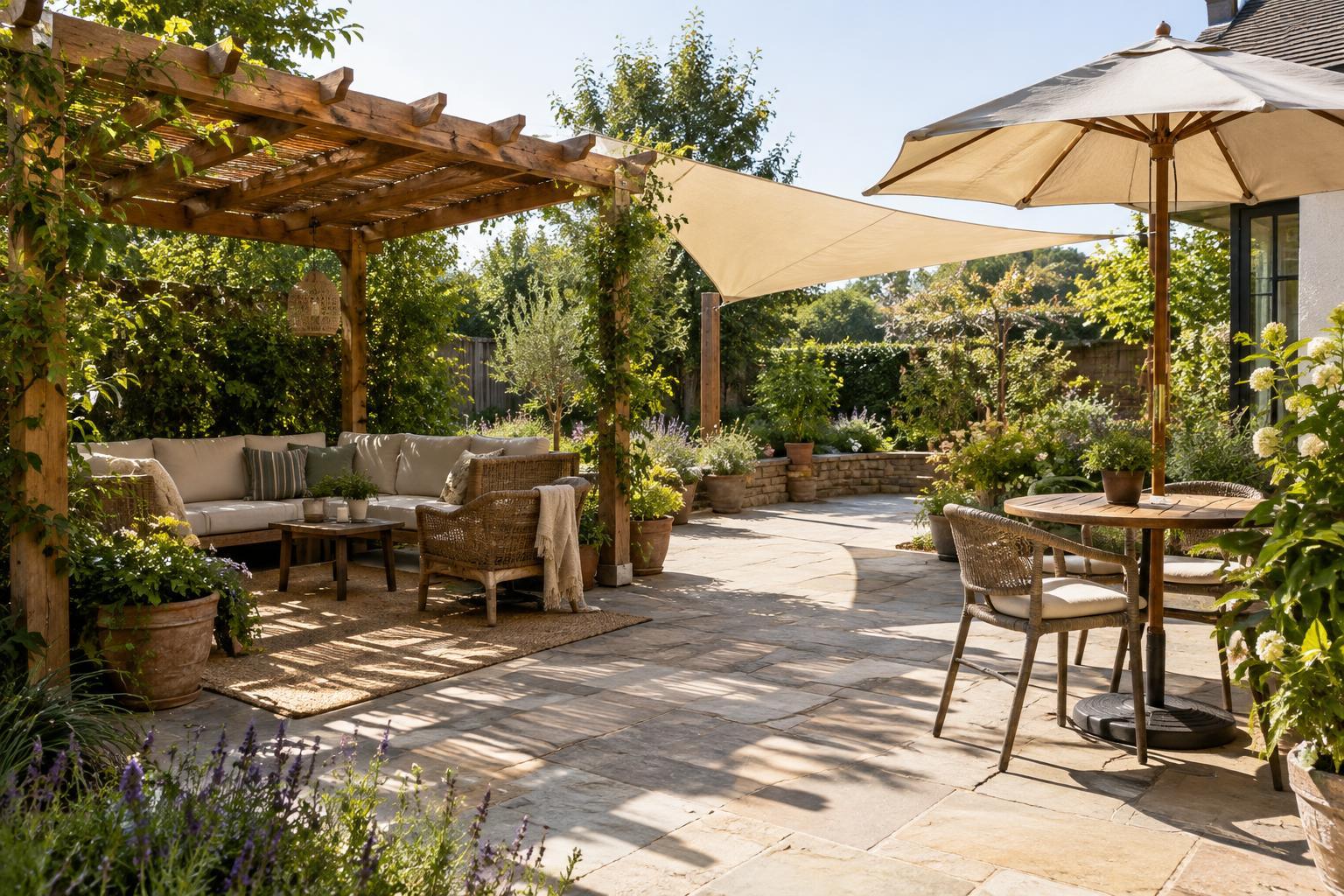
A patio should be pleasant to use once you arrive. Observe candidate spots at the times you expect to sit outside. Morning sun may suit breakfast, while afternoon shade may make summer meals more comfortable. Trees, fences and neighboring buildings can change how exposed a space feels. In a breezy garden, a slightly less direct location with natural shelter may be used more often than the nearest but most exposed corner.
Also look back toward the house from the proposed seating area. Windows can help the patio feel connected indoors, but seating directly in front of a frequently used window may affect privacy on both sides. Check views toward neighboring spaces, too. Planting or a screen can improve comfort, provided it does not narrow the route from the door. The aim is an easy connection that still feels like a place to stay.
Test the layout at full size
Before fixing a position, mark the proposed patio edges with stakes, string or a garden hose. Set out chairs or temporary markers for the furniture you expect to use, then walk from the indoor room to each seat. Pull chairs back, open the door and follow the route onward to the garden. This simple test often reveals whether a patio needs more depth, a different shape or a shift to one side.
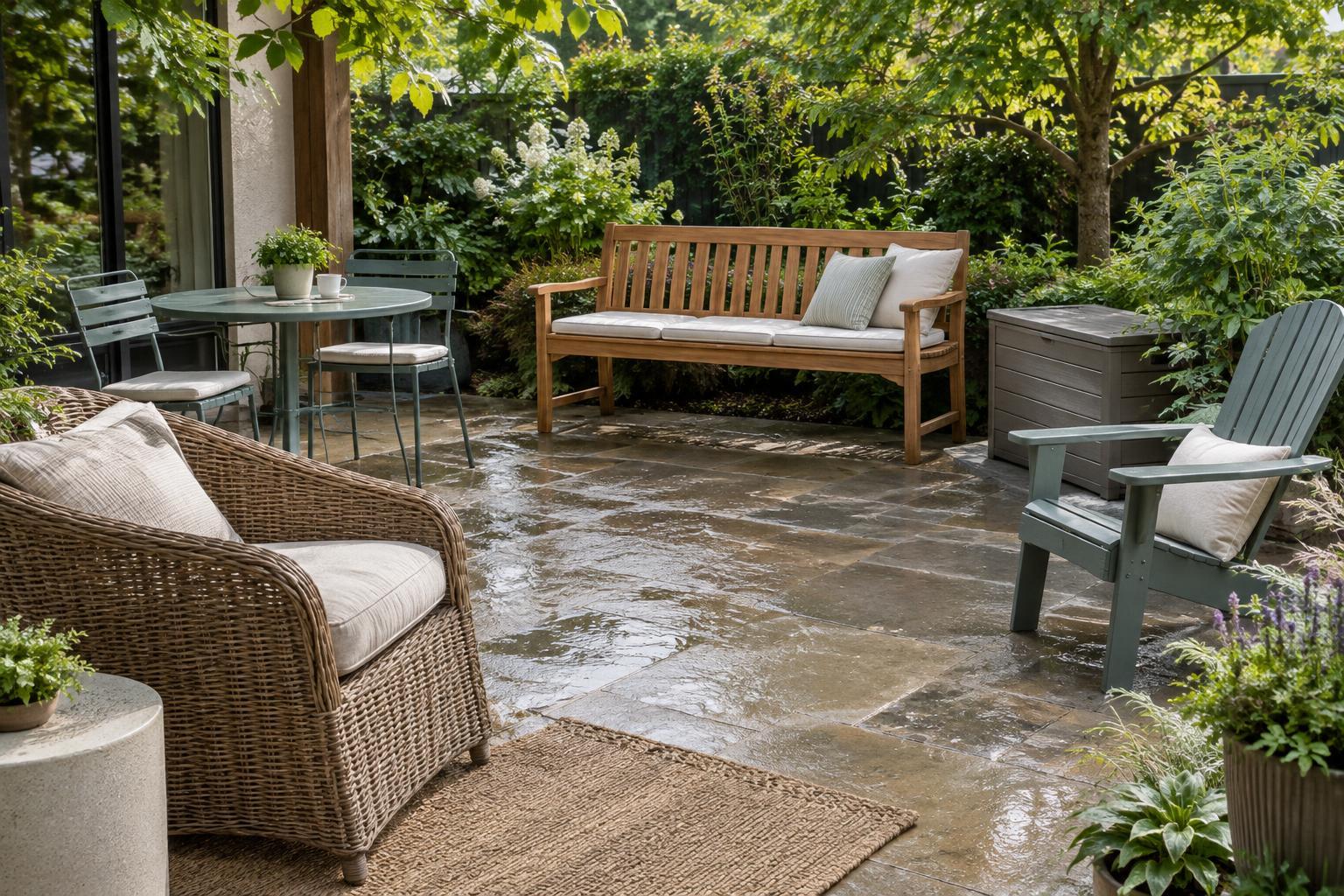
Repeat the test at different times of day and after rain if possible. Notice glare, shade, puddles and any place where people naturally step off the planned surface. Adjusting a marked-out area is much easier than changing a finished patio. A successful position does not have to be the shortest distance from indoors: it is the one that makes entering, using and leaving the space feel effortless.