Think in layers, not a single hedge
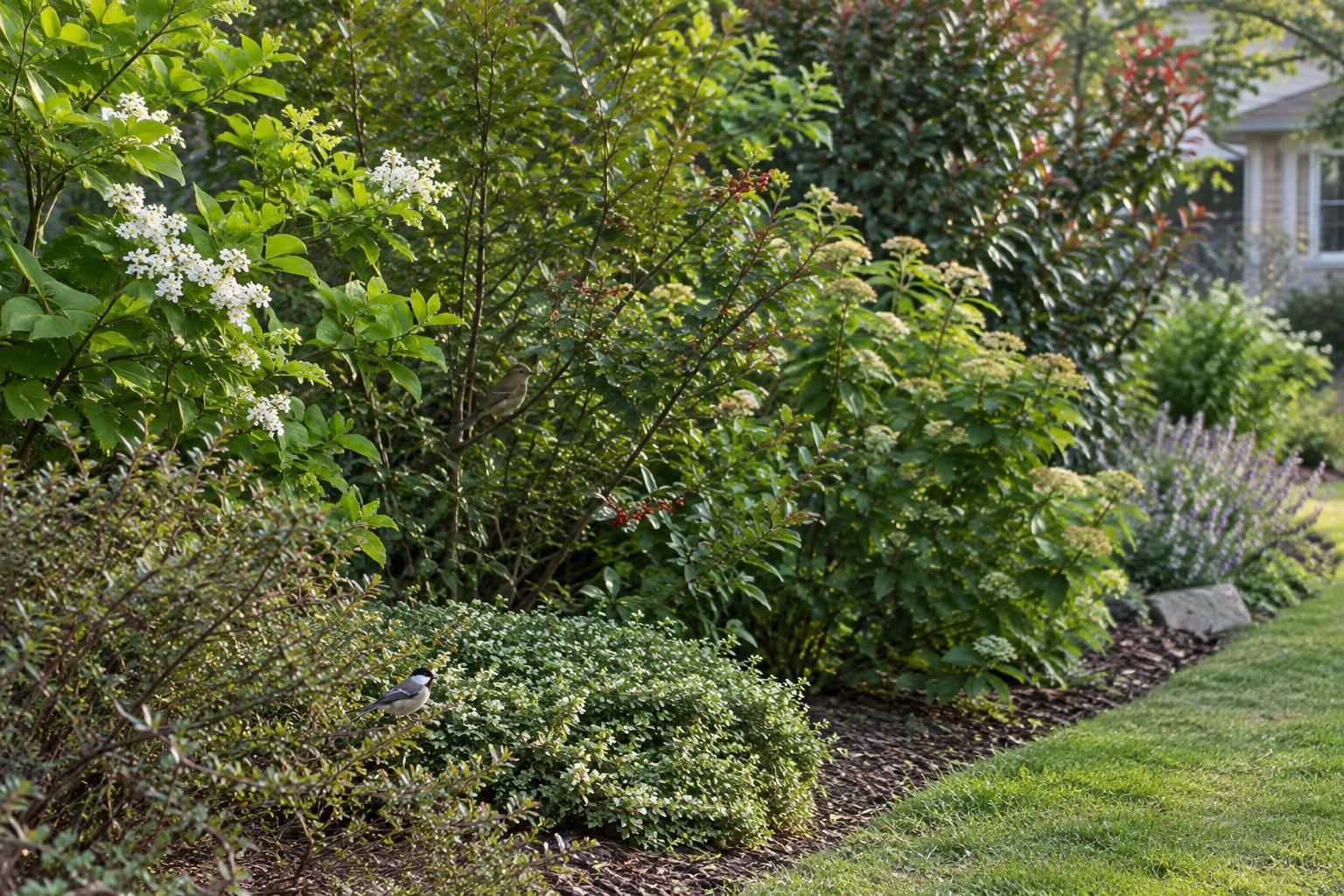
A clipped row of identical shrubs may make a neat boundary, but a mixed planting can offer birds more ways to use the same space. Low branches provide places to move under cover, mid-height growth creates sheltered perches, and taller shrubs add another level of protection. Branches that overlap are especially useful: they let birds travel through the planting rather than crossing open ground between isolated bushes.
Start by sketching the area from above. Mark paths, doors and views you want to keep open, then reserve the deepest part of the bed for a loose cluster of shrubs. If space allows, place shorter shrubs toward the front, medium shrubs behind them and taller ones at the back or center. Stagger the plants rather than lining them up in rigid rows. Even a small corner can have layers if you choose compact varieties with different mature heights.
Choose shrubs for structure and your site
Look for a combination of dense branching, varied mature sizes and plants suited to your soil, rainfall and light. Locally native shrubs are a useful starting point because they can support local insects as well as provide cover. Flowering and fruiting shrubs may add food, but check which species suit your area and whether a proposed plant spreads aggressively there. A local nursery or regional plant guide can help you narrow the choices without relying on a generic plant list.
Include at least one shrub that branches close to the ground. A shrub that naturally forms a thick, twiggy interior may offer more concealment than a tall plant with bare lower stems. Thorny shrubs can provide protected pockets where appropriate, but keep sharp branches back from walkways and play areas. Evergreen shrubs can maintain cover when deciduous plants lose their leaves; in some climates, a mixture of both gives the planting useful structure across seasons.
Give the planting enough room to become dense
Read each plant's expected mature width before setting it out. The aim is for neighboring shrubs to meet or slightly overlap as they grow, not for them to compete immediately after planting. Space them with their eventual size in mind, leaving room to reach the bed for watering and maintenance. In a narrow space, choose naturally compact shrubs rather than planting large-growing varieties and repeatedly cutting them back.
Set shrubs at the depth they grew in their containers or nursery soil, loosen any circling roots, and water thoroughly after planting. A layer of organic mulch can help moderate soil moisture and reduce weeds, but leave a gap around stems. During establishment, check the soil rather than watering by a fixed calendar: new shrubs generally need more attention than established ones, while heavy or poorly drained soil may stay wet longer. Healthy growth will do more for long-term cover than crowding extra plants into the bed.
Make the surrounding space safer and more useful
A shrub cluster works best as part of a connected garden. Nearby trees, a mixed border or another patch of cover can create short, sheltered routes. Let some leaf litter remain beneath the shrubs where it will not cause a problem; it can provide habitat for small creatures that birds may eat. Avoid routine pesticide use around the planting, since insects are an important part of many birds' diets.
Consider what lies just beyond the bed. Shrubs beside a frequently used path may offer less quiet than shrubs in a calmer corner. If cats regularly visit the garden, avoid creating an easy ambush point beside a birdbath or feeder. Keep branches from blocking sightlines needed for people to use the space safely. The goal is not an untouchable thicket, but a place with enough cover for birds and enough access for you to care for the plants.
Maintain cover without disturbing nests
Resist the urge to make every shrub symmetrical. Selective pruning can remove damaged wood and keep paths clear while preserving the dense inner and lower branches that make the planting valuable. Before cutting, look and listen for signs of nesting activity. If birds appear to be using a shrub for a nest, leave that area undisturbed and postpone nonessential work until the nesting activity has ended. Rules protecting nests and birds vary by location, so check local guidance if substantial work cannot wait.
As the planting matures, review it from a bird's-eye level as well as your own. Are there bare gaps near the ground? Has a vigorous shrub crowded out its neighbors? Small adjustments, such as adding a suitable low shrub or thinning one overgrown branch, can restore the layered shape. A bird-friendly planting is not finished on planting day; its value grows with patient care and a willingness to let some natural texture remain.