Why leave soil uncovered?
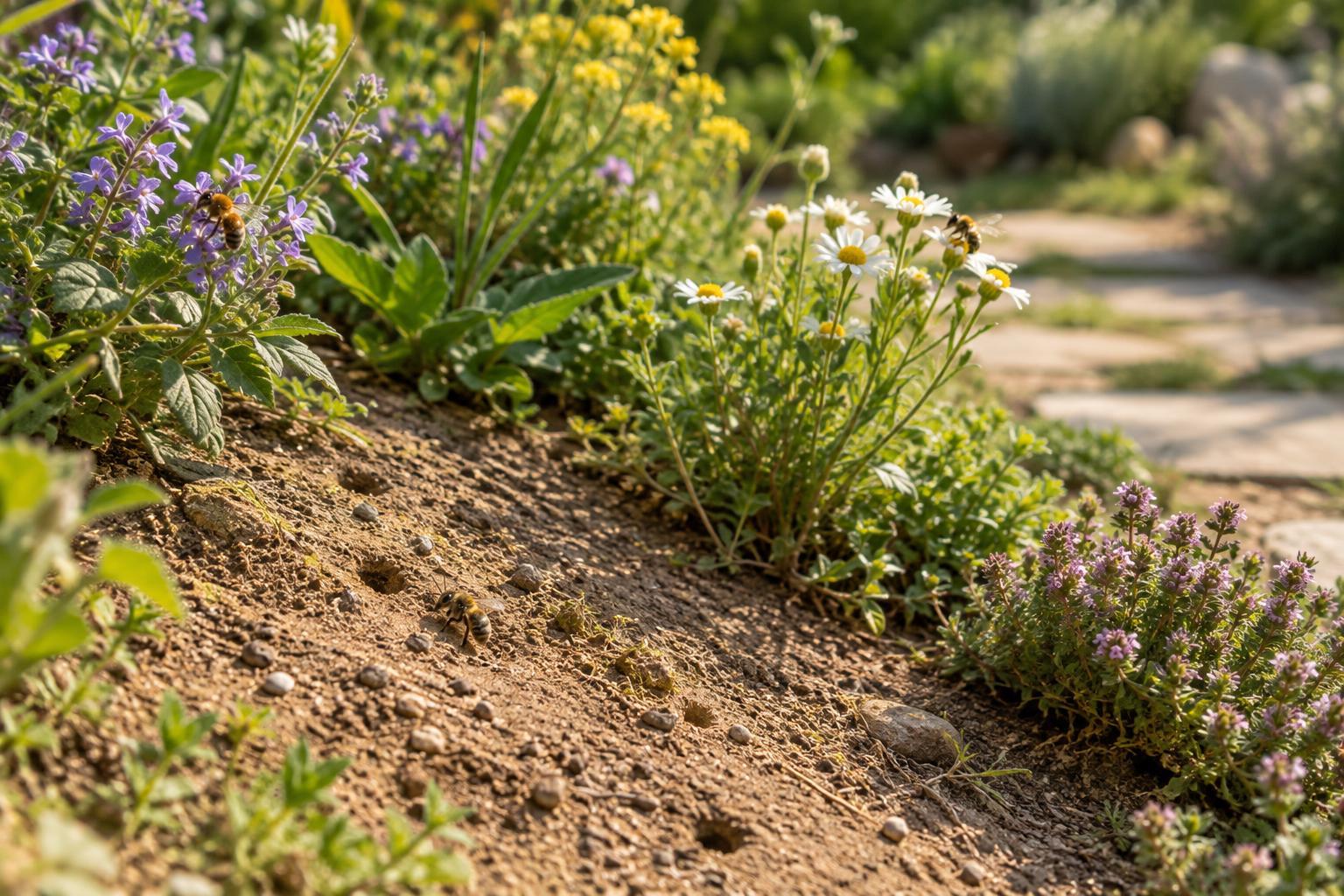
A tidy garden often has mulch, paving or dense planting over every bit of ground. Yet some native bees nest in soil. A female may dig a tunnel and create separate chambers for her young, stocking each with pollen and nectar. An accessible patch of earth gives these bees a place to try. It complements flowering plants rather than replacing them: bees need both nest sites and food nearby.
There is no single soil recipe that suits every ground-nesting bee. Species vary in the conditions they use, and other insects may use the patch too. The aim is not to build a guaranteed bee nursery, but to offer a few undisturbed, exposed areas that are often missing from managed outdoor spaces.
Choose a warm, quiet spot
Look for a place that gets plenty of sun, drains reasonably well and is unlikely to be stepped on. A garden edge, a low bank or a gently sloping area can work. In a wetter climate, a slight slope may help rain run off; in a hot, dry climate, consider a spot that receives some relief from the strongest afternoon heat. Start small enough that you can leave it alone without it getting in the way of daily use.
Avoid areas that flood, receive regular sprinkler spray or need frequent digging. Keep the patch away from play areas and narrow paths, where visible insect activity might cause concern or accidental disturbance. Before clearing a site, look for small holes and bees coming and going. If a patch is already in use, leave that ground intact and make your new opening elsewhere.
Expose the soil without overengineering it
Remove turf, thick mulch or dense weeds from a modest area, taking care not to disturb nearby roots more than necessary. Leave the soil surface open. If the ground is heavily compacted, gently loosen only the upper layer in part of the patch, then let it settle. Keeping another part firmer offers a choice of surfaces. There is usually no need to fill the site with purchased sand, add fertilizer or drill starter holes.
Observe how water behaves after rain or irrigation. If the patch remains muddy for long periods, a better-drained location may be more useful than repeated attempts to amend it. Where space allows, make two or three small patches with different sun exposure or soil firmness instead of one large cleared area. A few stones at the edge can mark the boundary, but leave plenty of soil visible and accessible.
Connect the nest site to flowers
A bare patch is most useful in a garden that offers flowers over an extended part of the growing season. Choose plants suited to your local conditions and include a range of flower shapes and blooming times. Native plants can be a good starting point, but the best choices depend on your region, soil and available light. Grouping flowers together can make them easier for visiting insects to find, while leaving open routes to the soil.
Keep the immediate nesting area free of thick mulch and sprawling plants, but let the surrounding garden provide cover and variety. If you use pesticides elsewhere, take care to avoid exposing visiting insects, especially on flowers or near the nesting patch. A wildlife-friendly space does not have to look unmaintained; a clear edge and a simple path can make an intentional bare spot feel like part of the garden.
Maintain it with a light touch
Check the patch occasionally for plants that are closing over the soil. Pull a few weeds by hand when needed, working around any holes you notice. Avoid tilling, raking deeply or covering the patch with compost or mulch at the end of the growing season. Nesting activity may be brief, and young bees can remain in the ground after the adults are no longer visible.
Small holes alone cannot reliably tell you what is nesting there. Watch from a comfortable distance for insects entering or leaving, rather than probing the openings. If nothing appears to use the patch, give it time and reassess the basics: Is the soil exposed, reasonably drained and undisturbed? You can adjust an unused edge or try another location, while leaving any active area alone. Even a small, simple patch adds another kind of habitat to a garden built around flowers.