Why birds fly into windows
A window can show a bird what looks like a clear route through the house, particularly when glass on opposite sides lines up. At other times, it reflects trees, shrubs or sky so convincingly that the bird flies toward the reflection. The problem is not limited to large picture windows: a small pane beside a favorite feeding spot can also be risky.
Start by looking at your home from the garden. Walk past each window at different times of day and notice where you see reflected greenery or a view through to the other side. Pay particular attention to panes near feeders, birdbaths, fruiting plants and dense cover. If you have noticed a collision, treat that window as a priority even if it looks harmless to you.
Make the outside of the glass visible
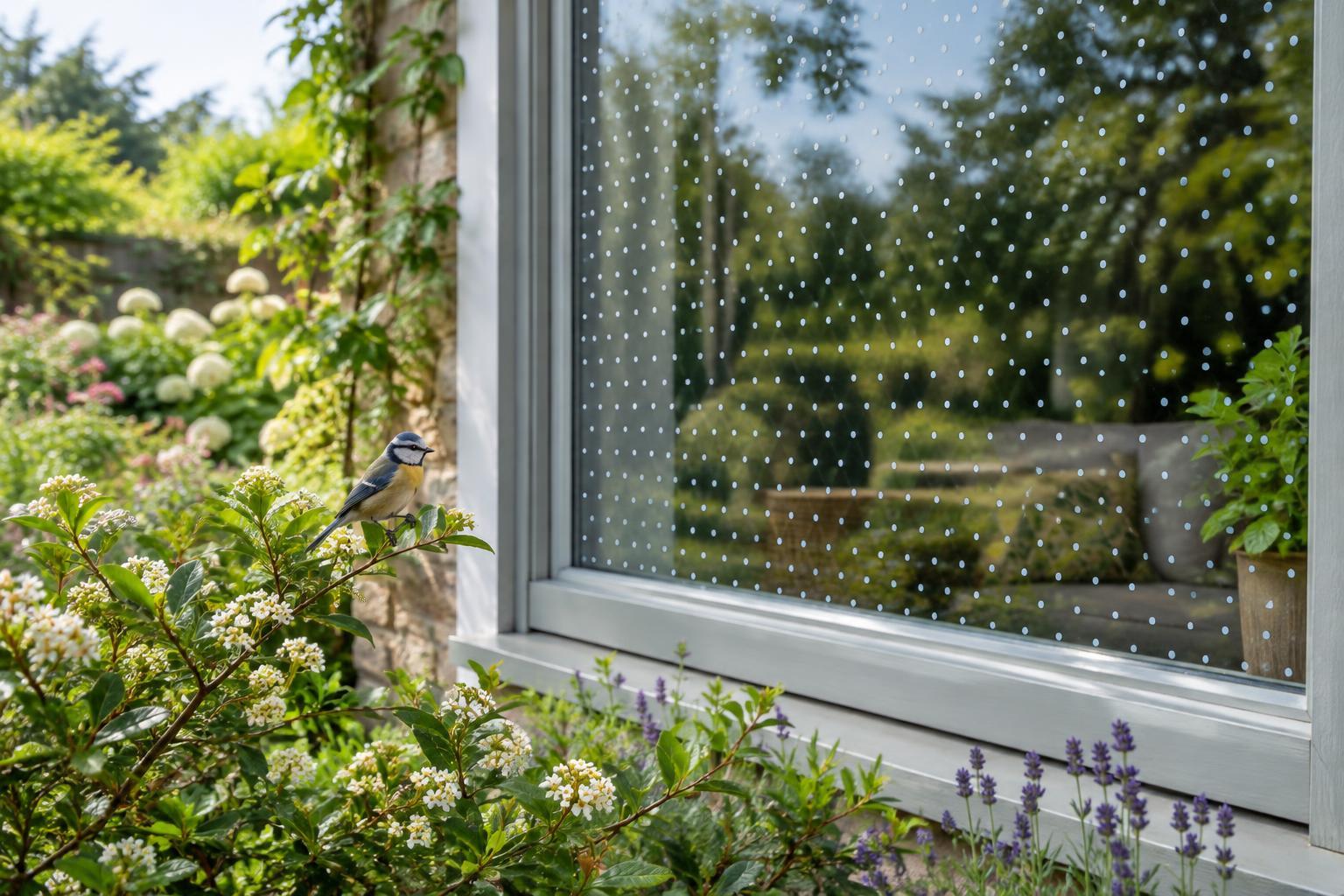
The most direct fix is to break up the apparent open space with markings birds can see before they reach the pane. Exterior window film, purpose-made decals, tempera paint or strips of suitable tape can all help when they form a close, repeated pattern across the entire risky area. A few isolated bird silhouettes leave wide stretches of unmarked glass, so they are less useful than a consistent pattern.
Aim for gaps no wider than about two inches in either direction, and follow the product’s instructions for the surface you are treating. Place markings on the outside whenever possible: reflections on the outer surface can hide patterns applied indoors. If you cannot safely reach the exterior, consider a professionally installed option or another approach, such as a screen. Check that adhesives and paints suit your window material, and keep any planned emergency exits usable.
Use screens, shades and other barriers
An exterior insect screen makes glass less reflective and creates a visible surface between a bird and the pane. A taut screen or purpose-made bird-safe netting set in front of the window can also soften an impact, provided it is installed securely and maintained so birds cannot become trapped. Avoid loose mesh with openings that could catch a bird.
Exterior shutters, awnings and shades may reduce troublesome reflections at certain times of day. Indoor blinds or curtains can help where a bird can see straight through a building, though they may not solve a strong reflection on the outside of the glass. Test the result from the bird’s side of the window rather than assuming a treatment works because it is noticeable indoors.
Rethink the space around problem panes
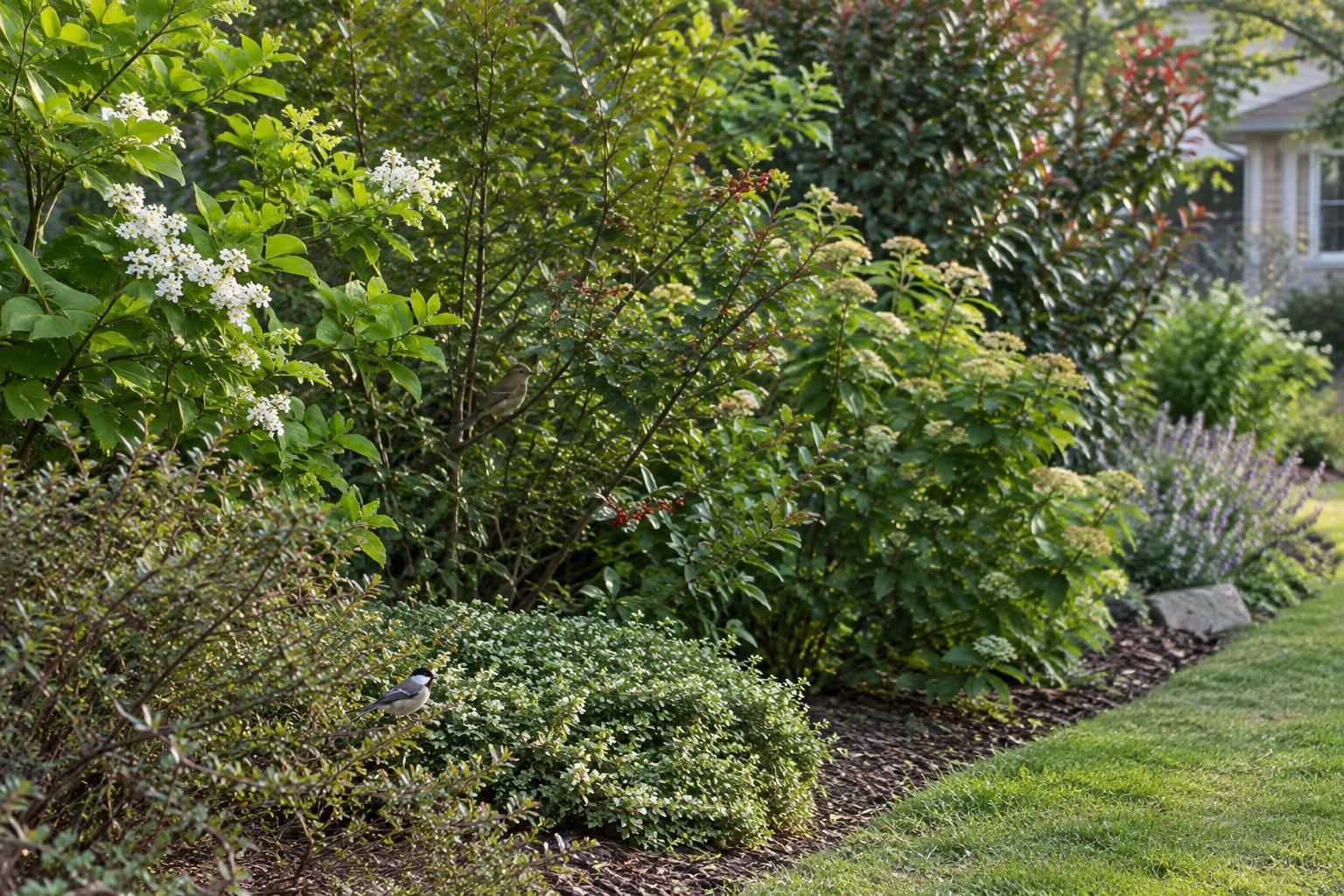
A wildlife-friendly garden can offer food, water and shelter without drawing birds along a risky flight path. If strikes happen near a feeder or birdbath, consider moving it very close to the window so birds have less room to build speed before reaching the glass, or farther away from the building. Avoid leaving it at an in-between distance directly opposite an untreated pane. Watch how birds actually approach and adjust the layout if the route still crosses the window.
Trees and shrubs are valuable habitat, so removing them need not be your first response. Treating the glass often preserves both the planting and its benefits. You can also shift a movable container planting or water dish away from a direct line of sight to a reflective pane. Where lights make glass especially conspicuous after dark, close blinds or switch off unnecessary lighting when the room is not in use.
Check your changes and respond to collisions
Window safety is an ongoing garden task rather than a one-time purchase. Look for signs of strikes beneath windows, particularly after changing feeder locations, pruning shrubs or cleaning glass. Reapply worn markings, repair loose screens and reassess reflections as the angle of sunlight changes through the seasons. If a window remains a problem, try a denser pattern or a different exterior treatment instead of adding just one more decal.
If you find an injured or stunned bird, keep pets and people away and contact a local wildlife rehabilitator for guidance. If you need to move the bird out of immediate danger, handle it as little as possible and place it in a ventilated box in a quiet, dark location while you seek advice. Do not offer food or water unless a qualified rehabilitator tells you to. A bird that flies away may still be hurt, which is another reason to prevent the next collision.