Start with a patio inventory
Before shopping for a deck box or clearing a shed shelf, gather the things you expect to store. Include seat and back cushions, throws, furniture covers, watering cans, small tools, outdoor games and any supplies used for cleaning or entertaining. Separate items you reach for every day from those you only need at the start or end of a season. This gives you a clearer picture of what belongs close to the seating area and what can live farther away.
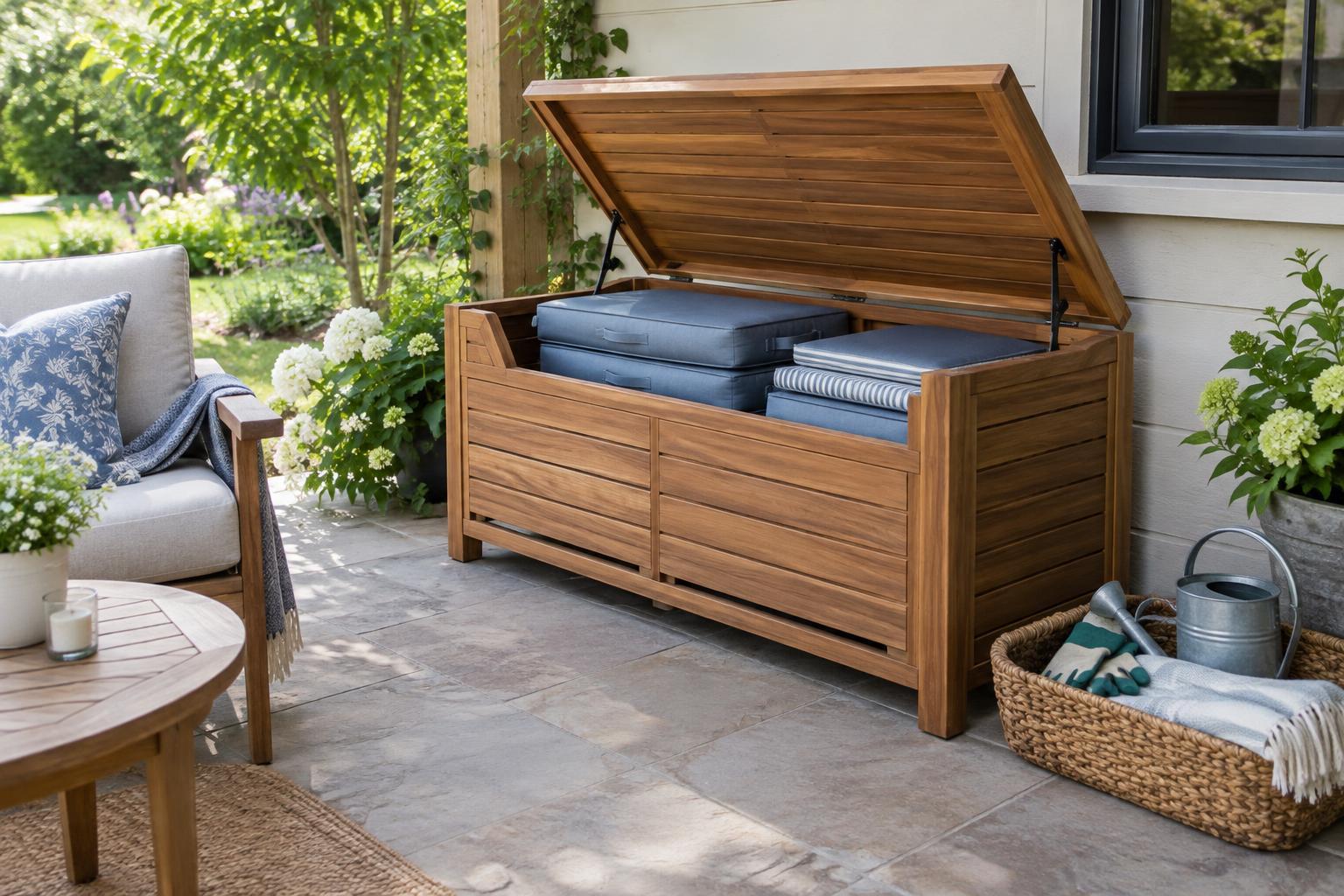
Measure the largest cushions as a stack, allowing room to lift them in and out without forcing a lid or door closed. Check the usable interior dimensions of a storage unit rather than relying on its exterior size. If cushions must be folded to fit, consider whether the fabric and filling tolerate folding without losing their shape. Leave some spare capacity for an extra throw or cover, but avoid making the container so large that small items disappear at the bottom.
Choose storage that suits the contents
A deck box can keep frequently used cushions near the patio, while a cabinet or shed may be better for taller tools and supplies. Benches with built-in storage can serve two purposes in a compact outdoor room, provided their seats are comfortable and their storage compartments are easy to access. Open shelving works well for pots and durable equipment under cover, but it is less suitable for soft furnishings exposed to windblown rain.
Think about how each option opens. A hinged lid needs clearance above and behind it; cabinet doors need space in front. If you will carry a full stack of cushions to storage, choose a path without awkward steps or tight turns. A low box may look tidy beside a sofa yet be frustrating if you have to move furniture each time you open it. For shared spaces, simple storage that everyone can use is often more effective than an elaborate system.
Plan for moisture, heat and airflow
Outdoor storage is not automatically dry storage. Rain can enter around lids and doors, condensation can form inside enclosed spaces, and damp cushions can develop odors. Look for a container suited to your exposure, place it on a stable surface and follow its assembly and care instructions. A sheltered position may reduce direct rain, but avoid setting storage where water pools after a storm.
Let cushions dry fully before putting them away, including seams and inner edges that may stay damp longer than the surface. If a container has vents, keep them clear rather than packing items tightly against them. Breathable cushion bags can help keep dust off when items are stored in a dry, protected area; a sealed bag is a poor choice for anything that might still hold moisture. In a hot, sunny spot, shade may also help limit heat buildup inside dark storage boxes. Local weather should guide how often you check stored items.
Give small supplies their own places
Cushions are easiest to retrieve when they are not buried under a collection of smaller patio items. Use a separate basket, tray or shelf for clips, cleaning cloths, plant ties and other loose supplies. Keep heavier items low so they cannot topple onto soft furnishings. Store liquids according to their labels and away from cushions, children and pets; a spill inside a shared box can be difficult to clean.
Group supplies by activity rather than by size. For example, keep furniture-cleaning items together and put outdoor games in a container that can be carried to the table. Labels can help when several people use the space, but clear placement matters more than a complicated labeling scheme. Leave the most-used items near the opening and reserve the back or bottom for seasonal supplies.
Build storage into the patio routine
Decide when cushions need to come inside or go into storage. On a covered patio, they may stay out through ordinary use and be put away ahead of prolonged wet weather. On an exposed patio, storing them after use may be more practical. The right routine depends on the materials, the shelter available and how willing you are to move the cushions regularly. If the routine feels like too much work, the storage location may be too far away or too difficult to open.
Check the storage area occasionally for leaks, trapped leaves, pests and signs of dampness. Give the container a clean before a long period of storage, and make sure everything going into it is clean and dry. A good plan does not require every patio item to fit in one box. It gives each item a sensible home, protects soft goods when they are not in use and makes the outdoor room easier to enjoy.