Start with the route people actually use
Before changing the patio, walk the full route from the house to the place where someone would sit, eat or garden. Notice where a person has to step over a door track, turn sharply, squeeze past a planter or cross a patch of loose material. Try the route while carrying a tray or moving a wheeled garden cart: small obstacles become much more obvious. Ask regular users which spots feel awkward rather than assuming the shortest path is the easiest.
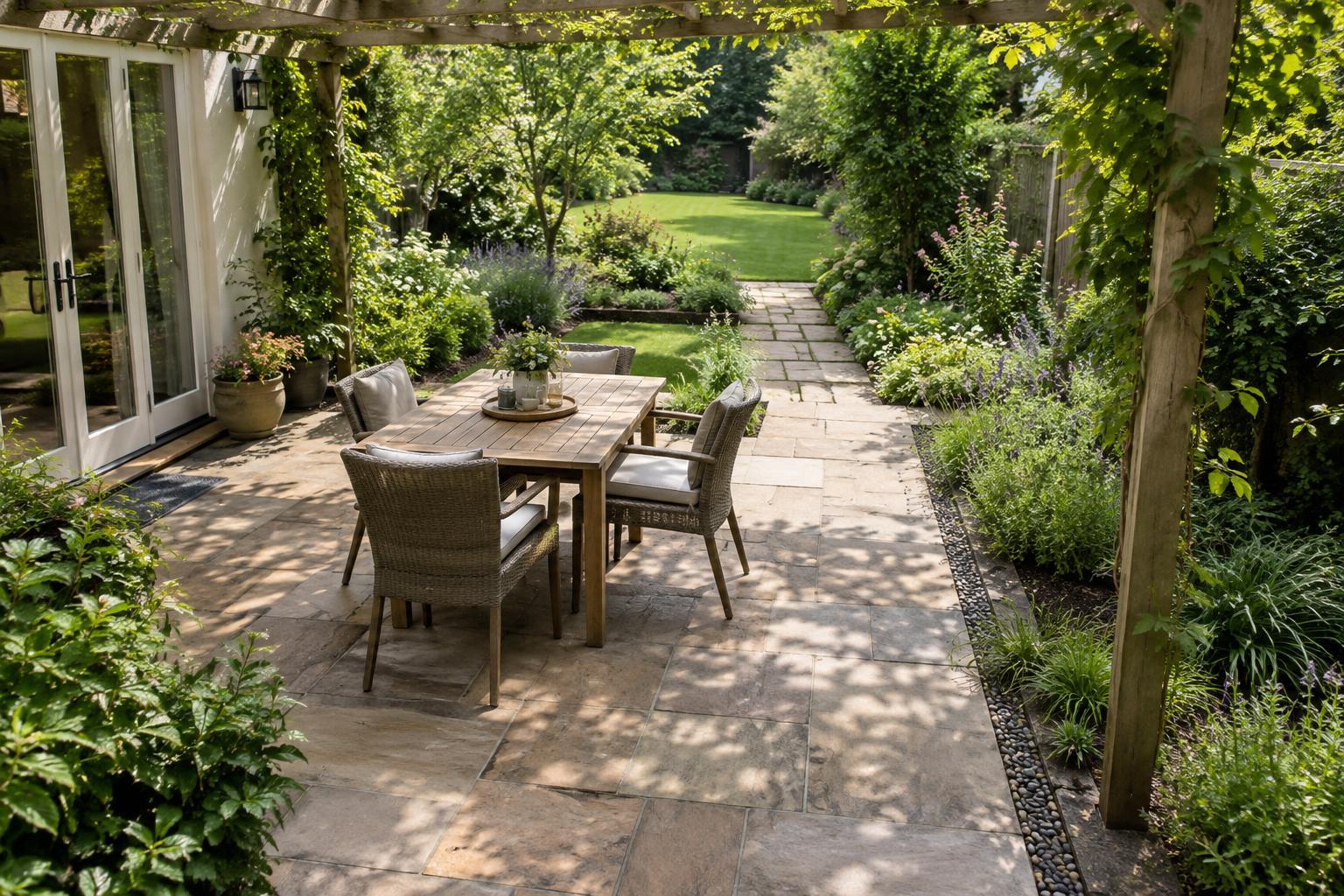
Aim for a continuous, predictable route with enough clear space to open the door, move around furniture and turn without backing into a planting bed. Keep the main path free of pots, hoses and chair legs. If you are planning from scratch, decide where that route will go before choosing the size of a dining set or the shape of a border.
Treat the doorway as part of the patio
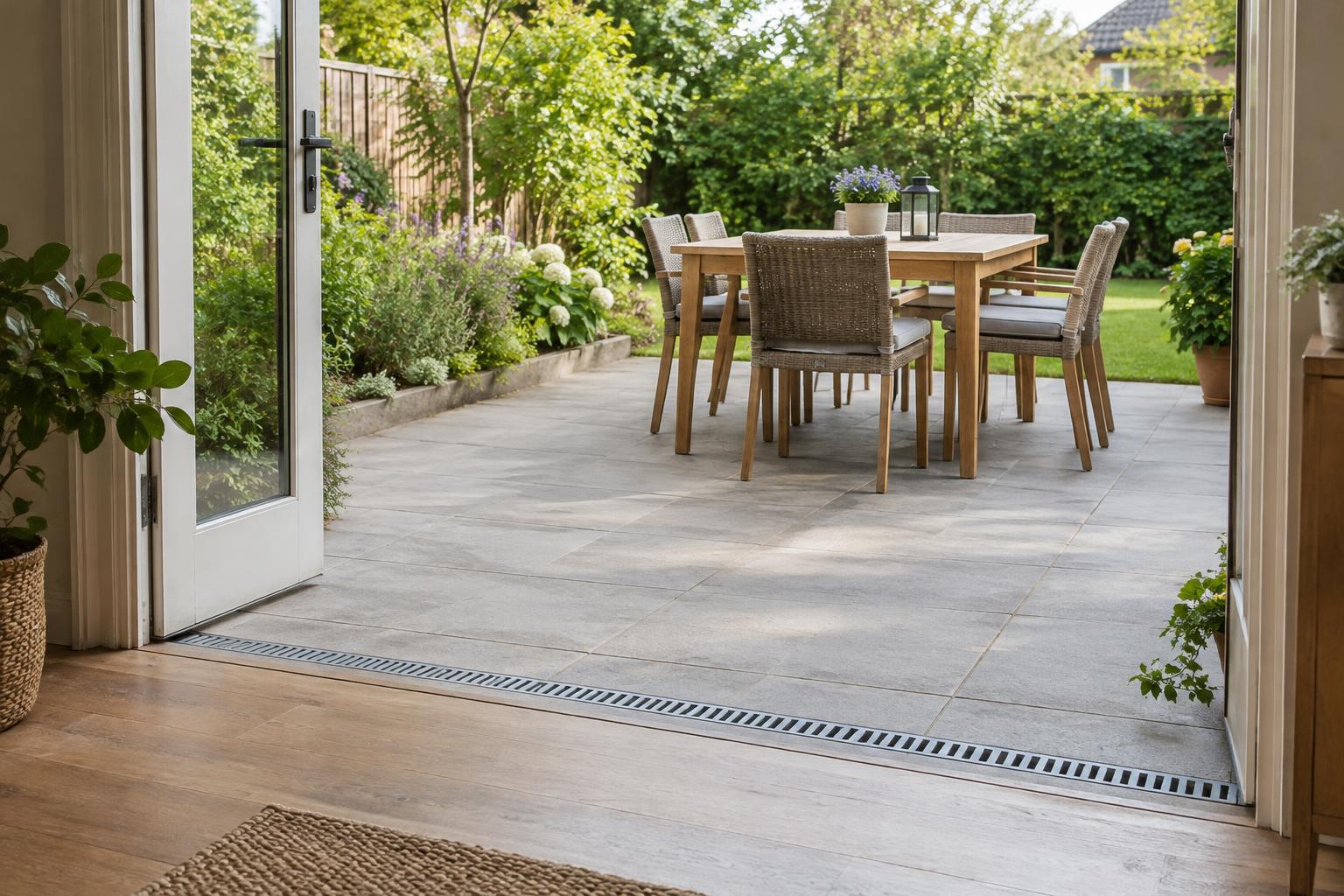
A threshold can be harder to cross than the patio itself. Look at the height difference between indoor flooring and the outdoor surface, the shape of the door track and whether the door can open fully without blocking the route. A low, smooth transition is generally easier to use than an abrupt lip. Where a level change cannot be avoided, a properly fitted transition or ramp may help, but it needs room for a gradual approach and a secure, stable surface.
Do not raise paving against the house simply to hide a step. Doorways need to shed water, and changing the ground level can interfere with drainage or moisture protection. If the work involves altering a doorway, building a ramp or changing levels next to the house, ask a qualified local contractor about a suitable design and any applicable requirements. A mat can catch dirt, but choose one that lies flat and will not slide or bunch underfoot.
Choose surfaces for steadiness, not just appearance
Firm, even paving makes a route easier to read and use. Well-laid pavers or slabs can work well when they are stable and their joints stay reasonably flush. Loose gravel, shifting stones and widely spaced stepping stones can be more difficult for people using a cane, walker or wheeled mobility aid. If you love the look of loose material, consider keeping it in planting areas and using a firmer surface for the main route.
Pay attention to texture in wet weather. A surface should offer grip without being so rough or uneven that it catches feet or wheels. Check samples when they are damp if possible, and think about shade, fallen leaves and algae-prone spots. Strong visual contrast between a path and its edges can help people see where to walk, while consistent paving makes changes in level easier to notice.
Plan for water, light and usable space
A navigable patio should not collect puddles on its main route. Water can make surfaces slippery, conceal uneven joints and leave dirt where people step out of the house. The surface needs an appropriate fall and a place for water to go without sending it toward the building or a neighbor’s space. Keep drainage channels clear and consider whether a nearby tap or downspout creates a recurring wet patch.
Lighting matters at the threshold and anywhere the route changes direction or level. Even, gentle light is more useful than a single bright fixture that creates deep shadows or glare. Place switches where they are easy to reach before stepping outside. Leave room to pull out a chair without blocking the path, and select furniture that stays steady on the chosen surface. A clear route should still be clear when the patio is in use.
Keep the route dependable over time
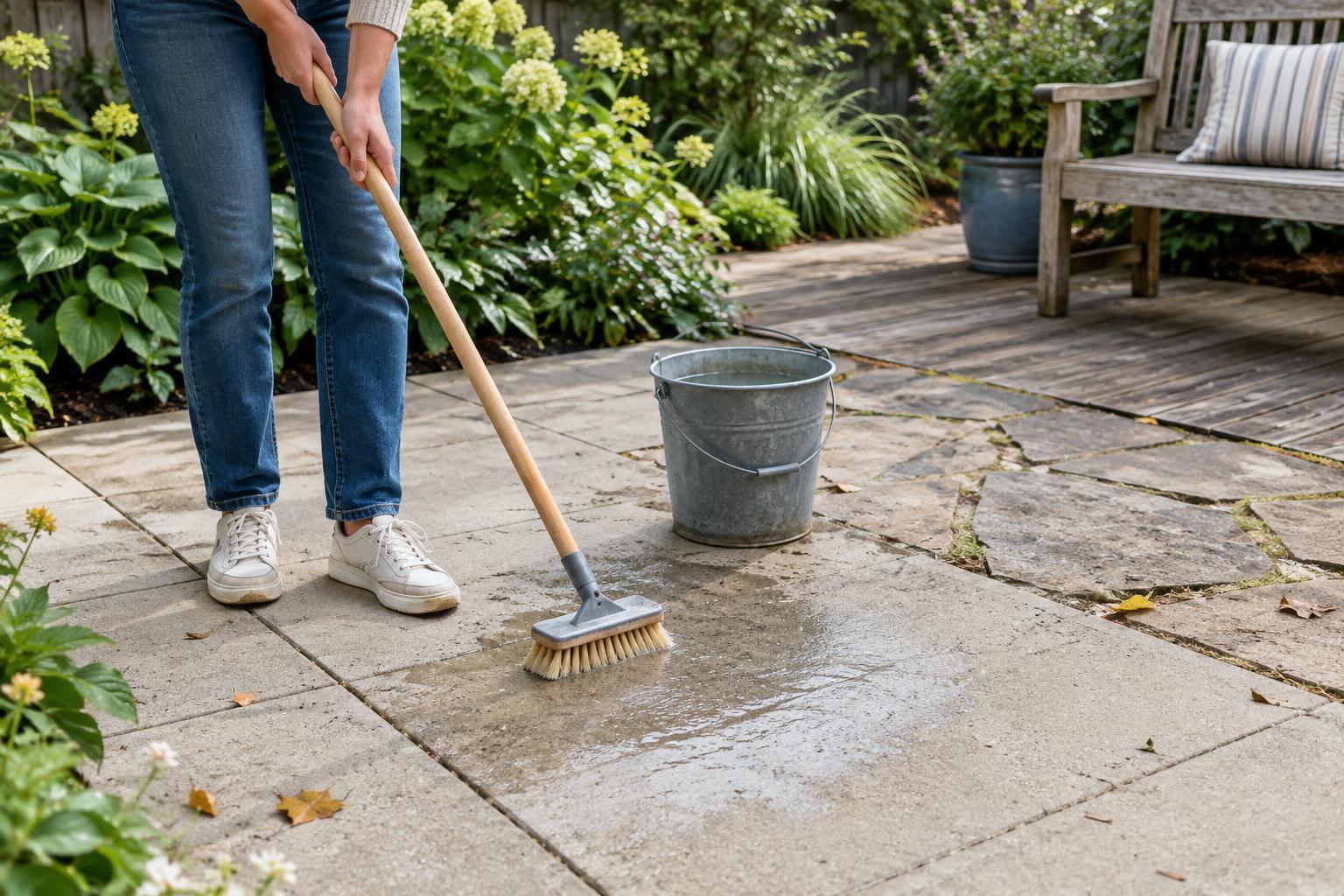
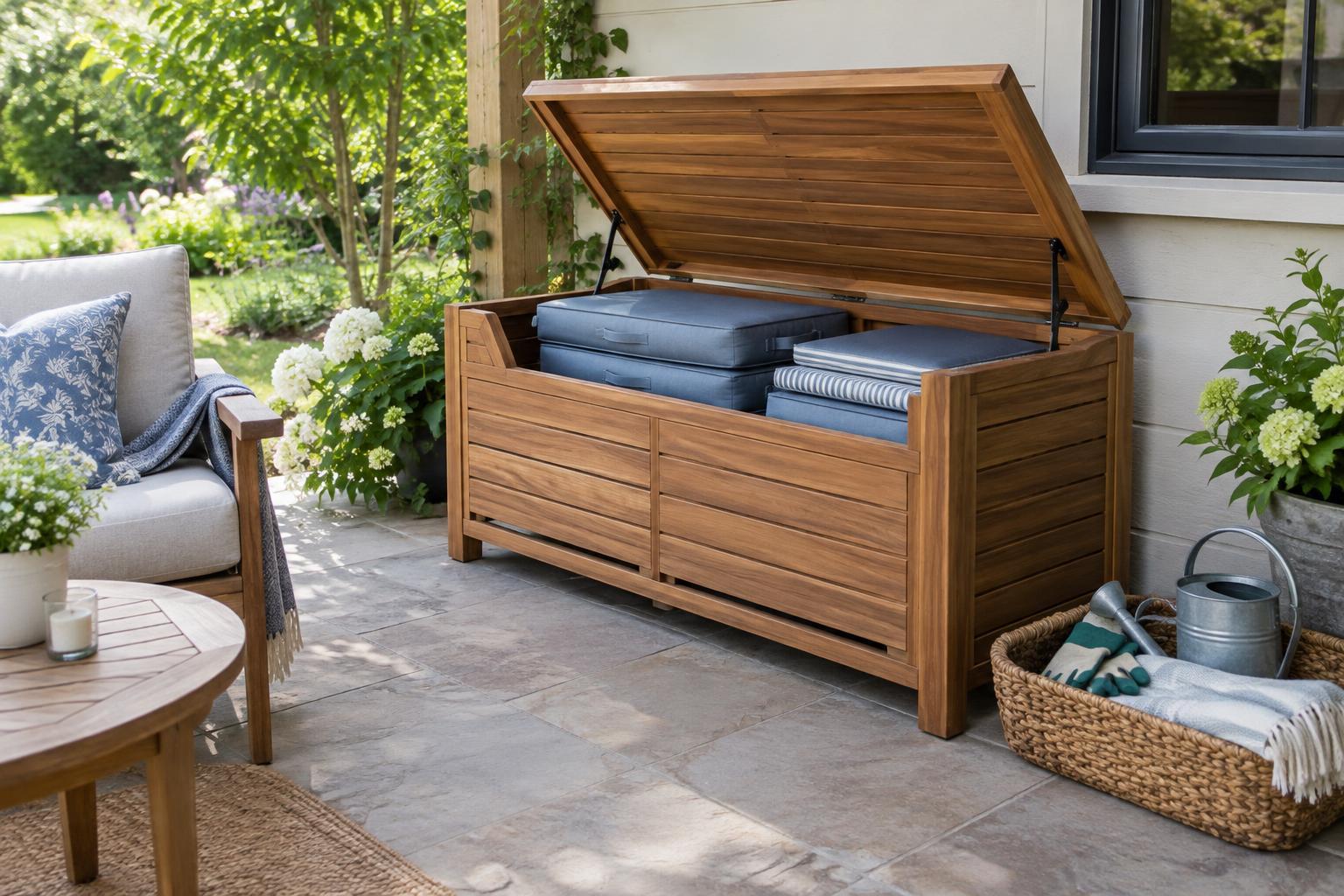
Even a thoughtfully designed patio needs occasional checks. Look for lifted pavers, widening joints, rocking slabs, slippery growth and edging that has shifted into the path. Sweep away leaves and soil before they build up, and move hoses and tools back to storage after use. In colder climates, check for changes after freeze-thaw cycles; in warmer or wetter places, watch shaded areas where growth may make paving slick.
Make one change at a time if a full redesign is not practical. Moving a planter, securing a mat or rearranging seating may improve the route immediately. Larger work can then focus on the most troublesome point, often the threshold or an uneven stretch of paving. The goal is not a patio that looks empty; it is one where people can get outside, move comfortably and enjoy the space without negotiating avoidable obstacles.